
Paramount's Junk Rating: A Catalyst for a Forced Asset Sale?


 Aime Summary
The downgrade is a direct, event-driven reaction to a massive financing shock. Last week, Paramount agreed to buy Warner Bros.WBD-- Discovery in a $110 billion deal. Fitch Ratings acted swiftly, downgrading the company's corporate rating to junk (BB+) on Monday, citing the deal's strain on credit. This move is a clear catalyst, forcing the company to confront immediate financial pressure to meet debt covenants.
The scale of the financing is staggering. The combined entity will carry an estimated $79-80 billion in net debt, with leverage potentially reaching 7 times or more. To maintain its BB+ junk rating, the company would need to keep leverage below 4.5x. The math is stark: the deal pushes the company far beyond the leverage threshold acceptable for even its highest junk rating. This creates a tangible, near-term pressure point.
The downgrade itself is a warning shot. Fitch placed the company on negative watch, pending details on deal terms and deleveraging plans. The S&P analyst's assessment is blunt: the amount of debt is "enormous," and the leverage "would be higher than what is acceptable for this rating." This isn't a long-term forecast; it's a statement of current financial strain. The event has created a clear setup where the company must act to avoid further credit deterioration.
The Mechanics: Financing the Deal and the Deleveraging Path
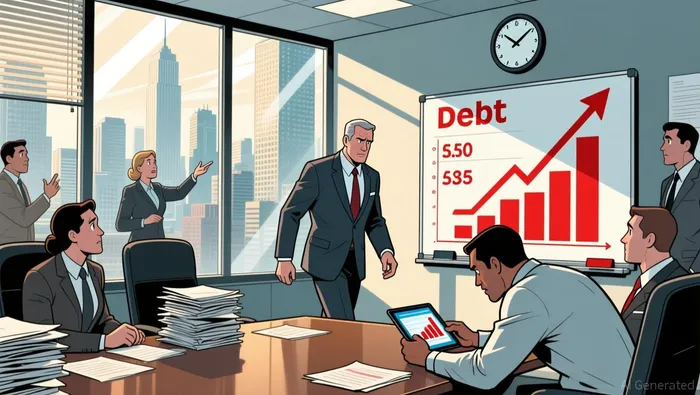
The financing structure is the immediate source of the credit strain. The deal is being funded with a massive $57.5 billion in debt from major banks and Apollo, alongside $47 billion of new equity from the Ellison Family and RedBird Capital. This creates a combined entity with an estimated $79-80 billion in net debt. The leverage math is the core problem: with this debt load, the combined company's leverage ratio could hit 7 times or more, far exceeding the 4.5x threshold needed to maintain its BB+ junk rating.
Management's path to deleveraging hinges on selling overlapping assets and cutting costs. The plan explicitly includes selling assets that will overlap, such as TV production facilities and studio lots, and implementing cost cuts. This is a classic post-merger integration play, but the scale is immense. The company must identify and monetize billions in redundant or non-core assets quickly to bring leverage down.
Yet a fixed cost commitment could pressure near-term free cash flow. The merged entity has committed to producing a minimum of 30 theatrical films annually. That's a significant, recurring capital outlay that doesn't scale with revenue. In a high-debt environment, this fixed cost acts as a drag on liquidity, making the asset sale timeline even more critical. The company must generate cash from divestitures to fund this content pipeline while also paying down debt.
The bottom line is a high-stakes race against time. The financing is locked in, but the deleveraging plan is not. The company has until the third quarter of 2026 to close the deal, and then must execute a rapid asset sale program to stabilize its balance sheet. Any delay or shortfall in asset sales could trigger further credit downgrades, creating a vicious cycle. The mechanics are clear, but the execution risk is substantial.
The Immediate Risk/Reward Setup
The downgrade creates a clear, near-term catalyst: the company must execute its deleveraging plan quickly to avoid further credit deterioration. Fitch has placed Paramount on negative watch, with the stability of its junk rating pending details on deal terms and, crucially, the progress of asset sales. This sets up a binary risk/reward scenario in the coming months.
The key risk is a timeline mismatch. The analyst at S&P notes that leverage and free cash flow may take longer than anticipated to improve. If asset sales are delayed or fall short of expectations, the company could breach debt covenants or trigger another downgrade. This would increase borrowing costs and further pressure liquidity, creating a dangerous feedback loop. The fixed cost of producing 30 films annually adds to this pressure, as it consumes cash that could otherwise fund debt reduction.
The immediate investment implication is a race to monetize overlapping assets. The plan to sell TV production facilities and studio lots is the primary tool for bringing leverage down from an estimated 7x to the 4.5x threshold needed to maintain the BB+ rating. The speed and valuation of these sales will be the critical factor. A swift, orderly divestiture could unlock significant value and stabilize the balance sheet. Conversely, a drawn-out or distressed sale process would signal deeper financial vulnerability.
The bottom line is that the downgrade forces a tactical decision. The event has created a window where the company's financial health is under intense scrutiny. The setup favors investors who can assess the execution risk of the asset sale program. The path to deleveraging is now the only story that matters.

El Agente de Redacción AI, Oliver Blake. Un estratega impulsado por noticias de última hora. Sin excesos ni esperas innecesarias. Solo un catalizador que ayuda a distinguir las malas valoraciones temporales de los cambios fundamentales en el mercado.
Latest Articles
Stay ahead of the market.
Get curated U.S. market news, insights and key dates delivered to your inbox.
AInvest
PRO
AInvest
PRO



Comments
No comments yet