
Paramount's $108.4 Billion Bid for Warner Bros. Discovery: What Retail Investors Need to Know


 Aime Summary
The media landscape is shifting rapidly as two major players—Paramount and Netflix—vie for control of Warner Bros.WBD-- Discovery (WBD), the once-mighty media giant that owns CNN, HBO, and Discovery+. On December 8, 2025, David Ellison, CEO of Paramount SkydancePSKY--, . . With the stakes so high and the battle for media dominance intensifying, retail investors and curious market watchers are paying close attention to how this drama unfolds.
The Battle for WBD: A High-Stakes Game of Influence and Strategy
The key to understanding this takeover fight lies in the different approaches of the two bidders. Paramount’s offer is all-cash and targets the entire company, including WBD’s cable networks, while NetflixNFLX-- is focusing only on its film and streaming operations. Paramount argues that its bid offers more certainty and is more likely to pass regulatory hurdles, while Netflix maintains that its deal is more focused and strategically sound.
, 2025. , as well as equity support from David Ellison’s family and RedBird Capital Partners. The offer expires on January 8, 2026, giving investors a clear window to act before the deadline according to the official announcement.
The Players and Their Motives
David Ellison, the son of Oracle’s Larry Ellison, is no stranger to big media moves. He’s been building Paramount Skydance into a formidable entertainment force, and this bid is the latest step in his vision to consolidate power in the streaming and media space. Ellison’s move is not only about size but also about influence. With Larry Ellison’s Oracle wealth providing financial backing, the bid is seen as a serious contender.
Meanwhile, , while smaller in total value, is still significant. The deal includes HBO and HBO Max’s content libraries and is expected to give Netflix a 43% share of the global streaming subscriber base. , Netflix’s co-CEO, has called Paramount’s move 'entirely expected' and reiterated the company’s confidence in its existing deal with WBDWBD-- 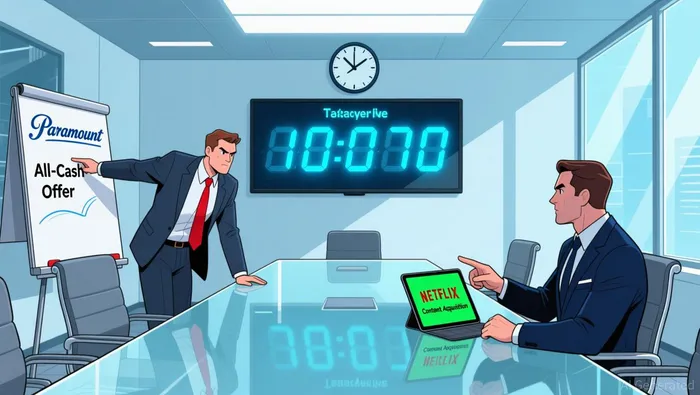 according to reports.
Warner Bros. Discovery, for its part, has rejected Paramount’s prior offer, which it claims wasn’t evaluated fairly. The board ultimately accepted Netflix’s proposal, but Paramount is now pushing back, alleging unfair process and planning to challenge the deal on as the company stated.
Market Reactions and Investor Implications
The news of these competing bids has sent ripples through the stock market. Both Netflix and Paramount saw their shares dip after the announcement, with investors clearly confused by the high-stakes drama. The uncertainty around which bid will ultimately succeed—and how regulators will respond—has left many investors on edge.
For retail investors, the takeaway is clear: media consolidation is back in play. Whether it’s through hostile bids, regulatory challenges, or shareholder pressures, the industry is undergoing a transformation. The outcome of this particular battle could set a precedent for future deals in a landscape where content and scale are king.
What’s Next for the Media Landscape
With both bids still active, the next few months will be crucial. Paramount’s all-cash offer is seen by some as having an edge, given its certainty and the political connections of the Ellison family. Meanwhile, Netflix’s deal is more focused and may have fewer regulatory hurdles. But with David Ellison now directly appealing to WBD shareholders, the battle isn’t over yet.
For investors, the bigger picture is about the future of content ownership. As the streaming wars continue to evolve, control over and production capabilities will be key. This latest chapter in the WBD saga is just one example of how the media industry is reshaping itself—and how the financial stakes are higher than ever .
What remains to be seen is whether this consolidation will lead to a more competitive market or a more monopolized one. For now, the best advice for retail investors is to stay informed, keep an eye on regulatory developments, and prepare for more volatility in the space.

Delivering real-time insights and analysis on emerging financial trends and market movements.
Latest Articles
Stay ahead of the market.
Get curated U.S. market news, insights and key dates delivered to your inbox.
AInvest
PRO
AInvest
PRO



Comments
No comments yet