
Paraguay's GDP: What Recent Data Means for Investors


 Aime Summary
Paraguay's economy has long been a quiet but steady performer in South America, growing consistently despite regional volatility. In 2025, as global markets brace for shifting trade dynamics and geopolitical risks, Paraguay’s GDP performance offers an intriguing case study for investors. With its strong agricultural sector and strategic position between Brazil and Argentina, the country is drawing renewed attention from those seeking emerging-market exposure with lower volatility.
GDP Growth and Economic Performance
Paraguay’s economy has historically been driven by agriculture, particularly soybeans and cattle. In 2024, it maintained a moderate but stable growth trajectory, though it hasn’t yet reached pre-pandemic levels of rapid expansion. As of 2025, the country is showing resilience in its agricultural output, which remains its largest economic contribution. However, the pace of growth has slowed in recent years due to infrastructure limitations and export bottlenecks.
Industrial and service sectors have shown limited expansion, which means Paraguay’s economic model remains highly dependent on a single industry. This vulnerability is a red flag for investors seeking diversified exposure. In 2025, the country’s economic performance continues to be shaped by global commodity prices and regional trade agreements. A key question for investors is whether Paraguay can diversify its economy to reduce reliance on agriculture and weather global market swings more effectively.
Key Factors Influencing GDP Trends
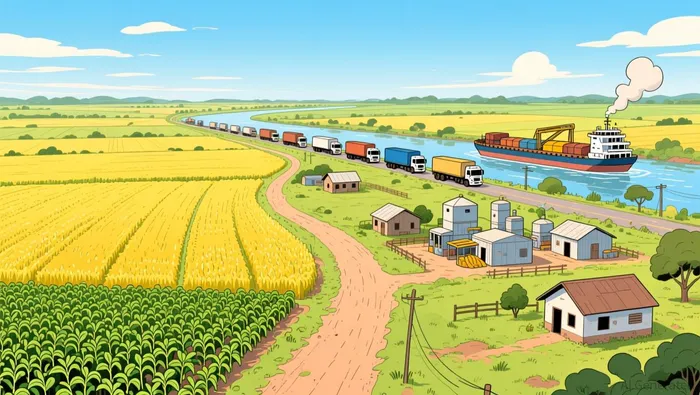
One of the biggest challenges Paraguay faces is its underdeveloped infrastructure. While the country has made strides in recent years, poor road conditions and limited access to ports still hamper export efficiency. This constraint has kept growth from accelerating even when global demand for Paraguayan exports—such as soy and beef—rises. Another factor is political stability. Unlike its neighbors Brazil and Argentina, Paraguay has maintained a relatively steady political environment, which has helped attract foreign investment. Still, policy uncertainty and weak regulatory enforcement remain risks to long-term economic planning.
The agricultural sector is also feeling the strain of climate change and environmental degradation. Droughts and deforestation are becoming more frequent, which not only impact crop yields but also raise concerns about sustainability. Investors are beginning to factor in these environmental risks, particularly as global markets shift toward more sustainable sourcing practices.
Implications for Investors and Global Markets
For investors, Paraguay’s economic story is one of cautious optimism. While the country has avoided the kind of hyperinflation and currency crises that have plagued other parts of South America, it hasn’t yet broken free of its reliance on a single industry. This makes it a relatively low-volatility option for emerging-market portfolios but one that may not offer explosive growth. Still, the stability of Paraguay’s government and its growing integration into regional trade networks could make it an attractive long-term bet.
Multinational companies operating in agriculture and agribusiness are already increasing their presence in Paraguay, drawn by its competitive land prices and favorable labor costs. However, the lack of infrastructure and environmental concerns mean that investors need to conduct thorough due diligence before entering the market. In particular, those with exposure to climate risk or ESG-focused portfolios should weigh these factors carefully.
Looking Ahead: Challenges and Opportunities
As 2026 approaches, Paraguay faces both challenges and opportunities. On the one hand, the country’s underdeveloped infrastructure remains a major obstacle to faster economic expansion. On the other, there is growing interest in green energy and sustainable agriculture, which could provide new avenues for growth. If Paraguay can successfully modernize its transportation and logistics systems, it could position itself as a regional hub for agribusiness and manufacturing.
At the same time, global economic trends will play a significant role. As the U.S. and China continue to adjust their trade policies, Paraguay’s exports may face new opportunities or risks depending on how these shifts unfold. Investors should also keep an eye on domestic policy developments, particularly regarding regulatory reform and environmental legislation.
In the end, Paraguay’s economy is a mix of promise and risk. For those willing to take a measured approach, it offers a unique blend of stability and growth potential in a region that’s often marked by volatility.

Delivering real-time insights and analysis on emerging financial trends and market movements.
Latest Articles
Stay ahead of the market.
Get curated U.S. market news, insights and key dates delivered to your inbox.






Comments
No comments yet