
Paraguay's Economic Outlook: Key Trends and Investment Implications for 2026


 Aime Summary
As global markets brace for a new phase of economic expansion, one country quietly making headlines is Paraguay. Known for its strong agricultural exports and a resilient economy, Paraguay has positioned itself as a key player in global grain markets. With 2025 shaping up to be a record year for soybean production and grain exports, the country is drawing attention from investors seeking exposure to emerging market growth and supply chain resilience. What makes Paraguay's performance particularly compelling is how it reflects broader macroeconomic shifts—from U.S. tax policies and AI-driven demand to shifting inflation dynamics in OECD countries. Here's what investors need to know about Paraguay's economic trajectory.
Paraguay's Agricultural Powerhouse
Paraguay has long been a major exporter of soybean meal and western grains, and 2025 is no exception. Soybean production is estimated at 167.4 million tons for the year—up 13.3% compared to the previous harvest. This surge in output aligns with global demand trends, especially as U.S. grain exports saw a $3.2 billion increase in September 2025 alone. For Paraguay, a country with a relatively small population and land-based economy, this translates to export-driven growth and currency stability. The U.S. and Latin American grain markets are closely linked, and as the U.S. refines its export strategies, Paraguay's role in filling the gaps becomes increasingly strategic.
A Global Grain Story
The broader context for Paraguay's success lies in the global grain market's ongoing transformation. The Andersons, Inc., has set a clear growth path for itself through 2028—aiming for a run-rate earnings per share of $7.00, up from $2.56 in the trailing twelve months ending September 30, 2025. While this target is U.S.-centered, it signals a broader trend of supply chain optimization and grain price volatility. As one of the largest suppliers of soybean meal in the region, Paraguay benefits from this ecosystem, with export volumes likely to rise alongside global demand. This is not just about raw production—it's about positioning in a supply chain that values efficiency and diversification.
Inflation and Growth: A Global Balancing Act
Paraguay's economic gains must be understood in the context of a global economy still navigating inflation and growth recovery. In the OECD, headline inflation was stable or declining in 14 of 37 countries as of September 2025. Food and energy inflation have both seen declines, with the euro area seeing year-on-year inflation at 2.1% as of October according to ICIS data. This easing trend is important because it lowers the cost of imported goods and services—key for a country like Paraguay that depends on global trade and investment. At the same time, 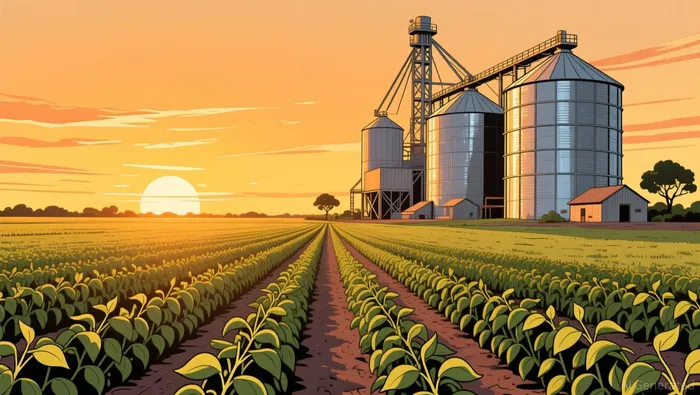 the global economy is expected to grow by 3.1% in 2026, driven by tax cuts, AI investments, and interest rate cuts from central banks. This environment supports export-oriented economies like Paraguay's by reducing currency pressures and stabilizing demand.
What This Means for Investors
For retail investors and those with an eye on emerging markets, Paraguay's performance highlights a few key themes. First, the country is demonstrating the kind of export-driven growth that is both scalable and resilient. As global supply chains become more fragmented, economies that can consistently produce high-quality agricultural goods—especially in the soy and grain sectors—stand to benefit. Second, the interplay between inflation and growth is critical. With the U.S. and China both adjusting to a slower global growth outlook, Paraguay's relatively low inflation and strong GDP growth could provide a buffer against macroeconomic turbulence. And third, the role of U.S. agribusiness companies like The Andersons in shaping global grain markets means investors should keep a close eye on trade policy and export strategies that could indirectly affect Paraguay's market position.
A Forward-Looking Outlook
Looking ahead, the economic outlook for 2026 appears cautiously optimistic. Global real GDP is expected to expand by 3.1%, and the U.S. could see growth of 2.2% as tax cuts and AI investments drive productivity. For Paraguay, this means a continued demand tailwind for its agricultural output. However, risks remain—especially around inflationary pressures and debt sustainability in emerging markets. As central banks remain cautious and global trade tensions persist, Paraguay's ability to maintain production and export efficiency will be a key determinant of its long-term success. For now, the numbers suggest a strong, if not entirely predictable, path forward.

Delivering real-time insights and analysis on emerging financial trends and market movements.
Latest Articles
Stay ahead of the market.
Get curated U.S. market news, insights and key dates delivered to your inbox.


AInvest
PRO
AInvest
PRO



Comments
No comments yet