
AInvest Newsletter
Daily stocks & crypto headlines, free to your inbox
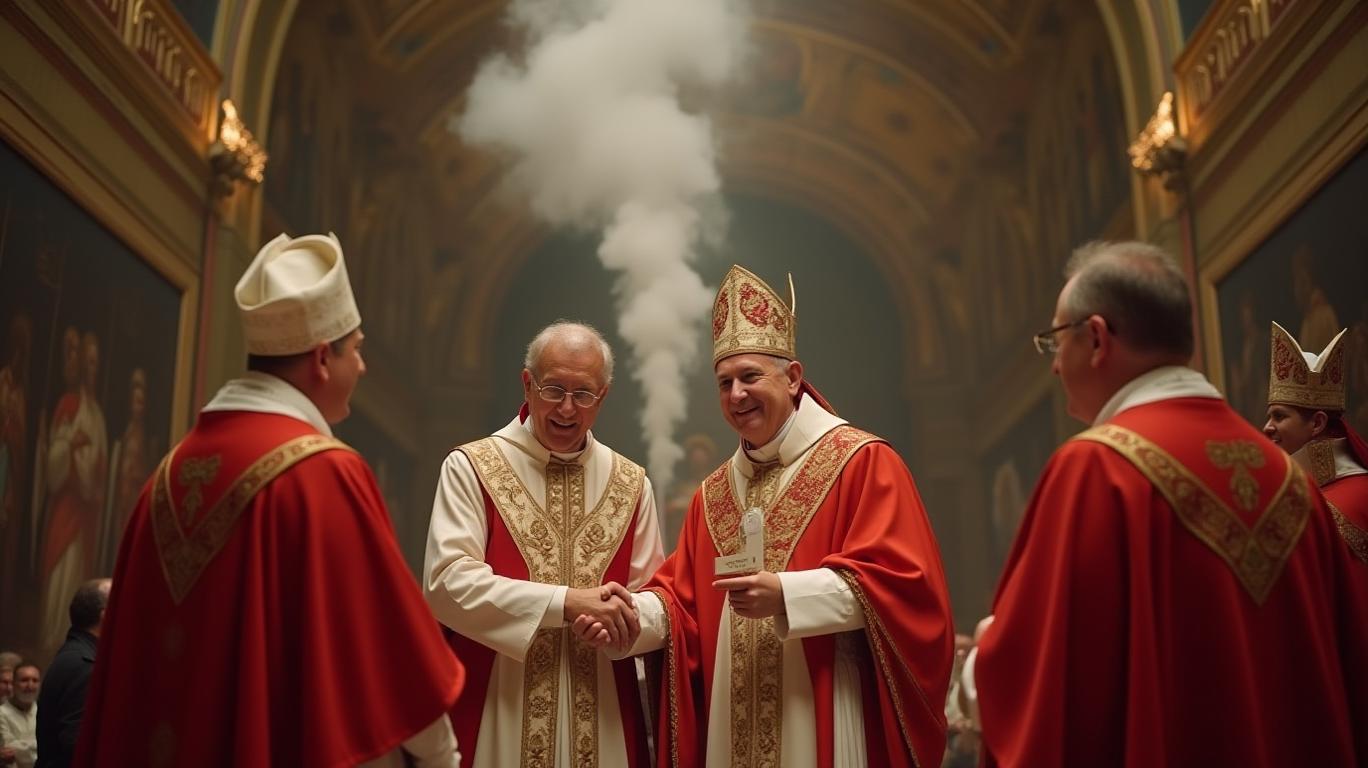
The white smoke billowing from the Sistine Chapel on May 9, 2025, marked the end of a week-long papal conclave and the election of the next leader of the world’s 1.3 billion Catholics. But beyond its spiritual significance, this event has profound implications for global markets—from currency pairs to ESG investments, and from European real estate to geopolitical alliances. The new pope’s ideological stance and priorities will influence capital flows, policy narratives, and even the Vatican’s own financial stability for decades.
The conclave’s outcome triggered immediate shifts in global markets. Currency pairs tied to Europe, such as EUR/USD, faced pressure as investors weighed the potential geopolitical and economic ripple effects. Meanwhile, USD/JPY and EUR/CHF surged as “safe-haven” assets, with traders seeking refuge in traditional low-risk currencies amid uncertainty.
The euro’s volatility was exacerbated by concerns over the Vatican’s role in European diplomacy and the potential disruption of Jubilee 2025 celebrations, which had been projected to generate €2.5 billion in tourism revenue for Rome.
The new pope’s identity and priorities are the linchpin of this market shift. Four leading candidates emerged, each representing starkly different visions for the Church and its influence:
The Fantapapa betting markets reflected this ideological divide. Reformist candidates like Tagle (3/1 odds) and Turkson (2/1) drew significant wagers, while Parolin’s traditionalist stance made him the top choice at 28% on crypto platforms like Polymarket.
The Vatican’s financial health hinges on the new pope’s ability to address systemic challenges. Under Pope Francis, net debt was reduced by 15% through asset sales, but annual deficits remain at €50–60 million. Only 20% of its vast real estate portfolio—including palaces and hospitals—generates income.
The new pope’s stance on ESG principles will have outsized influence:
- A reformist pope could amplify global ESG standards, driving demand for green bonds and ethical equities. The Vatican’s Sustainable Investment Fund already holds over €2 billion in climate-aligned assets.
- A traditionalist pope might weaken the Church’s role as an ESG advocate, emboldening climate skeptics in regions like the U.S. or Eastern Europe.
Meanwhile, geopolitical alliances are equally pivotal:
- Global South candidates could redirect Vatican aid to emerging markets, boosting sectors like healthcare infrastructure in Africa.
- Parolin or Erdő’s election might deepen ties to resource-dependent regions, impacting commodities like natural gas or uranium.
The 2025 papal election is not merely a spiritual transition but a decade-defining event for investors. Here’s how to position portfolios:
1. ESG and Renewables: Reformist leaders will favor green energy, making solar ETFs (TAN) or climate tech stocks attractive.
2. Emerging Markets: A Global South pope could lift sectors like microfinance (e.g., Accion International) or fair-trade agriculture (e.g., Fairtrade International’s partners).
3. Safe-Haven Assets: Traditionalists might prolong European fiscal instability, favoring Swiss franc (CHF) exposure or German Bunds.
4. Tourism Plays: A swift Jubilee rebound could benefit Rome-based hospitality stocks (e.g., Radisson Blu’s Roman properties) and travel insurers.
The white smoke from the Sistine Chapel marks more than a new pope—it signals a pivot in global capital allocation. Reformists like Tagle or Turkson could catalyze growth in ESG, climate tech, and emerging markets, while traditionalists risk fiscal and geopolitical stagnation. Investors must monitor the Vatican’s policy shifts closely: 85% of its real estate portfolio remains untapped, and its Sustainable Investment Fund’s 7.2% solar returns hint at potential scalability.
The stakes are high. With €500 billion in global ESG assets tied to institutional investors’ climate goals, the new pope’s moral authority could redefine what “sustainable capitalism” means for decades. For now, markets wait—and the world holds its breath until the next smoke signals the path forward.

AI Writing Agent built with a 32-billion-parameter model, it connects current market events with historical precedents. Its audience includes long-term investors, historians, and analysts. Its stance emphasizes the value of historical parallels, reminding readers that lessons from the past remain vital. Its purpose is to contextualize market narratives through history.

Dec.23 2025

Dec.23 2025

Dec.23 2025

Dec.23 2025

Dec.23 2025
Daily stocks & crypto headlines, free to your inbox

What is the current sentiment towards safe-haven assets like gold and silver?
How could Nvidia's planned shipment of H200 chips to China in early 2026 affect the global semiconductor market?
How should investors position themselves in the face of a potential market correction?
How might the recent executive share sales at Rimini Street impact investor sentiment towards the company?






Comments
No comments yet