
Panic selling in the stock market starts to pick up
ByAinvest
Friday, Apr 4, 2025 9:24 am ET1min read
Panic selling in the stock market starts to pick up
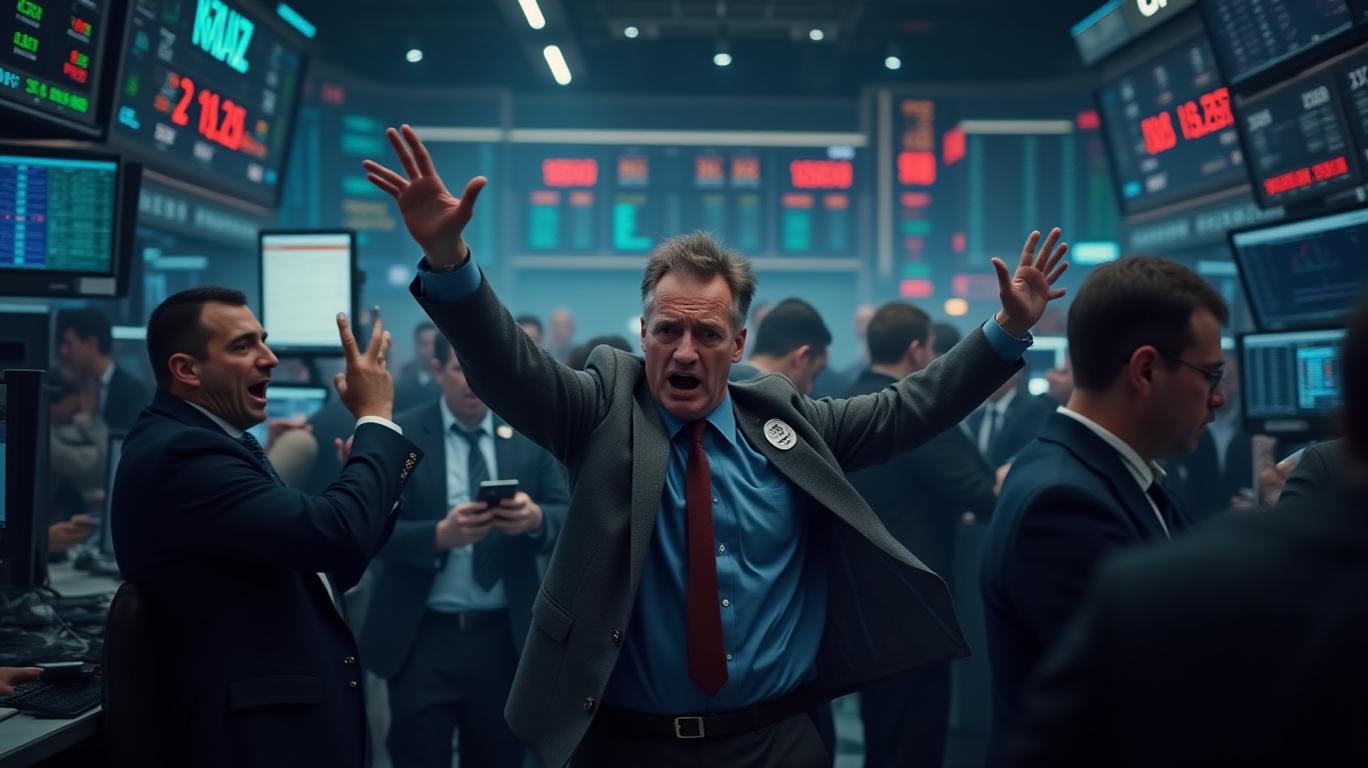
Investors are increasingly turning to safety as panic selling in the stock market escalates, driven by China's announcement of a 34% tariff on all U.S. goods in retaliation for recent U.S. duties. This move has sparked a wave of uncertainty, sending stock markets into a tailspin.On Friday, the Dow Jones Industrial Average futures plunged more than 900 points, while the S&P 500 and Nasdaq-100 futures experienced declines of over 2.5% each. The Cboe Volatility Index (VIX), often referred to as Wall Street's fear gauge, surged to 45.56, reflecting investors' growing unease. This comes after Thursday's market rout, where the Dow dropped more than 1,600 points, the S&P 500 tumbled 4.8%, and the Nasdaq fell by 6%.
The escalating tariffs have raised concerns about a protracted global trade war, with economists warning that the current tariff levels could lead to a significant economic slowdown. Despite the steep declines, the VIX was not as high as it was during the 2020 market crisis, suggesting that while investors are anxious, panic has not reached the levels seen in previous market downturns.
Market internals suggest that while the sell-off is significant, it may not yet indicate a full-blown panic. For instance, the VIX spiked to 65 in August 2020 during a dollar-yen carry trade reversal, which was a more extreme event compared to the current situation. This suggests that while investors are nervous, the market is not yet in a full-blown panic mode.
Investors are also holding onto the belief that the tariff rates may be negotiated down by the U.S. administration. However, the market's response to the tariff escalation indicates that a significant portion of investors are preparing for the worst-case scenario.
As the market faces these challenges, investors are advised to remain disciplined and stick to their long-term investment strategies. Emotional reactions, such as panic selling, can often lead to poor investment decisions. It is crucial to remember that markets are cyclical and that the current downturn may present opportunities for long-term investors.
In conclusion, the stock market's recent volatility reflects the growing uncertainty surrounding the escalating tariffs and the potential for a protracted trade war. While panic selling is picking up, the market's response suggests that while investors are anxious, panic has not yet reached the levels seen in previous market downturns. Investors should remain disciplined and focus on their long-term investment strategies.
Stay ahead of the market.
Get curated U.S. market news, insights and key dates delivered to your inbox.


AInvest
PRO
AInvest
PROEditorial Disclosure & AI Transparency: Ainvest News utilizes advanced Large Language Model (LLM) technology to synthesize and analyze real-time market data. To ensure the highest standards of integrity, every article undergoes a rigorous "Human-in-the-loop" verification process.
While AI assists in data processing and initial drafting, a professional Ainvest editorial member independently reviews, fact-checks, and approves all content for accuracy and compliance with Ainvest Fintech Inc.’s editorial standards. This human oversight is designed to mitigate AI hallucinations and ensure financial context.
Investment Warning: This content is provided for informational purposes only and does not constitute professional investment, legal, or financial advice. Markets involve inherent risks. Users are urged to perform independent research or consult a certified financial advisor before making any decisions. Ainvest Fintech Inc. disclaims all liability for actions taken based on this information. Found an error?Report an Issue




Comments
No comments yet