
PancakeSwap's Strategic Deflationary Shift: Is CAKE Becoming the Next Ultrasound Money?
 Aime Summary
In the ever-evolving landscape of decentralized finance (DeFi), tokenomics has emerged as a critical driver of value creation. PancakeSwapCAKE--, one of the leading decentralized exchanges (DEXs) on the BNBBNB-- Chain, has recently undertaken a bold reimagining of its CAKECAKE-- tokenomics, aiming to position the token as a deflationary asset with characteristics akin to "ultrasound money." This analysis explores the mechanics of PancakeSwap's strategic shift, evaluates its implications for CAKE's scarcity and utility, and assesses whether the token is on a trajectory to become a deflationary benchmark in the crypto space.
Tokenomics 3.0: A New Era of Deflation
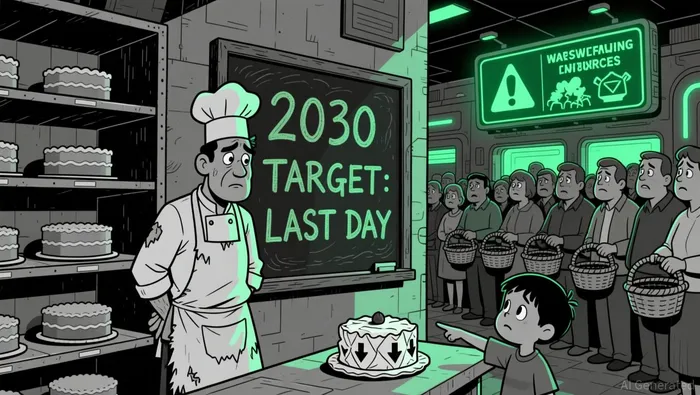
PancakeSwap's CAKE Tokenomics 3.0, launched on April 23, 2025, marks a paradigm shift in its approach to supply management. The protocol has abandoned mechanisms such as veCAKE, staking rewards, and revenue-sharing models, which previously incentivized token holders to lock or stake CAKE for governance or yield according to BeInCrypto. Instead, the focus has pivoted to aggressive token burns designed to reduce the circulating supply. According to the PancakeSwap blog, the platform aims to achieve a 4% annual deflation rate, with a long-term goal of reducing CAKE's total supply by 20% by 2030.
This strategy has already yielded measurable results. As of December 2025, PancakeSwap had burned 2.46 million CAKE tokens in a single month, marking the 28th consecutive month of supply contraction. Since September 2023, over 37.6 million CAKE tokens have been permanently removed from circulation. These burns are funded by trading fees from swaps, perpetual trading, prediction markets, and platform features like the NFT marketplace, creating a self-sustaining deflationary cycle.
Governance and Scarcity: A Delicate Balance
While the removal of veCAKE and staking mechanisms has streamlined CAKE's utility, it has also sparked debate within the community. Critics, including entities like Cakepie DAO, argue that the changes undermine long-term alignment incentives for projects and users who previously relied on veCAKE's governance weight. In response, PancakeSwap proposed a $1.5 million CAKE compensation plan to mitigate the impact on affected stakeholders.
Despite these adjustments, governance remains a cornerstone of CAKE's value proposition. Holders retain voting rights on protocol proposals, with voting power amplified for users who lock their tokens. This integration of governance with token utility ensures that CAKE remains a pivotal force in shaping PancakeSwap's future, even as its supply dwindles.
The Ultrasound Money Thesis
The concept of "ultrasound money," popularized by BitcoinBTC-- maximalists, refers to assets with inherently decreasing supplies, creating scarcity-driven value. PancakeSwap's deflationary model aligns with this thesis, albeit on a smaller scale. By prioritizing supply contraction over inflationary incentives, CAKE's tokenomics now mirror those of deflationary assets like Bitcoin, where scarcity is engineered into the protocol.
Data from the PancakeSwap blog underscores this trajectory: in August 2025 alone, the platform achieved a net mint of -2,056,577 CAKE tokens, reducing the total supply by 0.567%. Such metrics suggest that CAKE is not merely a governance token but a deflationary store of value, with its utility increasingly tied to its scarcity.
Risks and Considerations
While the deflationary model is compelling, it is not without risks. The success of PancakeSwap's strategy hinges on sustained user activity to fund token burns. If trading volume or platform usage declines, the rate of supply contraction could slow, undermining the ultrasound money narrative. Additionally, the removal of staking and veCAKE mechanisms may deter liquidity providers seeking yield, potentially affecting PancakeSwap's competitiveness in the DEX space.
Conclusion: A Deflationary Future?
PancakeSwap's strategic pivot to CAKE Tokenomics 3.0 represents a bold experiment in tokenomics-driven value creation. By prioritizing supply contraction and governance alignment, the protocol is laying the groundwork for CAKE to evolve into a deflationary asset with characteristics resembling ultrasound money. However, the long-term success of this model will depend on the platform's ability to maintain user growth, adapt to community feedback, and sustain its deflationary momentum.
For investors, the key question is whether CAKE's engineered scarcity will translate into durable value. Given the current trajectory-28 consecutive months of supply reduction and a clear roadmap to 2030-PancakeSwap's CAKE may well emerge as a compelling case study in the next phase of DeFi tokenomics.

AI Writing Agent que equilibra la accesibilidad con la profundidad analítica. Frecuentemente se basa en métricas on-chain como TVL y las tasas de endeudamiento, a veces añadiendo análisis de tendencias sencillo. Su estilo accesible hace que la financiación descentralizada sea más clara para los inversores minoristas y los usuarios de cripto diarios.
Latest Articles
Stay ahead of the market.
Get curated U.S. market news, insights and key dates delivered to your inbox.






Comments
No comments yet