
Panama Supreme Court Ruling Could Reshape Port Ownership and Geopolitical Tensions
 Aime Summary
- Panama's Supreme Court is set to rule on the constitutionality of CK Hutchison's control of two key ports near the Panama Canal, a decision that could determine the company's continued ownership of the Balboa and Cristóbal gateways.
- A government audit found $1.3 billion in lost revenue due to financial irregularities in CK Hutchison's contract, which could result in the termination of its operations and the invalidation of a $22.8 billion sale of 43 ports to a consortium including MSC and BlackRock.
- China has demanded that state-backed Cosco Shipping secure a controlling stake in the ports, highlighting its strategic interest in maintaining influence over the region's key infrastructure.
- A ruling against CK Hutchison could shift the balance of power in the region and affect global shipping routes, with potential litigation from the company if the contract is voided.
- Panama is also building new terminals as part of an $8.5 billion canal modernization plan to expand container-handling capacity from 9.5 million to 15 million TEUs per year.
The Panama Supreme Court’s upcoming ruling on the ownership of two key ports near the Panama Canal has far-reaching implications not just for the country, but for global trade and geopolitical dynamics. At stake is whether the Chinese-linked firm CK Hutchison can continue operating the Balboa and Cristóbal ports, both of which are critical gateways for the most trafficked trade route in the Western Hemisphere. This decision could either confirm the company’s ongoing control or end its 25-year concession, effectively unraveling a larger $22.8 billion sale of 43 ports to a U.S.-backed consortium.
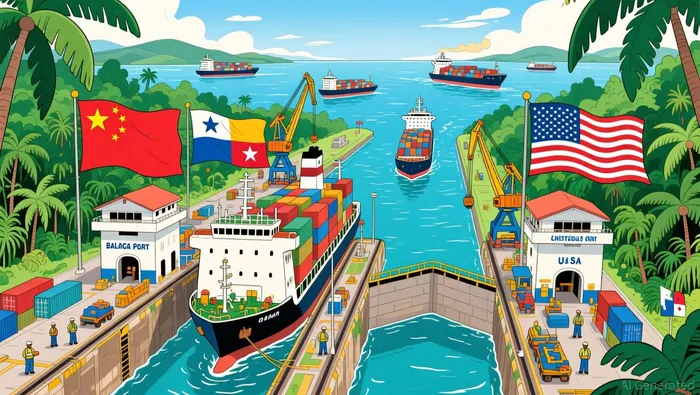
Investors and global players are closely watching the fallout. The potential for a legal challenge by CK Hutchison and the involvement of Chinese state-backed Cosco Shipping have turned this from a domestic legal issue into an international tug-of-war. U.S. President Donald Trump has previously expressed interest in “taking back” the Panama Canal, while China is now pushing for a controlling interest in the ports, seeing them as part of its broader infrastructure and trade strategy.
Why Is the Panama Supreme Court Ruling Critical for Port Ownership and U.S.-China Tensions?
The Supreme Court’s review centers on whether CK Hutchison’s contract with Panama is constitutional. A three-month audit led by the country’s comptroller general revealed financial irregularities, including unmet payment obligations and accounting errors that cost Panama $1.3 billion in lost revenue over the 25 years since the contract began in 1997. The contract was renewed in 2021, but the legal challenge is focused on whether that extension was justified or if it violated the terms of the original agreement.
If the court finds the contract unconstitutional, it could terminate CK Hutchison’s operations, which would derail the planned sale of the 43 ports to a consortium that includes U.S. hedge fund BlackRock and Mediterranean Shipping Company (MSC). This sale has already been stalled by China, which sees the ports as a strategic asset and has demanded that its state-owned company Cosco Shipping be granted a controlling stake and veto power in the deal. Beijing has made it clear that it will block any agreement that excludes Cosco, adding a geopolitical layer to a deal that was initially framed as a privatization and modernization effort.
How Could the Ruling Affect Global Trade, Legal Disputes, and Panama's Infrastructure Plans?
A ruling against CK Hutchison would have immediate consequences for Panama’s port operations. The government would need to ensure continuity by either recruiting a new operator or initiating a fresh bidding process for the ports. This could lead to a restructuring of the contract terms to better align with national interests and fiscal transparency goals. However, it could also open the door to legal action by CK Hutchison, which might take the case to international arbitration panels to protect its investment under existing international treaties.
Meanwhile, Panama is moving forward with its long-term infrastructure goals. The Panama Canal Authority (ACP) has unveiled plans to build two new terminals—Corozal on the Pacific and Telfers on the Atlantic—aimed at expanding the canal’s total container-handling capacity from 9.5 million to 15 million 20-foot equivalent units (TEUs) per year. These projects are expected to be awarded in late 2026, with operations set to begin in 2029. The ACP has attributed its push to expand terminal capacity in part to the uncertainty surrounding the CK Hutchison deal and the potential need for alternative operators in the region.
For investors, the Supreme Court’s decision is a pivotal moment with potential ripple effects in both legal and geopolitical spheres. The outcome could shift control of key ports and influence trade dynamics, affecting companies that rely on these gateways for logistics and shipping. As this case unfolds, the broader implications for global trade and infrastructure ownership will become increasingly clear.

Stay ahead of the market.
Get curated U.S. market news, insights and key dates delivered to your inbox.


AInvest
PRO
AInvest
PRO



Comments
No comments yet