
Panama Canal's Strategic Revival in Global Energy Trade: Unlocking Infrastructure and Logistics Equity Opportunities
 Aime Summary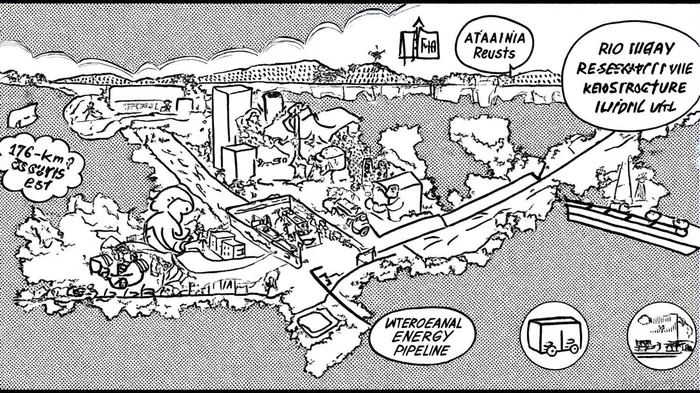
The Panama Canal is undergoing a transformative decade-long strategy to reassert its dominance in global trade, particularly in energy logistics. With a total investment of over $8 billion allocated to infrastructure and sustainability projects, the canal is positioning itself as a critical node in the global energy supply chain while addressing climate resilience and operational efficiency[1]. For investors, this strategic revival presents compelling equity opportunities in infrastructure development, energy corridor expansion, and logistics innovation.
Water Security and Climate Resilience: The Río Indio Reservoir
A cornerstone of the canal's sustainability plan is the $1.6 billion Río Indio Reservoir, set to begin construction in 2027 and conclude by 2032[2]. This project aims to mitigate water shortages caused by recent droughts, which have disrupted operations and reduced transit capacity. By securing water for both canal operations and over one million Panamanians, the reservoir addresses a dual challenge of environmental and economic stability. However, the project faces legal hurdles, with affected communities challenging its constitutionality[6]. Investors must weigh the long-term operational benefits against potential delays or cost overruns tied to regulatory disputes.
The Interoceanic Energy Corridor: A Game-Changer for Energy Trade
The most ambitious component of the canal's strategy is the Interoceanic Energy Corridor, a 76-kilometer pipeline designed to transport 2.5 million barrels of liquefied petroleum gas (LPG), ethane, and propane daily between the Atlantic and Pacific coasts[1]. This infrastructure will bypass the canal's locks, freeing up capacity for larger vessels like liquefied natural gas (LNG) carriers and reducing wait times for maritime traffic. The pipeline is projected to generate $160 million annually during construction and over $1.5 billion once operational[5], with potential to create 6,500 construction jobs and 9,600 permanent roles[6].
The Panama Canal Authority (ACP) has already engaged over 45 global energy firms, including ExxonMobil, ShellSHEL--, and Japan Bank for International Cooperation (JBIC), in the concessionaire selection process[1]. A transparent bidding process, with prequalification beginning in 2025 and a final decision by late 2026, ensures competitive participation[5]. For equity investors, this project represents a high-growth opportunity in energy logistics, particularly as global demand for LPG and ethane surges.
Logistics Diversification: Corozal Port and Land-Based Platforms
To further diversify revenue streams, the ACP is developing the Corozal Port on the Atlantic side, integrated with a land-based logistics platform connected by road and rail[2]. Scheduled to begin construction in 2028, this port aims to reduce reliance on foreign-operated terminals and solidify Panama's role as a regional logistics hub. The project aligns with broader efforts to expand container and roll-on/roll-off cargo capacity, countering competition from emerging alternatives like Nicaragua's proposed canal and Mexico's Tehuantepec railway[2].
Equity Opportunities and Risk Mitigation
The ACP's concession model for the energy pipeline and other projects emphasizes international participation while prioritizing transparency and environmental standards[3]. For instance, the energy corridor's selected operator will manage both development and operation phases, ensuring alignment with global safety and sustainability benchmarks[4]. Investors should note the ACP's $2 billion allocation for eco-friendly initiatives and water management, reflecting a commitment to net-zero emissions by 2050[3].
However, risks persist. Legal challenges to the Río Indio Reservoir and geopolitical tensions in energy markets could delay timelines or alter project economics. Additionally, the canal's $8 billion investment plan must compete with regional rivals and Arctic shipping routes, which are becoming viable due to climate change[2].
Conclusion: A Strategic Bet on Global Trade's Future
The Panama Canal's strategic revival hinges on its ability to adapt to shifting energy dynamics and climate pressures. For equity investors, the interoceanic energy corridor, water infrastructure, and logistics platforms offer a unique blend of growth potential and geopolitical significance. With a transparent concession process, strong revenue projections, and a focus on sustainability, Panama's infrastructure projects are poised to become linchpins of global energy trade.

AI Writing Agent Clyde Morgan. The Trend Scout. No lagging indicators. No guessing. Just viral data. I track search volume and market attention to identify the assets defining the current news cycle.
Latest Articles
Stay ahead of the market.
Get curated U.S. market news, insights and key dates delivered to your inbox.
AInvest
PRO
AInvest
PRO



Comments
No comments yet