
Pampa Energía S.A.’s 2026 Call: Leverage Peaks and Urea Revenue Claims Don’t Match
 Aime Summary
Date of Call: Aug 5, 2026
Guidance:
- EBITDA for 2026 is expected to be around $600 million.
- Q3 2026 EBITDA is expected to be higher than Q2, with Q4 typically weaker due to seasonality.
- 2027 EBITDA could increase by around $100 million, though it will be affected by PPA rollouts and winter demand.
- 2028 EBITDA is expected to be about $40 million lower due to PPA rollouts.
- CapEx for 2026 is around $1 billion, mainly for Rincón de Aranda.
- CapEx for 2027 is lower, around $700 million, and maintenance CapEx thereafter is around $600 million.
- Net leverage is expected to peak around 2x and vary between 1.5x and 2x over the next 2-3 years.
- Long-term gas production is expected to average around 20 million cubic meters per day, with a peak of 20-22 million.
- Rincón de Aranda production is expected to reach 28,000 barrels per day by year-end 2026 and a plateau of 45,000 barrels per day by 2027.
- Urea project financing is expected to be finalized by late 2026, with a 60/40 debt-equity structure and major contributions in 2028.
Business Commentary:
Fertilizer Business Expansion:
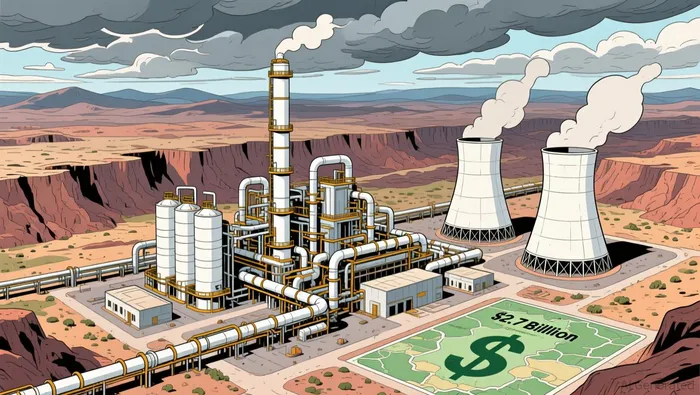
- Pampa Energía announced a $2.7 billion investment to construct Latin America’s largest urea plant, with an annual production capacity of
2.1 million tons. - The project aims to leverage the company’s shale gas reserves in Vaca Muerta, enhancing vertical integration and long-term profitability.
- The initiative is expected to contribute approximately
$1 billionannually through import substitution and increased exports.
Production and Revenue Growth:
- The adjusted
EBITDAfor Q2 2026 was$415 million, with a quarterly record production of107.5 kboeper day. - This growth was driven by the ramp-up at Rincón de Aranda and favorable gas pricing, supported by a new regulatory framework in power generation.
Power Generation Performance:
- The power generation segment reported an adjusted
EBITDAof$155 million, a39%increase year-on-year. - This improvement was due to stronger spot margins and B2B margins under the new regulatory framework, despite some operational outages.
Capital Expenditure and Financial Strategy:
- Capital expenditures for Q2 2026 were
$279 million, with significant investments in Rincón de Aranda. - The company is focused on maintaining a net leverage ratio between 1.5x and 2x, anticipating increased cash flow generation post-maturity of key projects.
Gas and Oil Segment Dynamics:
- Gas production increased by
10%year-on-year, reaching over14 million cubic metersper day. - The rise in production was driven by self-supply to power plants and higher spot margins, while oil production saw a threefold increase year-on-year due to Rincón de Aranda's performance.
Sentiment Analysis:
Overall Tone: Positive
- "Adjusted EBITDA amounted to $415 million, highlighted by a quarterly all-time high production of 107.5 kboe per day... EBITDA grew 28% quarter-on-quarter... The RIGI approval represents a significant milestone... We present the parent company figures... Free cash flow was negative $128 million in Q2, but improved year-on-year and quarter-on-quarter..." Management expressed confidence in growth projects and securing approvals.
Q&A:
- Question from Alejandro Demichelis (Jefferies): With the new expansion projects, how do you see CapEx in the next 2 to 3 years? At what level do you expect debt to leverage to peak?
Response: CapEx is around $1B in 2026, lower in 2027, then ~$600M maintenance CapEx thereafter. Net leverage should peak around 2x and vary between 1.5x and 2x over the next 2-3 years.
- Question from Guido Visosero and Santiago Herrera (Allaria): After the 23% jump in EBITDA for the first half of 2026, how do you expect evolution for second half and 2027 power generation?
Response: Q3 2026 EBITDA should jump with winter demand, Q4 weaker seasonally. 2027 EBITDA may increase by ~$100M, but will be affected by PPA rollouts. 2028 EBITDA is expected to be ~$40M lower.
- Question from Allaria: How do you expect to increase the stake of gas used for power generation, from 3% to 31% YOY?
Response: 2026 gas self-supply to power is ~40% of production. Going forward, Pampa's thermal units consume ~10M m³/day, of which 8M goes to CCGTs, representing flat consumption for self-supply.
- Question from Allaria: How do you expect petrochemical business to evolve?
Response: The petchem business contributed marginally to EBITDA this quarter due to high prices, but this is not expected to hold in the long term.
- Question from Allaria: How do you plan to finance the $3B urea project?
Response: Financing will be through project finance with limited recourse, targeting a 60/40 debt-equity ratio. Due diligence is nearing completion, with the loan expected to close in Q4 2026.
- Question from Allaria: How much revenue and EBITDA may come from the urea project?
Response: Revenue is ~$1M per year (2.1M tons/year x urea price). EBITDA is around 65% of revenue.
- Question from Allaria: What is the EBITDA impact on gas and power for the urea project?
Response: If gas production increases for urea, it could add ~$90M EBITDA to the gas segment annually. Power contribution is marginal.
- Question from Hilaria: What production ramp-up can be expected at Rincón de Aranda by year-end?
Response: Goal is to reach 28,000 BOE/day by end of Q3 2026, with production fluctuating as wells are tied in and maintained.
- Question from Bruno Montanari (Morgan Stanley): How can we think about Pampa’s long-term peak gas production?
Response: Peak gas production is expected to be between 20-22 million cubic meters per day, with an average of ~20M m³/day, selling intercompany to avoid seasonality.
- Question from Bruno Montanari (Morgan Stanley): Once we reach peak gas, how long can we sustain it and what CapEx is required?
Response: With 2P reserves, gas can be sustained for ~25 years. Annual maintenance CapEx is ~$250-$300M.
- Question from Bruno Montanari (Morgan Stanley): What is the funding strategy for the urea project?
Response: Strategy is based on monetizing gas reserves, regional urea demand, REE framework, and deploying Pampa's strong cash balance sheet.
- Question from Bruno Montanari (Morgan Stanley): What are the debt terms for the urea project?
Response: Profile likely includes a 4-year grace period and ~7-year maturity. Interest cost is still under negotiation.
- Question from Bruno Montanari (Morgan Stanley): Will oil lifting costs normalize?
Response: Lifting costs are expected to be around $10/barrel currently and drop to ~$5/barrel by Q2 2027 as production ramps and TPF efficiency improves.
- Question from Alejandro Christensen (Latin Securities): How should we think about gas lifting costs next year?
Response: Gas lifting costs are expected to remain around $0.80-$0.90 per million BTU, highly seasonal.
- Question from Alejandro Christensen (Latin Securities): When will drilling begin in the North Park of Rincón de Aranda?
Response: Comprehensive seismic studies will start in September 2026. Drilling is expected to begin in late 2027, with productivity rates lower than the current south strip.
- Question from Alejandro Christensen (Latin Securities): Which units benefit from FRA1 on Perito Moreno?
Response: The legacy Genelba CCGT will use the awarded volume consistently. Other volumes can be used seasonally for peakers or trading.
- Question from Alejandro Christensen (Latin Securities): With Plan Gas.Ar expiring, will strategy shift to transferring gas to plants?
Response: Yes, transferring Plan Gas.Ar volumes to self-supply is beneficial as it allows billing at higher pass-through prices permitted by CAMMESA.
- Question from Austin Pacheco (Maria) and Alvaro Leyva (BTG): Would you consider unwinding the oil hedge given favorable prices?
Response: No, the strategy is to keep current production hedged (until Q3 2027) and let new production be unhedged.
- Question from Juan Ignacio Lopez (Puente): What is driving the improvement in domestic gas sales, and will it persist?
Response: Improvement is due to CAMMESA's pass-through of higher LNG prices and the new deregulation (Resolution 400/2025). The dynamic is expected to evolve as procurement becomes more decentralized.
- Question from Walter Chiavesio (Santander): What is the gas production breakdown until 2030?
Response: Already discussed: peak around 20-22M m³/day, average ~20M m³/day, with flat consumption for internal Pampa needs.
- Question from Andres Cardona (Citi): Is any asset considered non-core for potential divestment?
Response: Petrochemicals are considered non-core and could be divested.
- Question from Ramiro Guerrero (Bull Market): How much of Rincón de Aranda oil is hedged through 2027 and at what price?
Response: Production is hedged for less than one year, until Q3 2027, at a weighted average price of $67 per barrel of Brent.
- Question from Ricardo Cabana (Itaú): How do you define Pampa in one sentence?
Response: Pampa Energía is an Argentine integrated energy company that invests heavily in Argentina to monetize Vaca Muerta reserves through power, urea, LNG, and other industrial segments.
- Question from Augusto Soto Baumann (Rosenthal Inversiones): Why did receivables increase significantly in Q2?
Response: Key drivers are higher gas and oil sales, improved collection efficiency (DSO improved to 54 days), and no major delays in CAMMESA payments.
- Question from Liliana Yan (HSBC): What is the update on TGS?
Response: TGS' main projects are the Iniciativa Privada (commission by next winter) and the NGL project (financing underway, awaiting RIGI approval).
- Question from Pedro Letelier: Is there a conflict between RIGI and the provincial RPIE regime for the urea project?
Response: No conflict; the regimes are complementary. Provincial approval (tax break on gross sales tax) is awaited.
Contradiction Point 1
Financing and Leverage Outlook
Contradiction on net leverage peak and trajectory over the next 2-3 years.
Alejandro Demichelis (Jefferies) - Alejandro Demichelis (Jefferies)
2026Q2: Net leverage is expected to increase to a maximum of around 2x, varying between 1.5x and 2x over the next 2–3 years. - [Fito](CFO)
Given the new expansion projects, what are your CapEx plans for the next 2–3 years, and at what level do you expect debt leverage to peak? - Alejandro Demichelis (Jefferies)
2026Q1: In 2–3 years, net leverage will be around 1.5x and gradually decline to zero as EBITDA grows from Rincón de Aranda ramp-up. - [Vito](Financial Executive)
Contradiction Point 2
Urea Project Financials
Contradiction on the expected annual revenue for the urea project at capacity.
What were Allaria's earnings for the quarter? - Allaria
2026Q2: Revenues will be ~$1 billion annually (2.1 million tons/year × urea price of ~$450/ton). - [Fito](CFO)
What are the revenue and EBITDA contributions from the urea project, and how do they impact gas and power? - Santiago Herrera (Allaria)
2026Q1: At capacity (2 million tons/year), sales could reach ~$1 billion historically, or nearly double at current prices due to Middle East disruptions. - [Gustavo Mariani](CEO)
Contradiction Point 3
2026 Capital Expenditure (CapEx) Forecast
Contradiction in the projected level of capital expenditure for 2026.
What were the key takeaways from Alejandro Demichelis's question at Jefferies during the earnings call? - Alejandro Demichelis (Jefferies)
2026Q2: CapEx will be around $1 billion in 2026 and slightly lower in 2027... - [Fito](CFO)
Given the new expansion projects, what are your expectations for CapEx over the next 2–3 years and at what level do you anticipate debt leverage to peak? - Juan Ignacio Lopez (Puente)
2025Q4: - Total 2026 CapEx is around $1.1 billion (approx. $1 billion for E&P, less than $100 million for Power, which is mainly maintenance). - [Gustavo Mariani](CEO)
Contradiction Point 4
Power Generation EBITDA Growth Outlook
Contradiction in the expected performance and growth trajectory of the Power Generation segment.
What role do Guido Visosero and Santiago Herrera play in Allaria's strategy? - Guido Visosero & Santiago Herrera (Allaria)
2026Q2: In 2027, EBITDA could increase as new long-term PPAs roll out... However, it will decline in 2028 as some PPAs expire. - [Fito](CFO)
Given the 23% EBITDA increase in H1 2026, what are your expectations for second-half 2026 and 2027 power generation? - Alejandro Christensen (Latin Securities)
2025Q4: - The Power Generation segment's EBITDA is projected to increase by 10-15% in 2026. - [Gustavo Mariani](CEO)
Contradiction Point 5
Gas Production Peak and Strategy
Contradiction regarding the peak level of gas production and related strategy.
Bruno Montanari (Morgan Stanley) - Bruno Montanari (Morgan Stanley)
2026Q2: The long-term peak gas production is estimated at between 20 and 22 million m³/day (average ~20 million)... - [Fito](CFO)
How should Pampa’s long-term peak gas production be assessed in light of internal use (power, urea) and exports? - Alejandro Demichelis (Jefferies)
2025Q4: - Natural gas production is expected to peak at ~18 million cubic meters per day during winter... - [Horacio Jorge Tomas Turri](Executive Director of Exploration & Production)

Discover what executives don't want to reveal in conference calls
Latest Articles
Stay ahead of the market.
Get curated U.S. market news, insights and key dates delivered to your inbox.


AInvest
PRO
AInvest
PRO




Comments
No comments yet