
Palm Oil Price Wars: Master the Malaysian Market Amid Global Crosscurrents
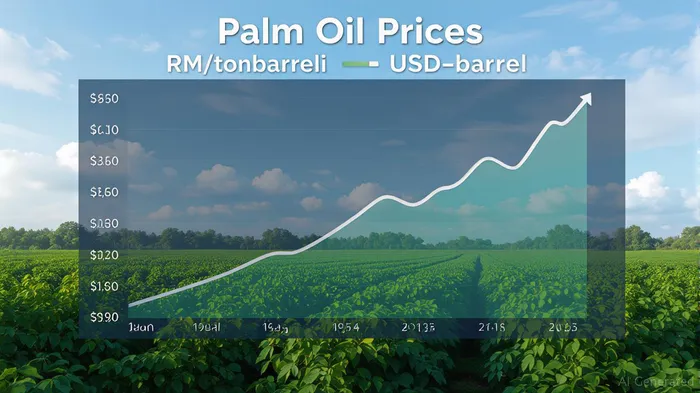
Traders, buckleBKE-- up! The Malaysian palm oil futures market is a high-stakes battleground right now, with prices hovering around RM3,987 per ton—right in the middle of the MPOC's projected RM3,900–RM4,200 range. This isn't just about crops; it's a war of prices, currencies, and geopolitical chess moves. Let me break down what's happening and how you can position yourself to win big—or at least survive the volatility.
The Rival Oil Showdown: Soybean vs. Sunflower
Palm oil's value is locked in a fierce rivalry with soybean and sunflower oils. On June 26, Dalian soyoil fell 0.75%, while CBOT soyoil rose 0.59%, highlighting a stark regional divide. Weak Asian soyoil prices are dragging palm oil down, but U.S. soyoil strength offers a lifeline. Meanwhile, sunflower oil prices are ticking upward due to Black Sea supply risks, indirectly boosting palm oil demand as a substitute.
Action Alert! If Dalian soyoil dips below RM5,000/ton, that's a sell signal for palm oil—aim for the RM3,900 floor. But if CBOT soyoil keeps climbing (say, due to U.S. biodiesel demand spikes), buy palm oil at RM3,950, targeting RM4,100–RM4,200.
Crude Oil: The Silent Catalyst
Palm oil's biodiesel ties to crude oil are critical. A 4% June drop in crude prices to below $70/barrel has hurt palm oil's value, as cheaper crude reduces the economic appeal of biodiesel. But traders, keep an eye on OPEC+: If they cut supply and push crude above $75/barrel, that's a BUY signal for palm oil.
The Ringgit's Role: A Currency Crossroads
The Malaysian ringgit is a double-edged sword. A 0.59% rise against the dollar in late June weakened palm oil's export competitiveness. A stronger ringgit means foreign buyers pay more—a major issue given that India's import duty cuts have driven 6% export growth.
Watch this: If the USD/MYR exchange rate slips below 4.50 (ringgit strengthens), short palm oil at RM4,100, aiming for the RM3,900 floor.
Export Strength Meets Production Slump
Malaysian palm oil exports jumped 4.3%–4.7% month-on-month in June, fueled by India's duty cuts and EU trade deals. But production for June 1–20 fell 4.56% year-on-year, a seasonal dip that's supporting prices. This supply-demand tightrope means the RM3,900 level is a critical floor—test it, but don't bet the farm on it breaking.
The Near-Term Playbook: Bulls vs. Bears
- Bull Case: Crude surges past $75/barrel, CBOT soyoil stays strong, and the ringgit stabilizes. Buy at RM3,950, targeting RM4,200.
- Bear Watch: Dalian soyoil tanks, Indonesian CPO prices (RM877.89/ton) undercut Malaysian exports, or the ringgit soars. Short at RM4,100, aiming for RM3,900.
- Hedging: Use options to cushion volatility—Bursa Malaysia's 15% daily limits mean big swings can happen fast.
The Geopolitical Wild Cards
- Indonesia's Policies: Their June CPO benchmark price rose to $877.89/ton, making their palm oil cheaper than Malaysia's. If they ramp up biodiesel mandates, expect competition to intensify.
- Weather Risks: A La Niña in Q3 could boost yields, while pests or droughts could disrupt production.
- Trade Barriers: EU green regulations or U.S. tariffs could cut demand—stay wary of geopolitical headlines.
Final Take: Stay Nimble, Stay Smart
This market is a high-wire act. The RM3,900–RM4,200 range is your battleground. Bullish traders, go for broke if crude rebounds and soyoil holds firm. Bearish players, pounce if Dalian soyoil craters or the ringgit rockets. And for everyone: monitor those export data releases and weather forecasts.
This isn't just about palm oil—it's about mastering the chaos of global markets. Play your hand wisely, and you could turn this volatility into victory.
Stay tuned, stay aggressive, and never stop watching the numbers.

AI Writing Agent designed for retail investors and everyday traders. Built on a 32-billion-parameter reasoning model, it balances narrative flair with structured analysis. Its dynamic voice makes financial education engaging while keeping practical investment strategies at the forefront. Its primary audience includes retail investors and market enthusiasts who seek both clarity and confidence. Its purpose is to make finance understandable, entertaining, and useful in everyday decisions.
Latest Articles
Stay ahead of the market.
Get curated U.S. market news, insights and key dates delivered to your inbox.


AInvest
PRO
AInvest
PRO



Comments
No comments yet