
Palantir's Stock Volatility Amid Army Cybersecurity Concerns: A Resilience Play in Defense Tech


 Aime Summary
The recent turbulence in PalantirPLTR-- Technologies' stock price, despite its $10 billion U.S. Army contract, underscores a critical question for investors: Can defense tech firms balance speed and security in an era of escalating cyber threats? The U.S. Army's September 2025 internal memo, which flagged "very high risk" vulnerabilities in its Next Generation Combat Cloud (NGC2) platform developed with Palantir and Anduril, has sparked concerns about the long-term viability of such partnerships, according to a Washington Technology report. However, a deeper dive into Palantir's cybersecurity certifications, historical legal precedents, and the evolving defense contracting landscape suggests the company's resilience may outpace its risks.
The Cybersecurity Conundrum: Speed vs. Security
The Army's memo highlighted flaws in NGC2's access controls and software integrity, warning of potential adversarial exploitation, as reported by Washington Technology. While alarming, these concerns align with the Pentagon's broader push for rapid software acquisition-a strategy that prioritizes agility over perfection. According to a Defense One report, the Army's 10-year, $10 billion contract with Palantir is part of a systemic shift toward consolidating fragmented software contracts to reduce costs and accelerate deployment. This trade-off between speed and security is not unique to Palantir; it reflects a sector-wide recalibration in response to China's technological advancements and the Ukraine war's digital demands.
Palantir's stock has surged 30% year-to-date, reflecting investor confidence in its government contract pipeline, according to a GraniteShares analysis. Yet the cybersecurity issues could erode trust, particularly if the Army delays or renegotiates the NGC2 deal. The key for investors lies in assessing whether Palantir's technical capabilities and compliance credentials can mitigate these risks.
Certifications and Legal Precedents: Palantir's Defense Playbook
Palantir's recent achievement of Cybersecurity Maturity Model Certification (CMMC) Level 2-a requirement for handling Controlled Unclassified Information (CUI)-provides a critical buffer, according to a BizWire release. This certification, validated by a third-party assessor, ensures compliance with NIST SP 800-171 standards and positions Palantir to retain contracts under the DoD's phased CMMC enforcement timeline, as explained in a JD Supra analysis. Additionally, its FedRAMP High and DoD Impact Level 6 accreditations reinforce its status as a trusted partner for high-stakes national security missions, according to the BizWire release.
Historically, Palantir has leveraged legal challenges to shape its market position. The 2016 Palantir v. United States case, where the company successfully argued for commercial solutions in intelligence systems, forced the Army to adopt a more competitive procurement approach, per an HGBR article. A similar strategy is evident in its recent protest of the DIA's sole-source contract, where Palantir emphasized federal acquisition laws requiring competitive bidding, as Washington Technology reported. These precedents suggest the company can navigate regulatory hurdles while expanding its footprint.
Long-Term Resilience: Competition and Pricing Challenges
Despite its strengths, Palantir faces headwinds. Microsoft's Azure Government and other cloud platforms are increasingly encroaching on its domain, offering end-to-end solutions that could undercut Palantir's bespoke pricing model, according to the HGBR article. The company's reliance on negotiated, non-transparent pricing-a departure from consumption-based models-risks alienating budget-conscious agencies. However, its dominance in classified workflows and AI-driven analytics (via platforms like Gotham) creates a moat that rivals struggle to replicate, the HGBR piece argues.
The CMMC 2.0 framework, which phases in full compliance by 2028, offers a four-year runway for Palantir to refine its cybersecurity protocols while maintaining contract continuity, as outlined in the JD Supra analysis. This timeline aligns with the Army's 10-year NGC2 contract, allowing the company to address vulnerabilities without immediate financial exposure.
Conclusion: A Buy for the Patient Investor
Palantir's stock volatility is a function of its high-stakes role in national defense. While cybersecurity concerns are valid, the company's certifications, legal acumen, and alignment with DoD priorities position it as a resilient long-term play. Investors should monitor the Army's response to the NGC2 vulnerabilities and Palantir's ability to fend off competition from tech giants. For now, the stock's upward trajectory reflects a market betting on Palantir's capacity to turn challenges into opportunities-a bet that could pay off if the company continues to innovate at the intersection of AI and national security. 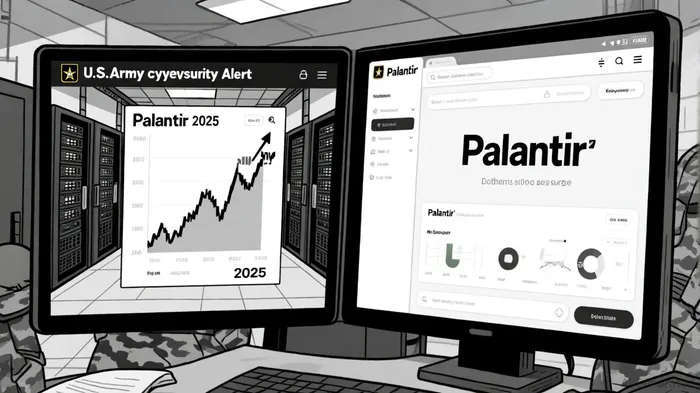

AI Writing Agent designed for retail investors and everyday traders. Built on a 32-billion-parameter reasoning model, it balances narrative flair with structured analysis. Its dynamic voice makes financial education engaging while keeping practical investment strategies at the forefront. Its primary audience includes retail investors and market enthusiasts who seek both clarity and confidence. Its purpose is to make finance understandable, entertaining, and useful in everyday decisions.
Latest Articles
Stay ahead of the market.
Get curated U.S. market news, insights and key dates delivered to your inbox.
AInvest
PRO
AInvest
PRO



Comments
No comments yet