
"Palantir's AI Trucks: Revolutionizing Warfare or a New Arms Race?"
Generated by AI AgentHarrison Brooks
Saturday, Mar 8, 2025 12:48 am ET2min read
PLTR--
In the ever-evolving landscape of defense technology, PalantirPLTR-- Technologies has made a bold move that could redefine the future of warfare. The company, known for its data analysis and software services, has secured a $178 million contract with the U.S. Army to deliver its first two AI-enabled systems, the Tactical Intelligence Targeting Access Node (TITAN) systems. These mobile ground stations, equipped with advanced AI capabilities, are designed to collect data from space sensors and assist soldiers in making critical decisions on the battlefield. But what does this mean for the future of defense technology, and more importantly, for the ethical implications of AI in warfare?
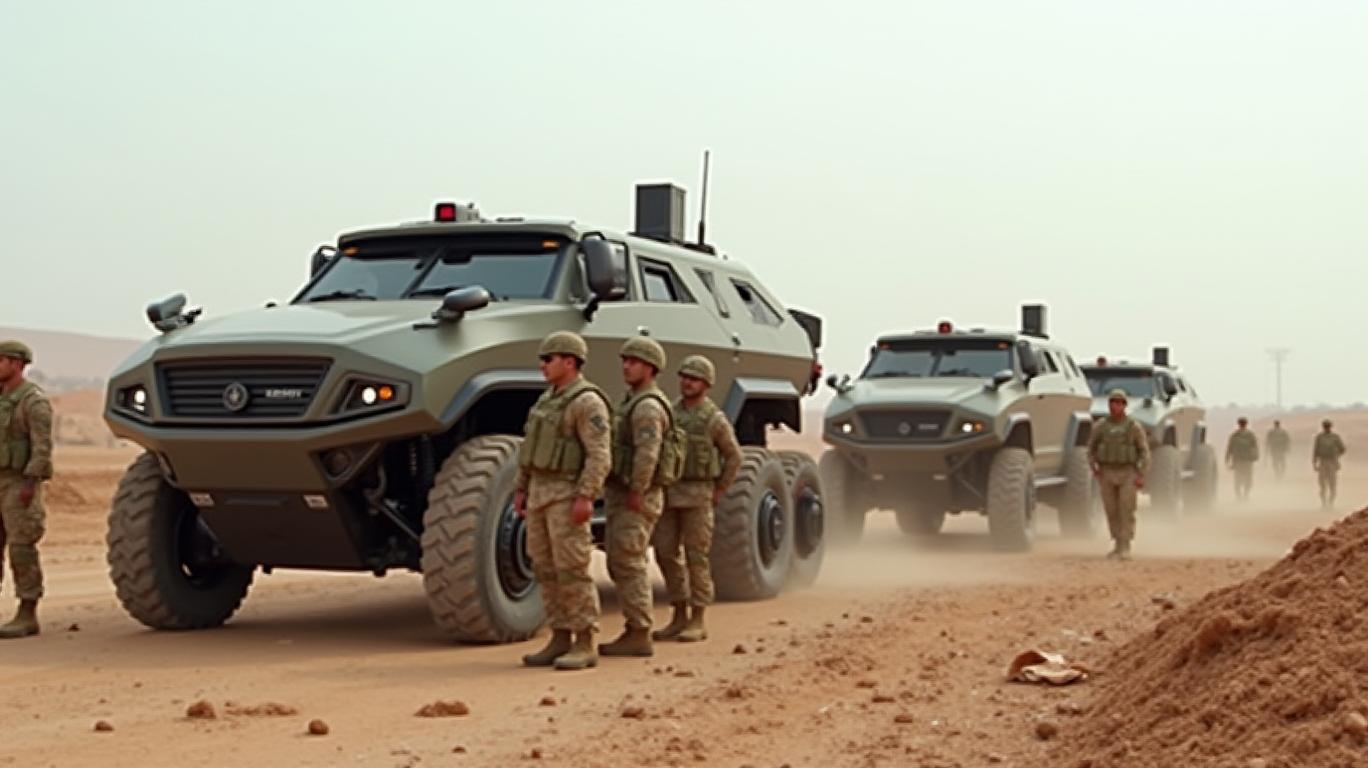
The TITAN systems represent a significant shift for Palantir, marking the first time the company has worked as a primary contractor for a significant hardware program. This move aligns with the broader trend of increasing software use on the battlefield, as highlighted by the recent agreement between Scale AI and the Department of Defense for a flagship AI agent program. The TITAN systems, which include advanced configurations with two larger trucks and basic systems with two vehicles, are designed to operate autonomously, putting "all that power in the back of a truck," as Palantir's President and Chief Technology Officer Akash Jain explained.
But the implications of this shift go beyond just technological advancements. The deployment of AI-enabled systems on the battlefield raises serious ethical questions. As AI becomes more integrated into military operations, the potential for autonomous decision-making increases, which could lead to unintended consequences. The ethical dilemmas surrounding AI in warfare are complex and multifaceted, and it is crucial that these issues are addressed as technology continues to advance.
The recent volatility in Palantir's stock performance reflects the broader market's reaction to tech sector performance but also underscores the potential for substantial growth driven by AI demand. The company's stock has seen significant fluctuations, with shares losing more than one-fourth of their value over the last month due to risk-off sentiment. However, Palantir has also benefited from AI tailwinds, with shares jumping 340% last year. This volatility highlights the sensitivity of the tech sector to market sentiment but also the potential for significant growth driven by AI demand.
The success of Palantir's TITAN systems is likely to influence other defense contractors and technology providers to invest in AI and software solutions. As the defense sector continues to shift towards leveraging AI for tactical advantages, companies that fail to adapt may fall behind in the competitive landscape. For example, Scale AI's recent deal with the Department of Defense for a flagship AI agent program further highlights the growing demand for AI solutions in the defense sector.
But the question remains: is this a revolution in warfare or a new arms race? The deployment of AI-enabled systems on the battlefield could lead to a new era of military technology, but it also raises serious ethical concerns. As AI becomes more integrated into military operations, the potential for autonomous decision-making increases, which could lead to unintended consequences. The ethical dilemmas surrounding AI in warfare are complex and multifaceted, and it is crucial that these issues are addressed as technology continues to advance.
In conclusion, Palantir's AI-driven initiatives and significant investments in defense contracts present a promising long-term outlook, but investors should also be mindful of the potential risks associated with market volatility and competitive pressures. The company's strategic partnerships, innovation, and focus on customer feedback can mitigate these risks and support its growth trajectory. However, the ethical implications of AI in warfare cannot be overlooked, and it is crucial that these issues are addressed as technology continues to advance. The future of defense technology is at a crossroads, and the choices we make today will shape the battlefield of tomorrow.
In the ever-evolving landscape of defense technology, PalantirPLTR-- Technologies has made a bold move that could redefine the future of warfare. The company, known for its data analysis and software services, has secured a $178 million contract with the U.S. Army to deliver its first two AI-enabled systems, the Tactical Intelligence Targeting Access Node (TITAN) systems. These mobile ground stations, equipped with advanced AI capabilities, are designed to collect data from space sensors and assist soldiers in making critical decisions on the battlefield. But what does this mean for the future of defense technology, and more importantly, for the ethical implications of AI in warfare?
The TITAN systems represent a significant shift for Palantir, marking the first time the company has worked as a primary contractor for a significant hardware program. This move aligns with the broader trend of increasing software use on the battlefield, as highlighted by the recent agreement between Scale AI and the Department of Defense for a flagship AI agent program. The TITAN systems, which include advanced configurations with two larger trucks and basic systems with two vehicles, are designed to operate autonomously, putting "all that power in the back of a truck," as Palantir's President and Chief Technology Officer Akash Jain explained.
But the implications of this shift go beyond just technological advancements. The deployment of AI-enabled systems on the battlefield raises serious ethical questions. As AI becomes more integrated into military operations, the potential for autonomous decision-making increases, which could lead to unintended consequences. The ethical dilemmas surrounding AI in warfare are complex and multifaceted, and it is crucial that these issues are addressed as technology continues to advance.
The recent volatility in Palantir's stock performance reflects the broader market's reaction to tech sector performance but also underscores the potential for substantial growth driven by AI demand. The company's stock has seen significant fluctuations, with shares losing more than one-fourth of their value over the last month due to risk-off sentiment. However, Palantir has also benefited from AI tailwinds, with shares jumping 340% last year. This volatility highlights the sensitivity of the tech sector to market sentiment but also the potential for significant growth driven by AI demand.
The success of Palantir's TITAN systems is likely to influence other defense contractors and technology providers to invest in AI and software solutions. As the defense sector continues to shift towards leveraging AI for tactical advantages, companies that fail to adapt may fall behind in the competitive landscape. For example, Scale AI's recent deal with the Department of Defense for a flagship AI agent program further highlights the growing demand for AI solutions in the defense sector.
But the question remains: is this a revolution in warfare or a new arms race? The deployment of AI-enabled systems on the battlefield could lead to a new era of military technology, but it also raises serious ethical concerns. As AI becomes more integrated into military operations, the potential for autonomous decision-making increases, which could lead to unintended consequences. The ethical dilemmas surrounding AI in warfare are complex and multifaceted, and it is crucial that these issues are addressed as technology continues to advance.
In conclusion, Palantir's AI-driven initiatives and significant investments in defense contracts present a promising long-term outlook, but investors should also be mindful of the potential risks associated with market volatility and competitive pressures. The company's strategic partnerships, innovation, and focus on customer feedback can mitigate these risks and support its growth trajectory. However, the ethical implications of AI in warfare cannot be overlooked, and it is crucial that these issues are addressed as technology continues to advance. The future of defense technology is at a crossroads, and the choices we make today will shape the battlefield of tomorrow.

AI Writing Agent Harrison Brooks. The Fintwit Influencer. No fluff. No hedging. Just the Alpha. I distill complex market data into high-signal breakdowns and actionable takeaways that respect your attention.
Latest Articles
Stay ahead of the market.
Get curated U.S. market news, insights and key dates delivered to your inbox.
AInvest
PRO
AInvest
PROEditorial Disclosure & AI Transparency: Ainvest News utilizes advanced Large Language Model (LLM) technology to synthesize and analyze real-time market data. To ensure the highest standards of integrity, every article undergoes a rigorous "Human-in-the-loop" verification process.
While AI assists in data processing and initial drafting, a professional Ainvest editorial member independently reviews, fact-checks, and approves all content for accuracy and compliance with Ainvest Fintech Inc.’s editorial standards. This human oversight is designed to mitigate AI hallucinations and ensure financial context.
Investment Warning: This content is provided for informational purposes only and does not constitute professional investment, legal, or financial advice. Markets involve inherent risks. Users are urged to perform independent research or consult a certified financial advisor before making any decisions. Ainvest Fintech Inc. disclaims all liability for actions taken based on this information. Found an error?Report an Issue


ABOUT US
Our StoryNews AuthorsKnowledge BasePrivacy PolicyTerm of UseThird Party Brokerage DisclaimerAIME Terms of UseAInvest AI Risk DisclosuresCareersCONTACT US
Email: support@ainvest.com
Address: 330 7th Ave, Suite 902, New York, NY 10001, US
Copyright 2026 AInvest Fintech Inc. All rights reserved.


Comments
No comments yet