
Palantir's 1.62% Daily Gains Amid 15th-Ranked U.S. Volume Can't Offset 16% Monthly Drop as AI Sell-Off and CEO-Burry Feud Intensify
 Aime Summary
Market Snapshot
On November 28, 2025, , . stocks. Despite the significant drop in volume, . However, .
Key Drivers
The selloff in Palantir’s stock during November reflects a confluence of macroeconomic, sector-specific, and company-specific factors. First, the AI sector faced widespread skepticism as investors grew wary of high valuations amid slowing demand growth. Analysts from Jefferies, RBC Capital Markets, and Deutsche Bank highlighted that Palantir’s valuation was “extreme,” “increasingly concentrated,” and “very difficult to wrap our heads around,” respectively. These critiques underscored broader market anxieties about the sustainability of AI-driven growth stories, particularly as companies like PalantirPLTR-- rely on niche government and enterprise contracts rather than scalable consumer-facing platforms.
Second, the public dispute between Palantir CEO and investor Michael Burry intensified investor uncertainty. Burry, known for his 2008 housing crisis short, doubled down on his bearish stance, betting against Palantir and AI chipmaker Nvidia. Karp responded aggressively on CNBC, accusing Burry of “market manipulation” and dismissing his short as “egregious.” While Karp’s vocal defense of the company aimed to stabilize sentiment, the conflict likely amplified short-term volatility, as investors weighed the credibility of both parties.
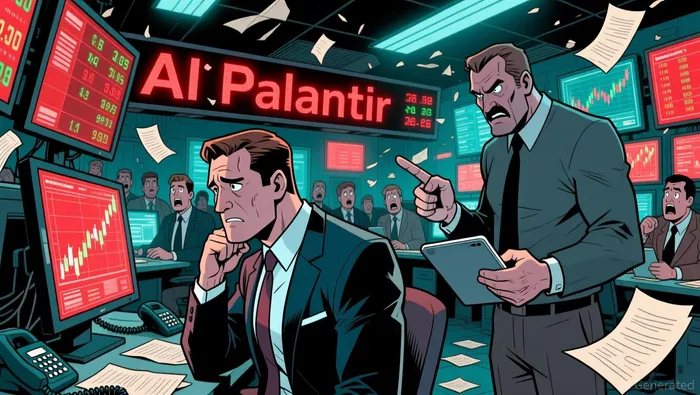
Third, Palantir’s earnings report, though technically strong, failed to alleviate concerns. , yet the post-earnings selloff persisted. Analysts attributed this to the broader narrative that Palantir’s growth is becoming “concentrated,” with revenue increasingly dependent on a narrow set of high-margin contracts. This concentration, combined with the absence of a clear path to widespread commercial adoption of its AI tools, left investors uneasy about long-term scalability.
Finally, Palantir’s recent deal wins, including a multiyear contract with PwC to accelerate AI adoption in the U.K., provided a temporary counterpoint to the negativity. However, these developments were overshadowed by the larger narrative of sector-wide caution. The company’s ability to secure such contracts demonstrates its competitive edge in specialized markets, but they also highlight the challenge of translating niche expertise into broader market appeal.
The interplay of these factors—sector-wide valuation skepticism, high-profile bearish bets, earnings-driven optimism, and strategic deal activity—paints a complex picture for Palantir. , the broader technical and fundamental headwinds remain unresolved. Investors will likely continue to monitor Palantir’s ability to diversify its revenue streams, defend its valuation thesis, and navigate the volatile AI landscape.

Stay ahead of the market.
Get curated U.S. market news, insights and key dates delivered to your inbox.
AInvest
PRO
AInvest
PRO



Comments
No comments yet