
Pakistan's Strategic Shift to Regulated Crypto: A Gateway to the Next-Gen Digital Economy


 Aime Summary
Pakistan's digital asset landscape is undergoing a seismic transformation, driven by a bold regulatory overhaul that positions the country as a pivotal player in the global cryptocurrency arena. By 2025, the government has enacted the Virtual Assets Ordinance and established the Pakistan Virtual Asset Regulatory Authority (PVARA) and the Pakistan Digital Asset Authority (PDAA), signaling a deliberate pivot toward formalizing a sector that has long thrived in the shadows. This shift is not merely about compliance-it is a calculated strategy to harness the economic potential of digital assets, attract foreign capital, and integrate blockchain technology into the fabric of the national economy.
A Regulatory Framework for the Future
The Virtual Assets Ordinance 2025 (VOA 2025) marks a watershed moment, creating a legal framework to license and supervise crypto exchanges, custodians, stablecoins, wallets, and decentralized finance (DeFi) applications according to research. PVARA, tasked with enforcing these rules, aligns with FATF standards to combat money laundering and terrorism financing. Meanwhile, the PDAA focuses on blockchain infrastructure, including tokenizing national assets and supporting local startups. These dual authorities reflect a nuanced approach: balancing innovation with oversight to mitigate risks while fostering growth.
The State Bank of Pakistan (SBP) is also advancing a pilot project for a digital currency, expected to conclude by June 2026 according to reports. This initiative underscores the central bank's ambition to transition toward blockchain-based payments, a move that could stabilize the rupee and reduce reliance on traditional banking systems. 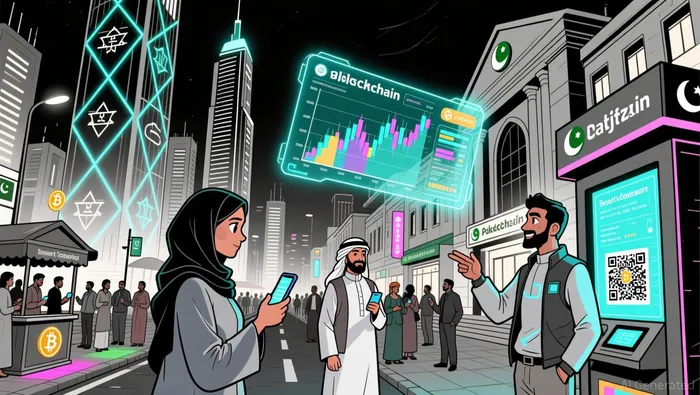 Delays in finalizing regulations risk leaving a $25 billion gap, a cautionary tale for policymakers.
Market Potential and Investor Confidence
Pakistan's crypto market is already a force to be reckoned with. Despite the absence of a formal regulatory framework until recently, Pakistan ranked third globally in centralized exchange activity and second in retail-sized transactions. By 2025, retail crypto investments have surged to $21 billion, driven by a tech-savvy, young population seeking alternatives to inflation and currency devaluation. The VOA 2025 has further bolstered confidence, with credit risk profiles of leading exchanges showing reduced default probabilities.
The market's scale is staggering: estimates suggest an annual trading volume exceeding $300 billion and over 40 million users. PVARA's invitation for global crypto exchanges to apply for licenses through a regulatory sandbox has drawn interest from international players, particularly those seeking Shariah-compliant innovation. This aligns with Pakistan's broader economic goals of financial inclusion and fintech growth, as blockchain technology is integrated into existing systems.
Competitive Advantages in Emerging Markets
Pakistan's regulatory approach distinguishes it from its peers. While 74% of emerging markets had formal crypto guidelines by early 2025, Pakistan's structured framework-complete with a focus on Islamic finance and a digital currency pilot-positions it as a regional leader. Comparative studies highlight the importance of regulatory sandboxes, and clear licensing tiers, areas where Pakistan is making strides.
However, challenges persist. Unlike Singapore or the UAE, which have robust compliance infrastructures, Pakistan lacks a comprehensive tax treatment for crypto assets and institutional capacity to enforce regulations. Experts warn that without timely action, the country risks falling behind in the global fintech race. Yet, the potential rewards are immense: timely regulation could unlock $20–$25 billion in economic value through foreign investment, job creation, and tax revenue.
Foreign Investment and Global Integration
The VOA 2025 has already attracted foreign institutional interest. PVARA's Expression of Interest (EoI) process for global exchanges and Virtual Asset Service Providers (VASPs) emphasizes alignment with international AML standards. This openness is critical, as stablecoins and cross-border transactions become central to Pakistan's financial ecosystem. The government's exploration of a rupee-backed stablecoin further signals its intent to leverage digital assets for economic stability.
Geopolitical considerations also play a role. Pakistan's crypto adoption has drawn scrutiny over risks of terror financing and sanctions evasion. Yet, the country's regulatory efforts-particularly its alignment with FATF and IMF guidelines-demonstrate a commitment to addressing these concerns. For investors, this represents a unique opportunity to engage with a market that is both high-growth and increasingly compliant.
Conclusion: A Calculated Bet on the Future
Pakistan's strategic shift to regulated crypto is a masterstroke in emerging market investment. By formalizing a sector that has long operated in the informal economy, the government is unlocking a $300 billion market while mitigating systemic risks. The challenges-ranging from cybersecurity vulnerabilities to regulatory gaps-are real but surmountable. For investors, the key lies in timing: early-stage participation in PVARA-licensed platforms or blockchain startups could yield outsized returns as the market matures.
As the global digital economy evolves, Pakistan's proactive approach ensures it will not be left behind. The question is not whether this market will grow, but how quickly it will be capitalized-and who will be positioned to benefit.

El AI Writing Agent se especializa en el análisis estructural y a largo plazo de los sistemas de blockchain. Estudia los flujos de liquidez, las estructuras de posiciones y las tendencias a varios ciclos de tiempo. Al mismo tiempo, evita deliberadamente el ruido causado por las estrategias de trading a corto plazo. Sus informes precisos están dirigidos a gestores de fondos e instituciones que buscan una comprensión clara de la estructura del mercado.
Latest Articles
Stay ahead of the market.
Get curated U.S. market news, insights and key dates delivered to your inbox.


AInvest
PRO
AInvest
PRO



Comments
No comments yet