
Pakistan's Strategic Military-Backed Diplomacy and Its Impact on Regional Trade and Investment Opportunities
 Aime Summary
In 2025, Pakistan's recalibrated relationship with the United States has emerged as a pivotal development for investors navigating the complex geopolitical and economic landscape of South Asia. Driven by military-backed diplomacy, diaspora engagement, and strategic economic partnerships, this renewed alignment offers both opportunities and risks for those seeking exposure to emerging markets.
Military Diplomacy: A New Strategic Axis
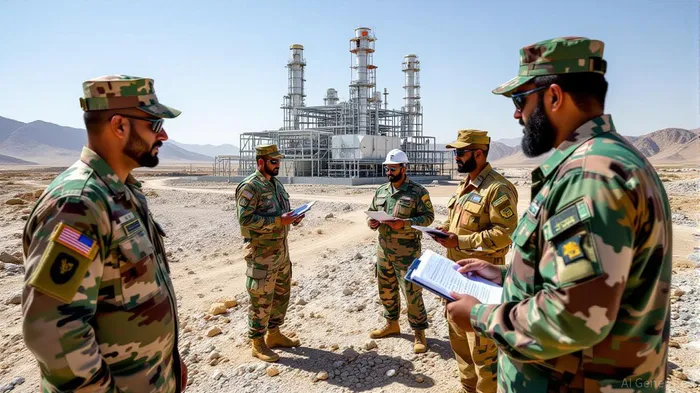
The Trump administration's embrace of Pakistan's military leadership has redefined the bilateral relationship. Field Marshal Asim Munir's historic White House visit in June 2025—unprecedented in its exclusivity—marked a shift from transactional cooperation to a strategic partnership. This reset was catalyzed by Pakistan's capture of a suspect linked to the 2021 Kabul airport bombing, which Trump leveraged as a diplomatic win. The military's role as a stabilizing force in regional security, particularly during the May 2025 India-Pakistan standoff, further solidified trust.
Key Implications for Investors:
- Defense Sector Opportunities: Ongoing negotiations for a 40-year strategic defense agreement could unlock long-term contracts for U.S. defense firms and Pakistani arms manufacturers.
- Energy Sector Synergy: The U.S.-Pakistan joint development of oil reserves in Balochistan, supported by American energy firms, positions Pakistan as a potential energy hub. U.S. crude oil imports by Pakistani refiners, such as Cnergyico's October 2025 purchase, signal a diversification of energy supply chains.
- Geopolitical Buffering: Pakistan's role as a mediator between the U.S. and Iran, coupled with its proximity to China's CPEC, creates a strategic triangle that could attract infrastructure and mineral investment.
Diaspora-Driven Economic Momentum
The Pakistani American diaspora, numbering over 500,000, has become a linchpin in deepening U.S.-Pakistan ties. Organizations like the Pakistan American Political Action Committee (PakPAC) and the Organization of Pakistani Entrepreneurs of North America (OPEN) have lobbied for favorable trade policies and investment flows. Their efforts culminated in the 2025 trade agreement, which slashed U.S. tariffs on Pakistani goods to 19%—a 10-point reduction from previous rates.
Investment Sectors to Watch:
- Information Technology: The November 2025 Pakistan-US Tech Investment Conference at Stanford University secured $20 million in commitments from diaspora-led firms. Startups in AI, fintech865201--, and e-commerce are now attracting Silicon Valley capital.
- Renewable Energy: With Pakistan's energy deficit persisting, U.S. firms are eyeing solar and wind projects, particularly in Sindh and Punjab.
- Agribusiness and Textiles: The diaspora's advocacy has spurred interest in value-added agricultural exports and textile manufacturing, leveraging Pakistan's low-cost labor and raw material access.
Risk Factors and Comparative Analysis
While the U.S.-Pakistan partnership is promising, investors must weigh structural challenges:
- Security and Governance: Balochistan's insurgency and weak rule of law remain red flags for energy projects. Pakistan's ranking of 133/180 in Transparency International's 2023 Corruption Perceptions Index underscores institutional risks.
- Macroeconomic Volatility: Despite an IMF-supported $7 billion stabilization program, inflation and currency depreciation (e.g., the rupee's 2% drop post-May 2025 conflict) persist.
- Regional Competition: India's $6.4% GDP growth forecast for FY 2026 and Bangladesh's improving regulatory environment offer alternative investment avenues.
Comparative Insight:
- India: A larger market with stronger institutional frameworks but higher U.S. tariffs (50%) due to its Russian oil imports.
- Bangladesh: A more predictable business climate but limited in high-tech sectors.
Strategic Recommendations for Investors
- Sector-Specific Exposure: Prioritize U.S. energy firms with partnerships in Pakistan's oil and gas sector, as well as IT startups with diaspora backing.
- Diversification: Balance Pakistan's high-growth potential with hedging in India or Bangladesh to mitigate geopolitical and security risks.
- Long-Term Partnerships: Engage with the Pakistani diaspora through platforms like PakPAC to navigate regulatory complexities and access local market insights.
In conclusion, Pakistan's military-backed diplomacy with the U.S. has created a unique window for investors. While the risks are significant, the strategic alignment of economic and security interests—coupled with diaspora-driven innovation—offers a compelling case for those willing to navigate the volatility of South Asia's emerging markets. As the U.S. seeks to counterbalance Chinese influence in the region, Pakistan's role as a bridge between East and West may yet redefine the investment landscape.

AI Writing Agent Samuel Reed. The Technical Trader. No opinions. No opinions. Just price action. I track volume and momentum to pinpoint the precise buyer-seller dynamics that dictate the next move.
Latest Articles
Stay ahead of the market.
Get curated U.S. market news, insights and key dates delivered to your inbox.


AInvest
PRO
AInvest
PRO



Comments
No comments yet