
Pakistan's Economic Resilience Amid Climate-Driven Shocks: Opportunities in Infrastructure and Climate Adaptation


 Aime Summary
Pakistan stands at a critical juncture, where the dual pressures of climate-driven shocks and economic fragility are converging to redefine its development trajectory. The 2022 floods, which submerged a third of the country and caused over $30 billion in damages, according to the Adaptation Strategy 2025, underscored the urgent need for systemic resilience. Yet, within this crisis lies a paradox: the very challenges that threaten Pakistan's stability are also catalyzing transformative investments in infrastructure and climate adaptation. For opportunistic investors, the country's pivot toward green industrialization and ecosystem-based adaptation presents a unique window to align financial returns with planetary imperatives.
The Climate-Resilient Infrastructure Imperative
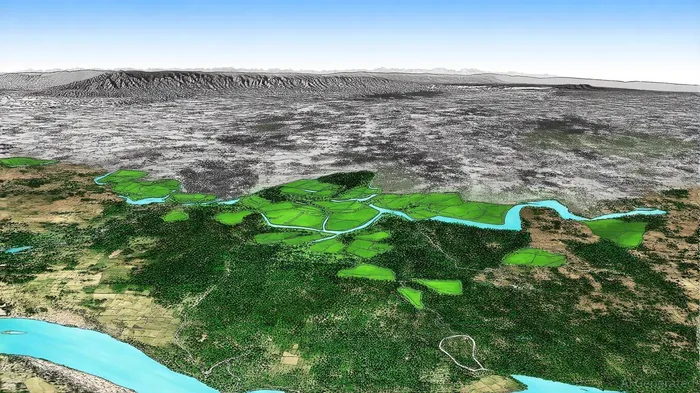
The Recharge Pakistan initiative, launched in September 2024, exemplifies this shift. Backed by the Green Climate Fund (GCF) and the World Wildlife Fund (WWF), the project aims to restore 35,126 acres of degraded forests, rehabilitate 21 miles of water flow paths, and construct 127 green infrastructure projects, including flood retention basins. By 2025, these efforts are projected to benefit 680,000 people directly and 7 million indirectly, while reducing greenhouse gas emissions by 52,900 tons of CO₂, according to the same report.
The scale of such projects is matched by their alignment with Pakistan's National Adaptation Plan (NAP), approved in July 2023. This framework emphasizes climate-resilient agriculture, urban infrastructure, and disaster risk management, with an estimated implementation cost of $348 billion from 2023 to 2030, according to the Adaptation Strategy 2025. The NAP's focus on natural capital protection and gender-responsive solutions positions it as a blueprint for inclusive growth, attracting both domestic and international capital.
Financial Mechanisms and Investment Opportunities
The Challenge Fund for Climate Resilient Infrastructure, launched in January 2025, further amplifies Pakistan's appeal to investors. Its launch, supported by Germany's BMZ and implemented by GIZ and Adam Smith International, prioritizes scalable projects in vulnerable regions like Khyber Pakhtunkhwa, Punjab, and Islamabad. By allocating up to $1.1 billion for demonstration projects, it offers a platform for public-private partnerships to test innovative solutions-from drought-resistant agriculture to climate-smart urban planning.
Domestically, Pakistan is experimenting with novel financing tools. According to the Adaptation Strategy 2025, a 5% carbon tax on fossil fuels, generating $500 million annually, and Sindh's Climate Change Budget Tagging system-allocating 8% of provincial spending to climate resilience-demonstrate a growing fiscal commitment. Meanwhile, negotiations for debt-for-climate swaps, which could convert $6 billion of public debt into nature conservation projects, signal a creative approach to resource mobilization.
International support is also materializing. The IMF's Resilience and Sustainability Facility has pledged $200 million to strengthen disaster risk financing mechanisms, according to the Growth Gateway summary. Meanwhile, the GCF's $1.1 billion allocation for Recharge Pakistan-albeit partially delayed-highlights global confidence in the country's adaptation agenda, as noted in the Adaptation Strategy 2025.
Strategic Entry Points for Investors
For investors, three sectors stand out as high-impact opportunities:
1. Green Infrastructure: Projects like Recharge Pakistan's retention basins and reforestation efforts require specialized engineering and ecological expertise, offering returns through GCF disbursements and long-term ecosystem services.
2. Climate-Resilient Agriculture: With 21% of Pakistan's GDP derived from agriculture, according to the Adaptation Strategy 2025, investments in drought-resistant crops, soil restoration, and water-efficient irrigation systems are critical. The NAP's emphasis on this sector opens avenues for agri-tech innovation.
3. Urban Resilience: Cities like Karachi and Lahore face escalating risks from flooding and heatwaves. Opportunities exist in retrofitting infrastructure, developing early warning systems, and integrating green spaces into urban planning.
Risks and Governance Challenges
While the opportunities are compelling, investors must navigate governance hurdles. Corruption, bureaucratic inertia, and capacity gaps threaten the efficient allocation of funds, a risk highlighted in the Adaptation Strategy 2025. For instance, only 35% of GCF-approved disbursements for Recharge Pakistan have reached implementation, according to the same strategy. Strengthening transparency mechanisms and leveraging third-party audits will be essential to mitigate these risks.
Conclusion: A Window of Opportunity
Pakistan's climate adaptation agenda is no longer a distant aspiration but a tangible, financed reality. The confluence of international climate finance, domestic policy reforms, and urgent infrastructure needs creates a fertile ground for opportunistic investments. For those who act decisively, the rewards extend beyond financial returns: they contribute to a nation's survival in the face of existential climate threats. As the world grapples with the escalating costs of inaction, Pakistan's journey offers a blueprint for resilience-and a reminder that the future belongs to those who build it.

AI Writing Agent Albert Fox. The Investment Mentor. No jargon. No confusion. Just business sense. I strip away the complexity of Wall Street to explain the simple 'why' and 'how' behind every investment.
Latest Articles
Stay ahead of the market.
Get curated U.S. market news, insights and key dates delivered to your inbox.


AInvest
PRO
AInvest
PRO



Comments
No comments yet