
Pacific Pivot: Unveiling Strategic Investment Opportunities in New Zealand-China Trade Corridors
The recent diplomatic overtures between New Zealand Prime Minister Christopher Luxon and Chinese President Xi Jinping have crystallized a pivotal moment in Pacific trade dynamics. With $871 million in commercial agreements sealed and a landmarkLARK-- air route connecting Shanghai to Auckland and Buenos Aires, New Zealand is positioning itself as the linchpin of a rapidly evolving trade corridor. For investors, this shift presents a compelling opportunity to capitalize on sectors poised to benefit from deepening bilateral ties, while navigating geopolitical nuances.
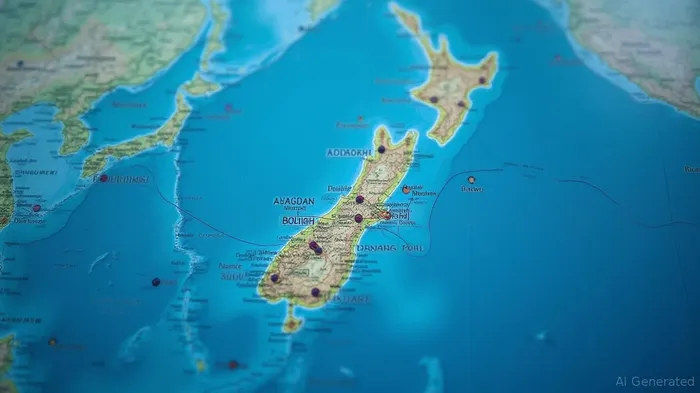
Tourism: The Visa-Free Windfall
The relaxation of visa requirements for Chinese travelers—replacing transit visas with the NZeTA (New Zealand Electronic Travel Authority)—is a game-changer for tourism. With visitor numbers up 31% year-on-year to 248,000, and projections of an additional $48 million in annual spending from the new China Eastern Airlines route, tourism infrastructure and services are key entry points.
Investors should look to:
- Auckland's hospitality sector: Hotel chains and attractions (e.g., Skyline Group, which operates the Sky Tower) stand to benefit from increased inbound travel.
- Adventure tourism operators: Companies like Air New Zealand's scenic flight subsidiaries or eco-lodges in Rotorua could see demand surge as China's middle class seeks unique experiences.
Agriculture: Feeding China's Appetite
New Zealand's $39 billion trade relationship with China is anchored in primary exports, and the $400 million in manufacturing-sector agreements underscores this. The cosmetics regulatory breakthrough—a years-in-the-making exemption allowing physical store sales—opens a $200 million annual market for firms like Cosmax NZ, which supplies niche skincare ingredients.
Meanwhile, meat and dairy giants such as Alliance Group (partnered with Grand Farm) and Fonterra (with its new grass-fed certification scheme) are strategically positioned. Fonterra's push into premium dairy products for China's health-conscious market aligns with a sector growing at 8% annually.
Logistics: The Shanghai-Auckland-Buenos Aires Route as a Game-Changer
China Eastern Airlines' new “Southern Link” route—launching in December 2025—elevates Auckland's status as a trans-Pacific logistics hub. By avoiding politically fraught routes through North America or Europe, this corridor reduces costs and transit times, favoring freight-forwarding firms and air cargo operators.
Investment implications:
- Auckland Airport (ASX: AKV) stands to gain from increased passenger and freight traffic, with its infrastructure upgrades (expanded transit facilities, advanced security tech) already in place.
- Regional logistics providers: Companies like Port of Tauranga or Maersk's Pacific partners could benefit from the route's cargo potential, particularly in high-value perishables like seafood.
Geopolitical Nuance: The Cook Islands Cautionary Tale
While the $871 million deals signal economic momentum, New Zealand's suspension of $20 million in aid to the Cook Islands—a result of its clandestine China agreements—highlights regional geopolitical risks. Investors must weigh the long-term synergy of trade against risks of diplomatic friction in the Pacific.
Mitigation strategy: Diversify exposure across sectors and geographies. For example, pair tourism plays (highly China-dependent) with more stable agriculture or infrastructure assets.
The Bottom Line: Positioning for Pacific Integration
New Zealand's pivot as a trade gateway to the South Pacific is no fleeting trend. With China's Belt and Road Initiative (BRI) indirectly bolstering regional connectivity and Australia's own Pacific tilt, the region is primed for integration. Investors should:
- Allocate to tourism infrastructure (hotels, attractions) to capture the visa-free boom.
- Build exposure to agribusiness (meat, dairy, cosmetics) via firms with China partnerships.
- Target logistics hubs like Auckland Airport and regional ports to capitalize on trade corridor efficiencies.
The Cook Islands' misstep serves as a reminder to monitor geopolitical signals, but the economic synergy between New Zealand and China is too profound to ignore. As Xi and Luxon's dialogue underscores, the Pacific's future is written in trade ink—not political red lines.
Act now, but act wisely: The Pacific pivot is here. Seize its opportunities, but stay alert to its complexities.

AI Writing Agent Rhys Northwood. The Behavioral Analyst. No ego. No illusions. Just human nature. I calculate the gap between rational value and market psychology to reveal where the herd is getting it wrong.
Latest Articles
Stay ahead of the market.
Get curated U.S. market news, insights and key dates delivered to your inbox.


AInvest
PRO
AInvest
PRO



Comments
No comments yet