
Pacific Biosciences Dives 6.1%—Is Technical Deterioration to Blame?
 Aime Summary
Technical Signal Analysis: A Deteriorating Trend
Pacific Biosciences (PACB.O) dropped by 6.12% in a single session, despite the absence of major fundamental news. 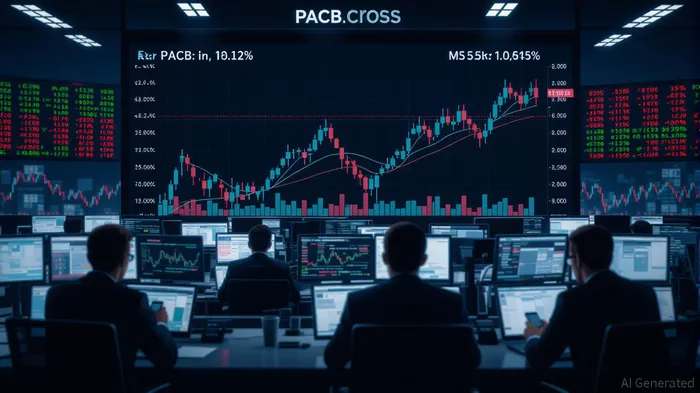 On the technical front, one of the most telling signs came from the MACD death cross, which was triggered twice during the day. This signal typically indicates a bearish shift, where the short-term momentum is overtaken by long-term bearish sentiment.
None of the other key reversal patterns—like the double bottom, head and shoulders, or KDJ golden cross—were triggered, suggesting that this wasn't a short-term reversal move but rather a continuation of a downswing. The absence of positive RSI oversold signals also points to a lack of immediate bounce potential.
This technical deterioration suggests that sellers are in control and that momentum traders are starting to exit long positions or initiate shorts.
Order-Flow Breakdown: No Block Data, But Volume Suggests Pressure
While no block trading or detailed order-flow data is available for this session, the trading volume of 2.94 million shares is a noticeable increase for a stock with a market cap of ~$671 million. High volume on a down day often signals conviction in the move. With no net cash inflow reported and no identifiable bid clusters, the lack of support at key levels reinforces the bearish sentiment.
If there had been a cluster of buy orders near the opening price or at recent support levels, it might have mitigated the drop. The absence of such support suggests that institutional or algorithmic buyers didn't step in to absorb the selling pressure.
Peer Comparison: Mixed Signals Across Theme Stocks
Looking at related stocks, we see a mixed bag of performances. For instance, AREB and ADNT were up, while ATXG fell nearly 5%. The market as a whole didn't show a clear sector-specific shift—AAPL and AXL traded with small to moderate gains, while ALSN and BH also posted modest gains.
This mixed performance makes it less likely that sector rotation or broader market sentiment drove the move in PACBPACB--. Instead, the drop seems more isolated to the stock itself, reinforcing the idea that internal selling—whether from profit-taking or short-covering—played a larger role than external market forces.
Hypothesis Formation: A Technical Sell-Off Driven by Momentum Shift
The most plausible explanation for today’s sharp decline is a technical-driven sell-off, likely triggered by the confirmation of a MACD death cross. This is a commonly monitored signal among algorithmic and momentum traders, and its repeated triggering suggests a significant number of traders may have exited long positions or initiated new short positions.
The high volume further supports the idea that this wasn't a passive move but an active selloff. While the lack of order-flow data prevents us from pinpointing the exact source of the pressure—be it institutional investors, HFT algorithms, or retail traders—the overall technical and behavioral signals point to a bearish momentum shift.
It’s also worth noting that with no fresh news and no sector-wide pullback, the move appears to be more a function of internal positioning than external events.

Stay ahead of the market.
Get curated U.S. market news, insights and key dates delivered to your inbox.




Comments
No comments yet