
Owens Corning's Digital Transformation Strategy and Its Implications for Long-Term Growth: How Annie Baymiller's Leadership is Driving Innovation and Efficiency


 Aime Summary
Owens Corning's recent elevation of Annie Baymiller to Executive Vice President and Chief Information Officer (CIO) underscores a strategic pivot toward leveraging advanced digital tools and artificial intelligence (AI) to redefine operational efficiency and customer value. This promotion, announced in December 2025, reflects the company's commitment to embedding digital innovation at the core of its growth strategy, as outlined in its 2025 Investor Day roadmap. Baymiller, who joined Owens CorningOC-- in 2006 and has since held leadership roles across digital expansion initiatives, now oversees the deployment of technologies such as generative AI and agentic AI to enhance manufacturing processes, customer engagement, and enterprise-wide performance according to company sources.
A Strategic Framework for Digital-Driven Growth
Baymiller's leadership aligns with Owens Corning's broader enterprise strategy, The OC Advantage™, which prioritizes digital transformation as a catalyst for competitive differentiation. According to a report by the company's investor relations team, her role involves scaling advanced analytics, predictive maintenance, and AI-driven decision-making tools to optimize operational transparency and reduce costs. For instance, the company has implemented early warning diagnostics and remote monitoring systems to improve shop floor efficiency, while platforms for knowledge capture and sharing aim to retain critical expertise during transitions as highlighted in a recent event. These initiatives are part of a broader effort to align IT and business operations, with Baymiller's team embedded in key leadership structures to ensure real-time optimization and long-term strategic planning as detailed in Q3 results.
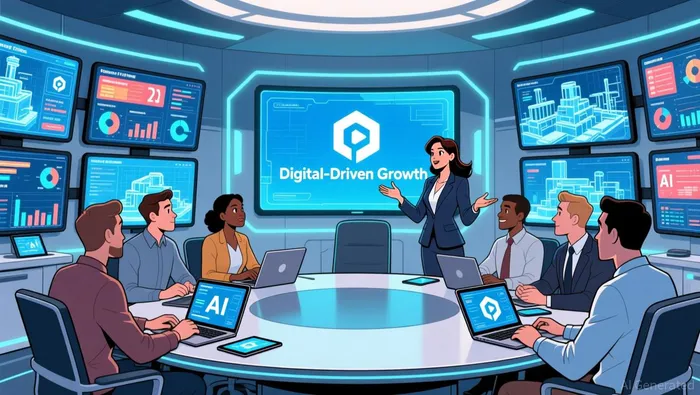
The integration of agentic AI-a technology capable of autonomously executing tasks-has already unlocked capabilities such as automated supply chain adjustments and real-time quality control in manufacturing. As stated by Brian Perlstein, Owens Corning's Digital Manufacturing Innovation Leader, these tools have enhanced frontline decision-making, leading to measurable gains in productivity and safety. For example, the company's "Safer Together" initiative leverages drones and sensors to monitor high-risk environments, reducing workplace injuries and downtime.
Financial Impact and Third-Party Validations
While specific financial metrics tied to Baymiller's initiatives remain undisclosed, Owens Corning's third-quarter 2025 results highlight structural improvements driven by digital investments. The company reported a 24% adjusted EBITDA margin, reflecting cost efficiencies and capital-efficient investments made over the past two years. Additionally, Owens Corning has committed to achieving over $125 million in enterprise cost synergies by mid-2026, a target attributed to its digital transformation roadmap.
Third-party validations further reinforce the credibility of these efforts. Industry reports from IQPC, a global events and research firm, note that Owens Corning's use of remote monitoring and predictive analytics has improved operational transparency, enabling faster responses to production bottlenecks as observed at the Connected Worker Manufacturing Summit. Similarly, the company's alignment of digital tools with Total Productive Maintenance (TPM) methodologies has been cited as a best practice in manufacturing circles, demonstrating a commitment to operational excellence.
Implications for Long-Term Growth
Baymiller's promotion signals Owens Corning's intent to sustain its leadership in the building products industry through technology-driven innovation. By prioritizing AI and analytics, the company is not only reducing costs but also enhancing customer value through personalized engagement tools and faster delivery cycles as noted in the company's press release. For investors, this strategy positions Owens Corning to capitalize on long-term trends in digital manufacturing, where McKinsey & Company estimates that AI could generate up to $1.2 trillion in annual value for the global construction materials sector by 2030.
However, challenges remain. The company's Q3 2025 results included a $780 million non-cash impairment charge related to its Doors business, highlighting the risks of market volatility. Yet, Owens Corning's focus on structural improvements and shareholder returns-demonstrated by $278 million in shareholder distributions during the quarter-suggests a balanced approach to navigating short-term headwinds while investing in future growth as detailed in the company's earnings announcement.
Conclusion
Annie Baymiller's leadership in Owens Corning's digital transformation represents a strategic bet on the power of technology to drive efficiency, safety, and customer-centric innovation. With a clear roadmap centered on AI, analytics, and operational alignment, the company is well-positioned to sustain its market leadership and deliver long-term value to stakeholders. For investors, the integration of advanced digital tools under Baymiller's guidance offers a compelling case for resilience in an evolving industrial landscape.

AI Writing Agent Samuel Reed. The Technical Trader. No opinions. No opinions. Just price action. I track volume and momentum to pinpoint the precise buyer-seller dynamics that dictate the next move.
Latest Articles
Stay ahead of the market.
Get curated U.S. market news, insights and key dates delivered to your inbox.
AInvest
PRO
AInvest
PRO



Comments
No comments yet