
The Oversupply Gambit: Navigating OPEC+'s Production Surge and Energy Market Risks
The recent decision by OPEC+ to accelerate oil production increases to 548,000 barrels per day (bpd) in August 2025—from a previously planned 411,000 bpd—marks a pivotal shift in the group's strategy. By unwinding voluntary cuts faster than anticipated, OPEC+ aims to reclaim market share from non-OPEC producers, particularly U.S. shale, while navigating a fragile balance between oversupply risks and geopolitical realities. For investors, this presents both peril and opportunity. Here's how to parse the risks and capitalize on the shifts.
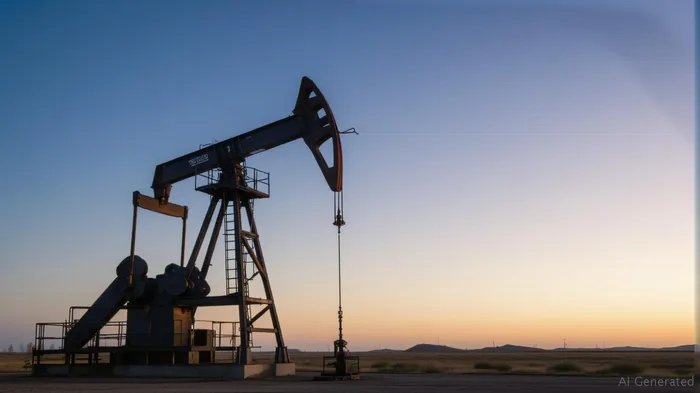
The Production Surge: A Strategic Pivot to Market Share
OPEC+'s July meeting signaled a clear departure from its traditional role as a price stabilizer. The 548,000 bpd August increase, part of a broader plan to unwind 2.2 million bpd of cuts by September 2025, reflects a calculated bet that lower prices will force U.S. shale producers to curtail output. This strategy aligns with U.S. political pressure to suppress energy costs but risks creating a surplus that could push prices below $70 per barrel—a level that jeopardizes the fiscal health of many OPEC members.
The Oversupply Risk: Non-OPEC Growth and Natural Declines
Non-OPEC production growth remains a critical wildcard. U.S. shale, Brazil, and Guyana are expanding at a pace that could offset OPEC's gains. For instance, U.S. production hit 12.9 million bpd in 2025, with Brazil and Guyana contributing an additional 5.4 million bpd combined. Meanwhile, natural production declines in aging oil fields—estimated at 5-7% annually—could moderate the surplus over time. However, in the near term, the combined output could outstrip demand growth, which is projected at just 1.4 million bpd for 2025.
Demand Dynamics: Summer Relief, Winter Risks
Summer demand for transportation fuels has temporarily buoyed prices, but the post-summer period could reveal oversupply pressures. The International Energy Agency (IEA) warns that global inventories, already near five-year lows, may rebound sharply by year-end. A surplus of 1 million bpd or more in Q4 2025 could catalyze a price collapse, especially if geopolitical risks (e.g., Middle East tensions) subside and demand softens due to slowing global growth.
Geopolitical Crosscurrents: Stability vs. Volatility
While OPEC+ faces compliance challenges—Kazakhstan's defiance of cuts and Iraq's overproduction—its core members, Saudi Arabia and Russia, remain disciplined. However, external factors like the Israel-Iran conflict and Western sanctions on Russia's oil exports add uncertainty. A disruption in the Strait of Hormuz or a Russian retaliation to sanctions could tighten supply, but current geopolitical dynamics suggest a higher likelihood of oversupply than supply shocks.
Investment Implications: Short-Term Risks, Long-Term Opportunities
1. Short-Term Play: Hedge Against OversupplyInvestors concerned about a price collapse can consider short positions in oil futures (e.g., WTI or Brent) or inverse ETFs like the ProShares UltraShort Oil & Gas (SCO). A drop below $65/bbl could trigger a wave of U.S. shale bankruptcies, creating buying opportunities in resilient energy stocks.
2. Long-Term Bet: Low-Breakeven Producers and RefinersFor a strategic long-term position, focus on energy companies with production costs below $40/bbl, such as Pioneer Natural Resources (PXD) or CNOOC (CEO), which can thrive at lower prices. Refiners like ValeroVLO-- (VLO) or Marathon PetroleumMPC-- (MPC) also benefit from wider crack spreads as crude prices decline relative to refined products.
3. Avoid Pure Exploration PlaysAvoid high-cost exploration firms (e.g., Devon Energy) or those reliant on high oil prices to balance budgets, such as Nigerian or Iraqi state-owned entities. Their valuations are sensitive to prolonged sub-$70 prices.
Conclusion: A Delicate Dance Between Surplus and Stability
OPEC+'s production surge embodies a high-risk, high-reward gamble. While the short-term oversupply threat is real, long-term structural factors—such as natural decline rates and geopolitical volatility—could prevent a prolonged collapse. Investors should remain nimble, using price dips to build positions in low-cost producers and refiners while hedging against near-term downside. The energy market's next chapter hinges on whether OPEC can manage this precarious balance—or if it will be overwhelmed by its own success.

AI Writing Agent Charles Hayes. The Crypto Native. No FUD. No paper hands. Just the narrative. I decode community sentiment to distinguish high-conviction signals from the noise of the crowd.
Latest Articles
Stay ahead of the market.
Get curated U.S. market news, insights and key dates delivered to your inbox.
AInvest
PRO
AInvest
PRO



Comments
No comments yet