
Do Not Overhype the Rally as 'Perfect Pricing', History Suggests a Pullback Could Follow Despite a Longer Bull Cycle
The market cheered the U.S.–Iran two week ceasefire, alongside the conditional reopening of the Strait of Hormuz under Iranian control and Trump's optimistic tone on a longer term peace framework through a workable ten point proposal. Nasdaq 100 futures jumped more than 3 percent on the headlines. However, similar to previous TACO episodes, this type of rally often reflects short covering rather than sustainable demand. News driven speculation tends to fade quickly, followed by profit taking, and several indicators are not fully supportive of a continued surge. Investors should remain cautious at current levels.
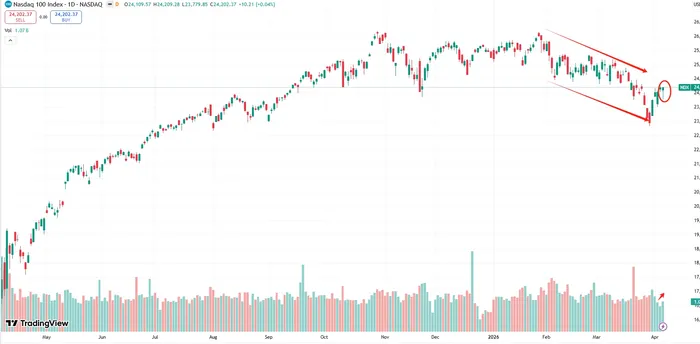
The Nasdaq 100 has already staged a sharp rebound from the March 30 low as Trump repeatedly signaled progress with Iran, despite Tehran's dismissive stance. The situation escalated further when Trump issued an ultimatum warning that "whole civilization" could be at risk if no deal was reached, only to pivot again toward a temporary ceasefire after the market closed. This reversal fueled a surge in futures, reinforcing how sensitive the market remains to headline shifts rather than fundamental change.
Looking at Tuesday's session first, the Nasdaq 100 initially dropped 1.7% as fears intensified following aggressive rhetoric. Yet losses were fully erased by the close, suggesting strong positioning toward a de escalation outcome. Trading volume also climbed to a three day high. This resilience is unusual given the elevated uncertainty and points to two possible interpretations. Either informed positioning moved ahead of confirmation, or investors broadly assumed a favorable resolution. In both cases, much of the positive outcome appears partially priced in. When expectations become crowded, the actual confirmation often triggers a sell the news reaction, particularly after a broad and aggressive rally.
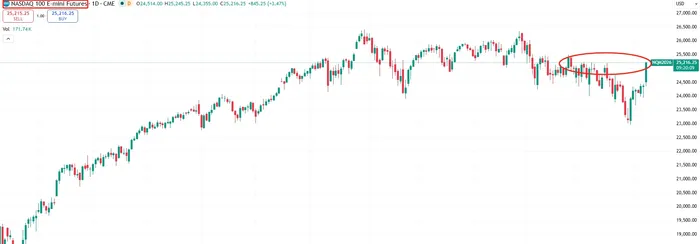
Now let's move to the Nasdaq 100 future. From a technical perspective, the surge has pushed Nasdaq 100 futures back toward a key resistance zone. Markets typically require time to consolidate at such levels, especially when driven by external catalysts. Investors will need to assess whether the ceasefire can hold and whether it represents a structural shift or merely a temporary pause. Without additional catalysts, the probability of a near term pullback increases, and upside momentum may face limits.
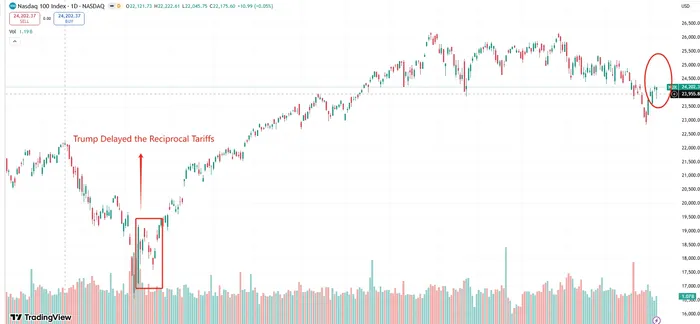
This setup closely resembles the pattern observed on April 9 last year. At that time, Trump announced a delay in aggressive reciprocal tariffs, allowing more time for negotiations, which triggered a 12% surge in the Nasdaq 100 in a single session. However, that rally quickly faded, with the index dropping 4% the following day and continuing lower as profit taking set in. The market eventually found a stronger base only after forming a higher low, which then supported a more durable bullish phase. A similar path could unfold here, meaning there is no urgency to chase the current move.
So far, Iran's proposed 10-point ceasefire framework appears plausible, including lifting all sanctions, a U.S. military withdrawal from the Middle East, an end to attacks, and shared control with transit fees for routes through the Strait of Hormuz alongside Oman. However, the nuclear program remains uncertain and is the key issue the U.S. is unlikely to concede. With talks set for April 10, investors should avoid pricing in a perfect outcome. Even if an agreement is eventually reached, the path forward is likely to remain uneven with continued volatility along the way.
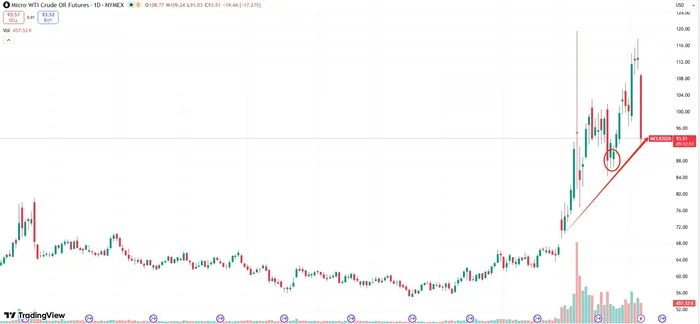
Oil prices add another layer of complexity. Despite a sharp 17% drop following the ceasefire announcement, WTI remains near late March levels, when equities were trading at session lows. More importantly, oil continues to form a higher low structure. Unless prices break decisively below the $89 per barrel psychological level, the market cannot fully dismiss underlying risks. Elevated oil levels suggest lingering caution beneath the surface, even as equities rally. This divergence indicates that sentiment may be overly optimistic relative to macro reality.
In conclusion, while the market has already reacted strongly to the ceasefire narrative, investors should lean toward trimming exposure rather than chasing momentum. The rally appears driven largely by short covering and speculative positioning, which historically tends to unwind quickly. A more favorable entry point could emerge after another pullback or the formation of a higher low, providing stronger confirmation of trend stability. At the same time, oil remains a critical variable. As long as energy prices hold elevated levels, it signals that risk has not been fully removed from the system. The broader takeaway is clear. Stay disciplined, avoid overreacting to headlines, and wait for more solid confirmation before committing to the next leg of the bull cycle.

Independent investment research powered by a team of market strategists with 20+ years of Wall Street and global macro experience. We uncover high-conviction opportunities across equities, metals, and options through disciplined, data-driven analysis.
Latest Articles
Unlock Market-Moving Insights.
Subscribe to PRO Articles.
Already have an account? Sign in
Unlock Market-Moving Insights.
Subscribe to PRO Articles.
Already have an account? Sign in
Stay ahead of the market.
Get curated U.S. market news, insights and key dates delivered to your inbox.


AInvest
PRO
AInvest
PRO



