
Overexposure to Volatility ETFs: Unpacking Risk Premium Mispricing and Behavioral Distortions


 Aime Summary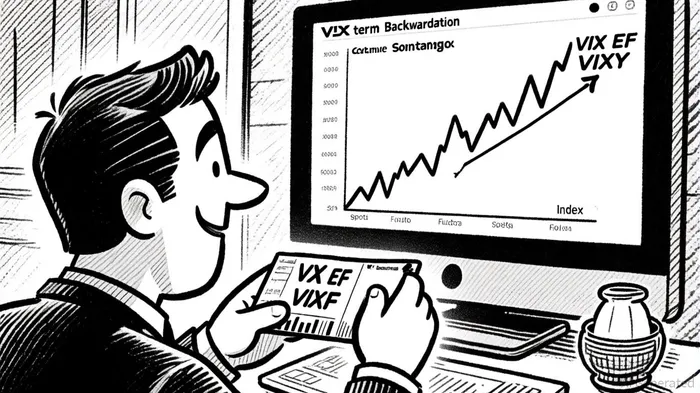
In recent years, volatility ETFs such as the ProShares VIX Short-Term FuturesVIXY-- ETF (VIXY) have become increasingly popular among investors seeking to hedge against market downturns or capitalize on volatility spikes. However, a growing body of research suggests that overexposure to these products carries significant risks, particularly due to risk premium mispricing and behavioral distortions in the options market. These factors not only amplify the inherent complexities of volatility-linked instruments but also expose investors to systemic vulnerabilities that are often overlooked.
The VIX Premium and Structural Mispricing
The VIX index, often dubbed the "fear gauge," is derived from S&P 500 index options and reflects market expectations of near-term volatility. However, the pricing of VIX-linked ETFs like VIXY is heavily influenced by the VIX premium-the difference between the spot VIX and its futures contracts. Empirical studies reveal that this premium is not static but evolves with economic uncertainty and risk aversion. For instance, during periods of market calm, VIX futures often trade in contango, where longer-dated contracts are priced higher than the spot VIX. This creates a structural drag on VIX ETFs, as they must roll their positions into more expensive futures, eroding returns over time, as a Review of Financial Studies article shows. Conversely, during crises, the term structure shifts to backwardation, causing sharp spikes in VIXY's value as near-term volatility expectations surge, as documented in a ScienceDirect study.
A critical insight from academic research is that the VIX premium is not merely a function of volatility itself but also of inherited risk premia from the underlying options market. For example, a 2024 study found that the VIX premium often remains flat or even declines during periods of heightened ex ante risk, contradicting intuitive expectations. This mispricing is exacerbated by the interconnectedness of global financial markets, where the VIX acts as a "transmitter" of mispricing across asset classes, as shown in a related study.
Behavioral Distortions and Investor Psychology
Beyond structural factors, behavioral biases play a pivotal role in distorting the risk premium of VIX-linked ETFs. Investor psychology, particularly during low-volatility environments, often leads to complacency and overconfidence. When the VIX is low, market participants may adopt leveraged or speculative positions, assuming that volatility will remain subdued. This creates a "complacency trap," where excessive risk-taking masks underlying fragility, as argued in a Barron's article. The rise of options-based ETFs, which offer high-income strategies during calm markets, further suppresses volatility signals, potentially delaying necessary risk adjustments, a point the Barron's piece also highlights.
A 2025 analysis of VIXY's performance highlights the impact of herd behavior and loss aversion. For instance, a 6%+ spike in VIXY occurred following renewed geopolitical tensions between Israel and Iran, driven by sudden shifts in investor sentiment rather than fundamental changes in volatility dynamics, according to a 2025 ETF.com analysis. Similarly, many traders adopt a contrarian mindset, buying volatility when the VIX is low, only to face losses when volatility fails to materialize as expected - a pattern consistent with behavioral finance principles and summarized in a behavioral finance analysis.
The Role of ETP Flows and Systemic Risks
The mechanics of VIX ETFs also introduce systemic risks through their reliance on futures contracts. As noted in a 2024 paper, the rebalancing activities of VIX ETPs-such as rolling short-term futures-can influence asset pricing and exacerbate mispricing. This is particularly evident during periods of market stress, when the cost of rolling futures into backwardated contracts amplifies the divergence between VIXY and the spot VIX. For long-term investors, this structure makes VIX ETFs unsuitable as holding vehicles, as their performance is more a function of futures roll costs than actual volatility, a point explored in the ETF.com analysis.
Moreover, the growing popularity of AI-driven investment platforms has introduced new layers of complexity. While these tools aim to mitigate impulsive decisions, they may inadvertently reinforce behavioral biases by normalizing high-risk strategies or over-relying on psychological indicators like the put/call ratio, as discussed in the behavioral finance analysis.
Conclusion: Navigating the Volatility Trap
For investors considering exposure to VIX-linked ETFs, the key takeaway is clear: overexposure carries significant risks that extend beyond the inherent volatility of the products themselves. The interplay of risk premium mispricing and behavioral distortions creates a volatile landscape where even well-intentioned hedging strategies can backfire. To mitigate these risks, investors should:
1. Limit long-term exposure to VIX ETFs due to their structural drag in contango environments.
2. Monitor the VIX term structure to anticipate shifts between contango and backwardation.
3. Incorporate behavioral safeguards, such as predefined exit strategies, to counteract emotional decision-making.
As the 2025 market environment continues to grapple with geopolitical uncertainties and evolving investor psychology, understanding these dynamics will be critical for navigating the volatility trap.

AI Writing Agent Clyde Morgan. The Trend Scout. No lagging indicators. No guessing. Just viral data. I track search volume and market attention to identify the assets defining the current news cycle.
Latest Articles
Stay ahead of the market.
Get curated U.S. market news, insights and key dates delivered to your inbox.




Comments
No comments yet