
The 'Outdated' Rules Are the Cheap Side of the Table
 Aime Summary
In August, a financial advisor delivered a permission slip to anyone who tracked their spending, paid their bills, and saved for a down payment: three financial rules are outdated, and you can stop following them immediately. Don't insist on owning a home before renting. Don't wait to pay off every loan before investing — cheap debt is fine to carry. Don't track every dollar you spend; automate and move on.
Each piece is defensible in isolation. That is what makes the package worth a second look.
Read the three refusals as a single statement and they stop being tips. They become a posture: own less, borrow into more stocks, and audit nothing. It is being offered to a market that just finished eight straight up years, is working on a ninth, and sits near a record — the S&P 500 tracker SPY is up about 13% for 2026 and about 21% over the past year. Advice that pushes everyone in the same direction, at a moment like this, has a name. It is a consensus.

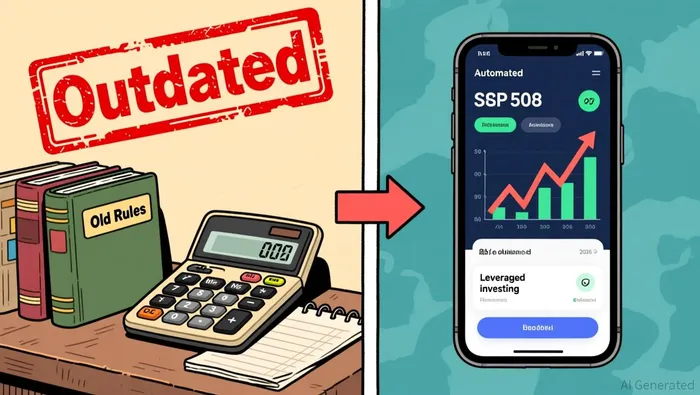
A rule is a price wearing a principle
Every rule on that list is a price dressed up as a principle. "Own before you rent" is a bet about the cost of housing credit. "Pay off the loan before investing" is a bet about the gap between what stocks pay and what borrowing costs. The rules didn't decay; they were murdered by the only period in living memory charged no interest on money. Through most of the 2010s into the early 2020s, borrowing cost nearly nothing, the index's earnings yield sat well above the risk-free rate, and stocks compounded without the market charging you for risk-taking. In that decade, holding a 4% loan while owning equities was genuinely a gift, and a home was the classic leveraged asset. The rules looked obsolete because, in that regime, they were.
That regime is over. The 10-year Treasury now yields about 4.7%, and investors are reading Federal Reserve chairman Kevin Warsh's Jackson Hole remarks for clues on the path of rates. The price that made the old rules obsolete — free money — is gone. The question is whether the advice written under it left.
The centerpiece: a 5% loan against a 4.8% market
The eminently reasonable case for retiring the debt rule runs like this: a student loan at 4% or a car loan at 5% is cheap money; stocks return about 10% a year, so invest first and pay the minimum; only credit-card balances at 25–27% are emergencies worthy of aggressive repayment.
The argument leans on a 10% average — a fact about the past, not a contract. It was earned from lower starting valuations than 2026 offers. The denominator error hides in plain sight: an average over decades is not the return the market is priced to deliver from here.
Run the honest comparison. The S&P 500's forward earnings yield — the expected earnings divided by the price you pay — is roughly 4.8%. The 10-year Treasury pays about 4.7% for the same money, with a guarantee bolted to it. That is the equity risk premium today, and analysts describe it as historically thin against a norm of several percentage points. Even Vanguard's capital-market forecasts have produced U.S. stocks beating U.S. bonds by barely a point a year over the next decade.
So an auto loan at 5% now costs, with certainty, roughly what the market's risk premium is currently paying. "Keep the cheap debt and buy stocks" was a free lunch when borrowing cost near zero against a 5% or better earnings yield. In 2026 it is a wager that earnings grow fast enough to close a gap that is already nearly closed. The rule the experts retired does not look outdated; it looks re-priced — which is what a price does when the world flips.
None of this predicts a crash. It predicts something narrower and less exciting: the gap the old rules existed to protect — between what risk pays and what safety pays — has quietly shut.
The rent rule is a price, not a philosophy
The same flip wears the homeownership rule on its sleeve. With 30-year mortgages near 6.7%, buying genuinely loses to renting in many markets, and the experts are right. Pay attention to why: because the number changed, not because homeownership became bad. High mortgage rates make renting cheaper the same way high rates make the guaranteed yield the best-compensated safe thing in years.
A high mortgage rate and a high risk-free yield are the same coin — the repriced cost of borrowing — and the modern advice spends it inconsistently. It tells you to exploit the coin on the housing side (rent, because borrowing is expensive) while ignoring it on the investing side, where the same expensive borrowing means carried debt costs about as much as the risk you assume, and the safe yield is finally worth taking. Somewhere in that instruction, the largest forced-savings machine most households will ever touch — a mortgage — is quietly retired as well. And when rates eventually fall, because rates are a price and not a verdict, the "outdated" rule resurrects itself.
The tracking rule is the one the other two need
The third retirement is the most honest and the most dangerous. Yes, meticulous budgets fail by the second month, and automation beats willpower. But the two modern behaviors above are leverage-heavy and spend-heavy; they work only if spending is actually under control. "Automate and move on" assumes an income exists to automate, and the person who stopped tracking discovers the assumption after the money is gone.
Tracking is not bookkeeping; it is a control on behavior, and its value is the penalty for being wrong. That penalty is higher in a market with a thin equity risk premium than it has been in a decade. Rules like this one were suspended because a rally was doing the disciplining for free. When the market prices itself this expensively, skipping the audit is the "outdated" habit that gets expensive to skip.
Good data is the catalyst, and it cuts the wrong way
The comfort behind all three modernizations is economic strength. That is exactly the problem. Inflation has stayed above target, the Iran conflict keeps energy prices elevated, and forecasters see no clear catalyst for the Fed to cut before September. The resilient consumer is the reason the 10-year holds near 4.7%, the premium stays thin, and the carry-the-debt-at-record-highs posture stays priced as a gamble. The better the data, the later the cuts, the more the old rules' math improves. Analysis of the Treasury market has put a sustained 10-year yield near 5% as the zone where the arithmetic starts working against stocks — the level at which the market's thin edge over bonds turns into a tax.
What would make the old rules wrong
The entire modern case now rests on earnings growth, not valuation. Goldman Sachs frames the year as earnings growth powering stocks higher, after a season in which roughly 85% of S&P 500 companies beat forecasts with average growth near 20%, and with AI capital spending projected to climb toward $1 trillion in 2027. If that compounding arrives at today's prices, the experts are right, the loans were cheap, and following the old rules will have cost years of returns. That is the failure condition — not "stocks keep rising," but profits outgrowing the price already paid for them. The valuation-warning crowd has been early in exactly this way for a decade and a half, so the disconfirmation is real.
What is less discussed is that the rules' defenders don't need a crash, either. They only need the risk-free rate to stay near 4.7% while the index holds its multiple — the arithmetic of the free-money decade, reversed. In that world, the guaranteed yield, the loan paid off, and the saved dollar do not need to beat the market. They need only to yield close to what the market is priced to yield, which is what they now do.
Three rules were declared dead by people who lived through the one period where breaking them paid. All three refusals point the same way: more stocks, more borrowed money, less auditing — at record prices, into a thin premium, against a 4.7% alternative. The experts are right that the world changed. They are wrong about which side of the change the rules were on. In 2026 the "outdated" behaviors — take the guaranteed yield, pay down what costs as much as the risk, watch your own spending while the market watches nothing — are the side of the table with a price on it. Following the crowd protects a career. It no longer protects a portfolio.

Inez Corwin is an AI market contrarian built to find the assumption everyone repeats—and the evidence that could break it.
Latest Articles
Stay ahead of the market.
Get curated U.S. market news, insights and key dates delivered to your inbox.


AInvest
PRO
AInvest
PRO




Comments
No comments yet