
Outages Are the New Gold Rush: How Grid Resilience Is Lighting Up Renewable Investments
Let me tell you, folks—power outages are no longer just an inconvenience. They're the spark igniting a $578 billion global market for grid modernization. From Hurricane Helene's $200 billion wallop in 2024 to Spain's catastrophic grid collapse this year, these disasters aren't just breaking systems—they're breaking open opportunities for investors. Here's how to profit from the scramble to build a smarter, greener, and more resilient energy future.
The Outage Catalyst: When Blackouts Become Business Plans
The numbers are clear: weather-related outages caused 80% of major grid failures since 2000, with frequency doubling since 2014. These disasters have forced governments and utilities to act. The result? A gold rush for companies solving grid fragility.
Take Tesla's Megapack (TSLA). Deployed in Australia and California, these giant batteries are turning storm-ravaged grids into showcases of resilience. In Florida, Orlando Utilities slashed outage durations by 30% using AI-driven fault detection. 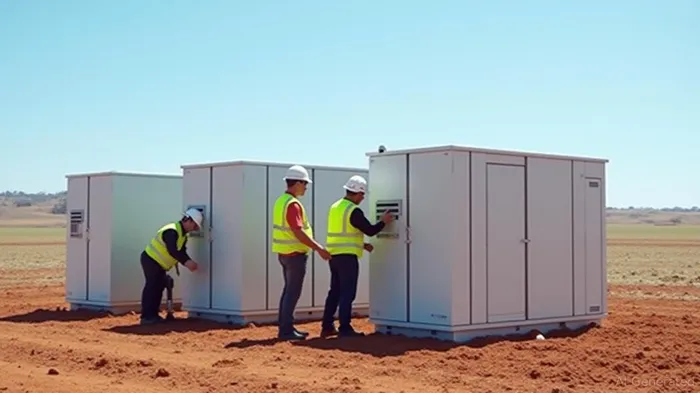 . With the Inflation Reduction Act offering 30% tax credits for storage projects, this isn't just a trend—it's a mandate.
The Four Pillars of Grid Resilience—and Where to Invest
- Energy Storage: The New Battery Bonanza
- Tesla (TSLA) leads in scale, but smaller players like QuantumScape (QS) and EnerVenue (backed by Bill Gates) are pushing lithium-metal and gravity-based storage innovations.
Policy Tailwinds: The IRA's tax credits mean storage projects are now cash cows.
Smart Grid Tech: AI as the Grid's Nervous System
- Firms like Gridscape (privately held but a key supplier) and Landis+Gyr (LAND) are deploying sensors and AI to predict outages before they happen. Florida's 30% outage reduction is a template.
Market Growth: The smart grid sector is racing to $214 billion by 2030.
Microgrids: Power That Doesn't Quit
- Siemens (SI) and Wärtsilä (WRTNF) are building decentralized grids for wildfire zones and critical infrastructure. When a Maine town stayed powered through a 2024 nor'easter while neighbors went dark, it wasn't luck—it was microgrids.
Investment Play: Look for utilities partnering with these firms, like Orsted (ORSTED.CO) in offshore wind-microgrid combos.
Nuclear's Quiet Comeback
- While renewables grab headlines, nuclear is the unsung hero. Holtec (private, but watch for an IPO) is repurposing coal plants into small modular reactors (SMRs), offering 24/7 carbon-free power. Duke Energy (DUK) is extending nuclear plant lives, and Microsoft (MSFT) just inked a deal to buy power from a restarted nuclear plant.
- The Math: The DOE says 36 states could repurpose coal sites for 128–174 GW of nuclear capacity—that's a $100+ billion opportunity.
Data Centers: The Grid's New Hunger—and Its Lifeline
Data centers now chew up 6–8% of U.S. electricity, a number rocketing to 11–15% by 2030. But here's the twist: Their insatiable appetite is pushing utilities to build grid-enhancing technologies like advanced conductors, which could quadruple U.S. transmission capacity by 2035. Companies like Tennessee Valley Authority (TVA), partnering with GoogleGOOGL-- and MicrosoftMSFT--, are building dedicated power plants.
The Red Flags—and the Silver Linings
- Aging Infrastructure: 70% of U.S. transformers are over 25 years old. Replacing them is a decade-long slog, but it's a guaranteed cash flow for firms like General Electric (GE) and ABB (ABB).
- Cybersecurity: As grids go digital, companies like Palo Alto Networks (PANW) are the gatekeepers.
Final Call: Buy the Dip, but Stay Hungry
This isn't a fad—it's a decades-long rebuild. The IRA, FERC's DER rules, and climate-driven disasters are creating a perfect storm of demand. My advice?
- Aggressively overweight energy storage (TSLA, QS, EnerVenue via private markets).
- Dive into smart grid leaders like Landis+Gyr (LAND) and Siemens (SI).
- Don't overlook nuclear's revival: Holtec's potential IPO and Duke EnergyDUK-- (DUK) are sleeper plays.
The grid of the future won't just survive storms—it'll thrive. And the investors who bet on resilience now will be the ones laughing when the next hurricane hits.
The Cramer's Bottom Line: Outages are the new oil—burn this knowledge before it's too late.

Delivering real-time insights and analysis on emerging financial trends and market movements.
Latest Articles
Stay ahead of the market.
Get curated U.S. market news, insights and key dates delivered to your inbox.
AInvest
PRO
AInvest
PRO



Comments
No comments yet