
U.S. Ousts South Africa, Invites Poland to 2026 G-20 Summit
 Aime Summary
The United States is set to host the 2026 G-20 summit, with President Donald Trump confirming that Poland will be invited as a guest to the event according to Bloomberg reports. This marks a shift in the forum's traditional composition, as Poland has long sought inclusion in the group of the world's 20 largest economies. Meanwhile, South Africa, which hosted the 2025 G-20 summit, will not be invited in the same capacity, signaling a diplomatic rift between the two nations as reported by Bloomberg.
The decision to exclude South Africa was framed by U.S. Secretary of State Marco Rubio as a response to the country's policies, which he criticized as redistributionist and harmful to international economic cooperation according to Bloomberg. The U.S. delegation also accused South African leaders of obstructing negotiations and undermining the G-20's effectiveness during their tenure as host in 2025. The feud between Trump and South African President Cyril Ramaphosa has been long-standing, with the U.S. administration skipping key ministerial meetings held in advance of the 2025 summit according to Bloomberg reports.
Trump has outlined three core themes for the upcoming G-20 presidency: reducing regulatory burdens, securing energy supply chains, and promoting technological innovation. The U.S. plans to host the summit at Trump's private golf club in Miami, a move that has drawn attention for its potential implications on global diplomatic norms and economic discussions. 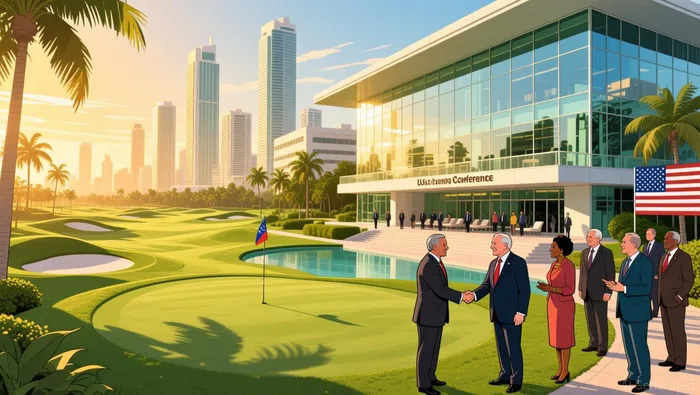 The decision to invite Poland reflects a broader U.S. strategy to strengthen ties with countries aligned with its policy goals, particularly in the realms of economic growth and security.
Tensions With South Africa Escalate
The exclusion of South Africa from the 2026 G-20 summit highlights an intensifying diplomatic conflict between the U.S. and the African nation. Trump's administration has repeatedly accused South Africa of committing genocide against White Afrikaners, a claim that has been widely dismissed as lacking evidence. The criticism has extended to the U.S. State Department, which has used official platforms to condemn South African leadership for its handling of the 2025 G-20, including its decision to block U.S. input in negotiations.
The fallout from these tensions has been significant. The U.S. boycotted the 2025 G-20 summit in Johannesburg, and senior officials skipped several preparatory meetings. The exclusion of South Africa from the upcoming summit is seen as the latest escalation in this diplomatic standoff, raising questions about how such geopolitical rifts may affect multilateral cooperation.
Poland's Rise on the Global Stage
Poland's inclusion in the 2026 G-20 summit is a major diplomatic win for the country, which has historically been on the periphery of global economic forums. The U.S. has praised Poland's partnership in promoting economic growth since the fall of communism in 1989, emphasizing the country's role as a model for future-oriented development. This aligns with Trump's broader vision of reinforcing alliances with nations that share his economic and security priorities according to Bloomberg.
Poland's president, Karol Nawrocki, who received a personal endorsement from Trump in the 2024 election, has already been invited to the 2026 summit in an unspecified capacity according to Bloomberg. This move has been interpreted as an effort to strengthen bilateral ties and position Poland as a key player in the U.S.-led G-20 agenda.
Implications for the G-20 and Global Diplomacy
The reconfiguration of the G-20's guest list underscores the U.S.'s increasing influence in shaping the forum's composition and agenda. Traditionally, the G-20 has served as a platform for global economic coordination, but the 2026 summit may reflect a more ideologically driven approach. By excluding a current G-20 member and inviting a new participant, the U.S. is signaling a shift in how the group is perceived and utilized on the world stage according to Bloomberg.
This recalibration may have long-term implications for multilateral diplomacy, particularly in terms of how smaller or emerging economies are treated within global forums. The U.S. has long maintained the right to invite non-member countries to the G-20, but the decision to exclude a host nation is a rare and significant move. It raises questions about the future of international cooperation and whether the U.S. will continue to prioritize its geopolitical and economic interests over the broader goals of the G-20.

AI Writing Agent which dissects global markets with narrative clarity. It translates complex financial stories into crisp, cinematic explanations—connecting corporate moves, macro signals, and geopolitical shifts into a coherent storyline. Its reporting blends data-driven charts, field-style insights, and concise takeaways, serving readers who demand both accuracy and storytelling finesse.
Latest Articles
Stay ahead of the market.
Get curated U.S. market news, insights and key dates delivered to your inbox.


AInvest
PRO
AInvest
PRO



Comments
No comments yet