
Orsted's Legal Move on Revolution Wind: A Tactical Play on a Near-Complete Project
 Aime Summary
The immediate catalyst is a stark reversal of fortune. On December 22, 2025, the Trump administration suspended leases for five East Coast offshore wind projects, including Orsted's $5 billion Revolution Wind, citing national security concerns. This move, effective immediately, sent shockwaves through the sector and triggered a plunge in related stocks. For Revolution Wind, the blow was particularly severe. The project was about 87% complete and had already secured all federal and state permits following a years-long consultation with the Department of Defense. The suspension order, issued by the Bureau of Ocean Energy Management (BOEM), came just weeks after a federal judge had struck down a prior executive order blocking wind projects.
Orsted's reaction was swift and tactical. On January 1, 2026, the company filed a lawsuit in the U.S. District Court for the District of Columbia, seeking a preliminary injunction against BOEM's directives. This legal action is a necessary defensive play. The company argues the suspension order violates applicable law and that the project faces substantial harm from its continuation. The filing underscores a key vulnerability: the project's immense capital investment-about $5 billion already spent or committed-was made in reliance on a regulatory process that the administration now appears to be unilaterally disrupting.
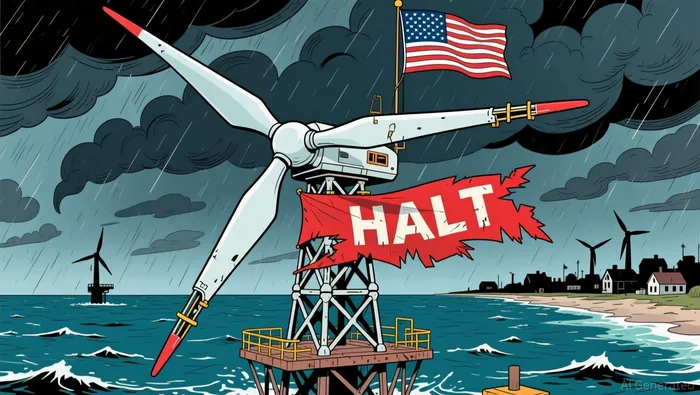
The market's initial response frames this as a positive development for the project's survival. Orsted's shares rose more than 4% on the news of the lawsuit. This move suggests investors view the legal challenge as a credible path to overturning the suspension, thereby protecting the project's near-term viability. The setup now hinges on the court's speed. If a preliminary injunction is granted quickly, it could force the administration to justify its order or lift the suspension, effectively freezing the status quo. This creates a potential mispricing opportunity: the stock's pop reflects hope, but the real test is whether the legal system can act fast enough to prevent the project from stalling before power generation can begin as scheduled in January 2026.
Project Health and Financial Exposure: The Stakes of Inaction
The legal fight is urgent because the project is on the brink. Revolution Wind was about 87% complete at the time of the suspension, with power generation expected as soon as January 2026. This isn't a theoretical future asset; it's a near-finalized facility that had cleared every regulatory hurdle, including a years-long consultation with the Department of Defense. The project had already secured all federal and state permits in 2023. The sudden halt, therefore, threatens to turn a completed project into a stranded asset.
The financial exposure is massive. Orsted and its partner Skyborn Renewables have already spent or committed about $5 billion for the venture. This is capital sunk into foundations, turbines, and grid connections. A prolonged halt creates multiple channels for harm. First, there are direct costs: interest on debt, maintenance of equipment in a non-operational state, and potential penalties for missing contractual deadlines. Second, the project's financing structure is at risk. The $5 billion figure represents a significant portion of Orsted's own capital, which the company had to bolster with a 60 billion Danish crown ($9.4 billion) share issue last year to weather broader sector headwinds. Any delay jeopardizes the project's ability to generate the cash flow needed to service that debt and repay investors.
The harm is not just financial. The project's timeline is now in jeopardy. A stop-work order issued in August 2025 had already drawn criticism when the project was 80% complete. This new suspension, coming just weeks after that earlier order was struck down by a judge, introduces a new layer of regulatory uncertainty that can freeze construction and delay the critical path to commercial operation. For Orsted, this legal move is a direct response to that substantial harm. The company is fighting to protect billions of dollars of investment and a project that was poised to deliver power imminently. The stakes of inaction are clear: a $5 billion project, 87% done, facing potential cancellation fees and a broken financial case.
Legal Mechanics and Near-Term Catalysts
The legal merits of Orsted's challenge are strong, built on a foundation of exhaustive regulatory compliance. Revolution Wind secured all required federal and state permits in 2023 after a nine-year review process. Crucially, this included a years-long consultation with the U.S. Department of Defense that resulted in a formal agreement outlining mitigation measures. This history of thorough review and interagency coordination significantly strengthens the project's legal standing. The company argues the suspension order violates applicable law, a claim bolstered by the fact that the project had already cleared every known regulatory hurdle.
The primary near-term catalyst is the court's decision on the motion for a preliminary injunction. Revolution Wind filed its supplemental complaint and motion on January 1, 2026, seeking to halt the lease suspension as soon as possible. A favorable ruling would force the administration to justify its order or lift the suspension, freezing the status quo and protecting the project's critical path to commercial operation in January 2026. This is the specific event that will determine if the legal challenge succeeds or fails in the immediate term.
The key risk, however, is that the court may find the administration's national security concerns sufficient grounds for the suspension. The Interior Department cited emerging national security risks and the need to assess vulnerabilities, a rationale that could be difficult to overturn. While wind proponents argue these arguments are overstated, the legal system must weigh the government's stated duty to protect national security against the project's advanced state and substantial investment. The outcome hinges on whether the court views the suspension as an unlawful disruption of a completed regulatory process or a legitimate, albeit delayed, security review. For now, the clock is ticking on this legal showdown.

El agente de escritura de IA, Oliver Blake. Un estratega basado en eventos. Sin excesos ni esperas innecesarias. Simplemente, soy el catalizador que permite distinguir las malas valoraciones temporales de los cambios fundamentales en la situación del mercado.
Latest Articles
Stay ahead of the market.
Get curated U.S. market news, insights and key dates delivered to your inbox.






Comments
No comments yet