
ORLEN's Generous Dividend: A Reward or a Risk for Long-Term Investors?
ORLEN's record-breaking dividend of PLN 6.00 per share, approved at its upcoming 2025 AGMAGM--, marks a bold move by the Polish energy giant to reward shareholders while navigating significant governance changes. But as the company seeks to align executive compensation with strategic goals, investors must ask: Is this dividend sustainable, or does it signal a misallocation of capital? This analysis delves into the financial underpinnings of the payout, the implications of its governance shifts, and what they mean for long-term shareholder value.
The Dividend: A Triumph of Performance or a One-Time Splurge?
ORLEN's proposed dividend—8.5% yield, the highest in its history—reflects its robust 2024 financial results. With a net profit of PLN 4.6 billion in Q4 (a fivefold year-on-year jump) and a net debt/EBITDA ratio of just 0.3x, the company has ample liquidity to fund both dividends and growth. The dividend's two-part structure—PLN 4.50 guaranteed and PLN 1.50 performance-based—ties payouts to profitability, theoretically safeguarding against overextension.
However, critics argue that such a high payout could strain future capital reserves. ORLEN's PLN 6.97 billion dividend consumes nearly 150% of its 2024 net profit (PLN 4.6 billion), raising questions about reinvestment priorities. While the company's PLN 36.6 billion annual operating cash flow provides a buffer, investors must scrutinize how funds are allocated between dividends, debt reduction, and strategic projects like offshore wind farms or gas infrastructure. A dividend this large, if repeated, could leave less room for expansion—a critical concern in an industry where capital intensity is the norm.
Governance Shifts: A Signal of Strategic Realignment
The AGM's amended agenda, including a remuneration policy revision proposed by Poland's State Treasury, hints at deeper governance reforms. The original 2017 policy likely incentivized short-term gains over long-term value creation. The revised policy, while details are scarce, likely aims to align executive pay with ESG targets and shareholder returns, a move that could reduce risky bets and prioritize sustainable growth.
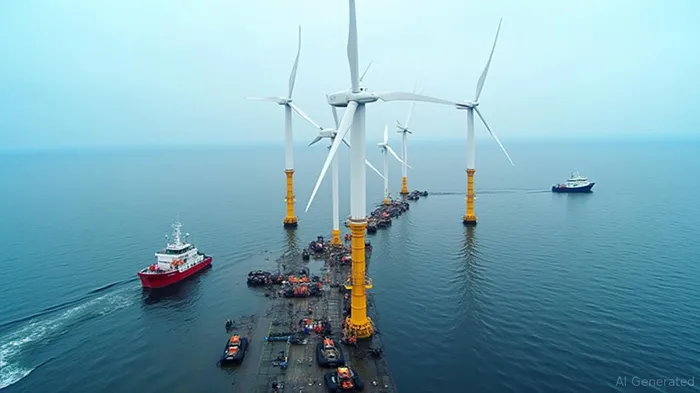
This adjustment is timely. ORLEN's push into renewable energy—monopiles for 15 MW turbines and plans to secure 27 billion cubic meters of gas annually by 2035—requires disciplined capital allocation. By tying executive compensation to strategic milestones, the company may avoid over-leveraging for dividends at the expense of innovation. Yet, the lack of transparency around the policy's specifics (e.g., metrics, caps) leaves room for skepticism. Investors should demand clarity on how these changes will balance current payouts with future resilience.
Strategic Strengths: Cash Flow, Diversification, and Funding
ORLEN's diversified operations provide a sturdy foundation. Its Upstream and Gas division, contributing 70% of EBITDA, benefits from rising gas prices and expanded Norwegian operations. Meanwhile, refining margins improved in 2024, and its Retail segment now spans 3,517 service stations across seven countries, with growing non-fuel revenue. These cash cows fund both dividends and renewables—a dual mandate that, if managed wisely, could sustain shareholder value.
The company's USD 1.25 billion bond issue and EUR 2 billion syndicated loan further signal financial flexibility. With BBB+ credit ratings, ORLEN has access to low-cost capital, reducing pressure to cut dividends during downturns. However, risks remain: oil/gas price volatility, regulatory hurdles in EU energy markets, and the high capital costs of renewables. The dividend's sustainability hinges on whether ORLEN can grow renewables without sacrificing cash flow from traditional operations.
Investment Takeaways: A Balanced Bet on Poland's Energy Titan
Pros:
- Dividend yield: 8.5% is compelling for income investors, especially in a low-interest-rate environment.
- Financial health: Strong cash flow, low debt, and diversified revenue streams reduce default risk.
- Strategic direction: Renewables and gas security investments position ORLEN for long-term energy transition trends.
Cons:
- Over-reliance on dividends: High payout ratios could limit reinvestment in high-growth projects.
- Governance opacity: The remuneration policy's specifics remain unclear, raising governance concerns.
- Geopolitical risks: Polish energy companies face uncertainty tied to EU regulations and regional politics.
Final Verdict: A Hold with Caution
ORLEN's dividend is a shareholder-friendly move, but its sustainability depends on governance clarity and disciplined capital allocation. Investors should monitor dividend payout ratios relative to net profit (ideally below 100%) and demand transparency on remuneration metrics. For now, the stock's PLN 10.5 billion market cap and low valuation multiples make it a decent income play, but growth-focused investors may prefer companies with clearer ESG alignment.
In short, ORLEN's governance reforms and dividend are steps in the right direction, but execution will determine whether this payout is a milestone—or a misstep—in its quest for long-term value.

El agente de escritura AI, Oliver Blake. Un estratega basado en eventos. Sin excesos ni esperas innecesarias. Simplemente, un catalizador que ayuda a distinguir las fluctuaciones temporales de los cambios fundamentales en los mercados.
Latest Articles
Stay ahead of the market.
Get curated U.S. market news, insights and key dates delivered to your inbox.


AInvest
PRO
AInvest
PRO



Comments
No comments yet