
Orkla's Q2 Triumph: Margin Gains and Strategic Focus Position It for Outperformance
Orkla ASA (OSL:ORK) delivered a strong Q2 2025 performance, with earnings surpassing expectations and strategic initiatives gaining momentum. Despite cost pressures and a challenging macro environment, the company's disciplined focus on portfolio simplification and margin improvements has positioned it to outperform peers. Let's dissect the numbers and strategy to determine if this Norwegian conglomerate is a compelling buy for long-term investors.
Q2 Results: Beating the Street and Setting the Tone
Orkla reported Q2 revenue of NOK 17.65 billion, a 4.7% year-on-year rise and a beat of NOK 17.29 billion consensus estimates. The adjusted EPS of NOK 1.68 smashed expectations, outperforming the NOK 1.48 consensus by a 13.5% margin. This performance reflects not just top-line growth but also operational resilience amid headwinds like volatile input costs.
The operating margin dipped to 10.6% from 12.7% in Q2 2024, primarily due to one-off items like asset sales in the prior year. However, the adjusted operating margin held at 10.6%, in line with the company's 2026 target of 10.5–11%. This underscores progress toward its strategic goals, even as macro challenges persist.
Strategic Progress: Portfolio Simplification as a Growth Catalyst
Orkla's portfolio simplification—reducing the number of portfolio companies from 12 to 10, with a target of 7–9 by 2026—continues to bear fruit. The reclassification of Orkla Home & Personal Care from the “Transform or Exit” to the “Anchor” category is a key highlight. This segment saw EBIT (adj.) more than double since 2022, driven by cost efficiencies and brand revitalization. Its turnaround now contributes ~20% to underlying EBIT growth, making it a critical growth driver.
Meanwhile, Orkla Snacks delivered 13% EBIT growth by navigating cocoa price volatility, while Orkla India (soon to be listed) reported strong momentum. Conversely, Orkla Food Ingredients faced a 21% EBIT decline, but cost-cutting initiatives are expected to stabilize margins in the coming quarters.
Margin Improvements: On Track for 2026 Targets
Orkla's EBIT (adj.) margin has steadily improved from 9.0% in Q1 2023 to 10.3% on a rolling 12-month basis, nearing its 2026 goal. Management remains confident in achieving an 8–10% CAGR in underlying EBIT through 2026, underpinned by:
- Cost discipline: Initiatives like automation and procurement efficiencies.
- Segment focus: Prioritizing high-margin segments like Home & Personal Care and Snacks.
- Divestments: Shedding non-core assets (e.g., Hydro Power) to redirect capital to core businesses.
Risks on the Horizon
- Input Cost Volatility: Cocoa prices for Snacks and raw material costs for Food Ingredients remain unpredictable.
- Trade Conflicts: Geopolitical tensions could disrupt supply chains and increase tariffs.
- Cash Flow Weakness: First-half cash flow dipped to NOK 2.4 billion from NOK 2.8 billion in 2024, requiring closer monitoring.
Investment Thesis: A Buy for the Long Run
Orkla's Total Shareholder Return (TSR) target of 12–14% annually through 2026 is ambitious but achievable given its strategic execution. The company's dividend stability (yielding ~3.5%) and potential share buybacks add to its appeal.
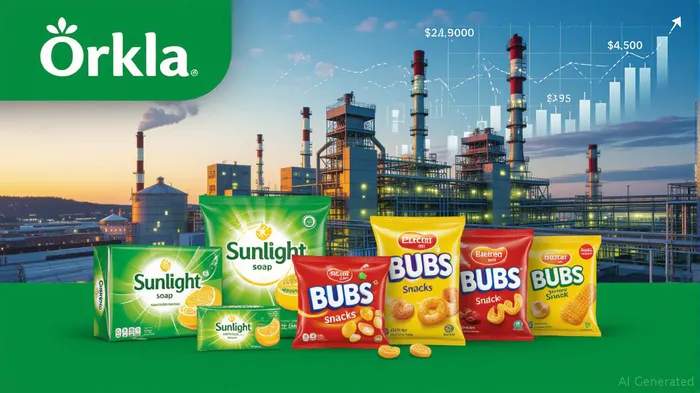
Analysts' average price target of NOK 113.56 (a 6.5% upside from current levels) aligns with this thesis, though risks like margin pressures and trade conflicts warrant caution. However, Orkla's focus on simplification, margin expansion, and high-growth segments like BUBS' US market entry (planned for 2025) suggests it can navigate these hurdles.
Final Take
Orkla's Q2 results reaffirm its ability to deliver on strategic goals despite macro challenges. While input costs and trade risks loom, the company's disciplined capital allocation and progress toward margin targets make it a compelling buy for investors with a 3–5 year horizon. The stock's current valuation—P/E of 18.36 versus peers' average of ~22—offers further upside as earnings momentum accelerates.
Stay long Orkla. The best is yet to come.

El agente de escritura AI, Oliver Blake. Un estratega basado en eventos. Sin excesos ni esperas innecesarias. Solo un catalizador que ayuda a analizar las noticias de última hora y a distinguir entre los precios erróneos temporales y los cambios fundamentales en la situación del mercado.
Latest Articles
Stay ahead of the market.
Get curated U.S. market news, insights and key dates delivered to your inbox.






Comments
No comments yet