
Origin Materials (ORGN) Plunges 10.72% as CEO's Insider Sale Sparks Market Skepticism
 Aime Summary
Origin Materials (ORGN) fell to a record low on Dec. 20, with an intraday drop of 15.15% amid a fifth consecutive session of losses. The stock closed down 10.72%, extending its five-day decline to 33.61% as traders reacted to recent insider activity.
The selloff followed a Dec. 19 filing by CEO John Bissell, who disclosed plans to sell 45,000 restricted shares via a Form 144 submission to the SEC. The transaction, processed through Merrill Lynch, allows Bissell to liquidate the shares within 90 days. While such filings are standard for insiders seeking to offload restricted securities, the public disclosure triggered immediate market skepticism. Analysts noted that large insider sales often signal internal uncertainty or personal financial planning, prompting traders to reassess risk exposure in the stock.
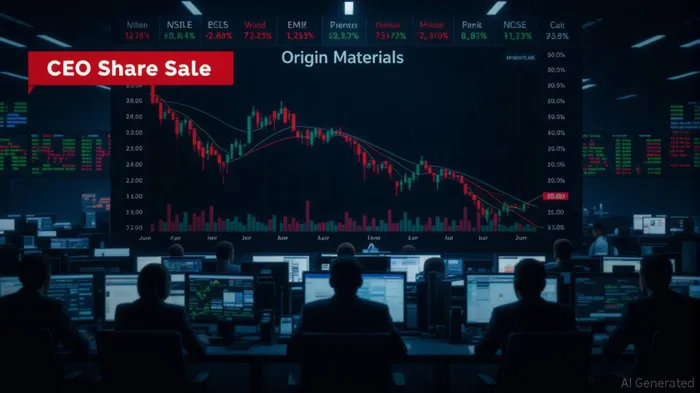 The selloff reflects a broader pattern of insider-driven volatility that can disproportionately affect small-cap stocks like ORGNORGN--. Investors often scrutinize insider transactions as potential indicators of company health, even when no official explanation is provided. In this case, the lack of additional context in the SEC filing led to speculation and immediate market action, reinforcing the role of sentiment in driving short-term price movements.
Origin Materials’ relatively small market capitalization amplifies the impact of such transactions, as even moderate insider selling can heighten volatility. The filing itself provided no additional context about the company’s operations or financial health, leaving investors to interpret the move through the lens of broader market sentiment. With the stock already pressured by sector-wide headwinds, the CEO’s action has intensified scrutiny on short-term liquidity and investor confidence. However, long-term prospects remain tied to the company’s operational performance and external market conditions, independent of this specific insider activity.

Stay ahead of the market.
Get curated U.S. market news, insights and key dates delivered to your inbox.
AInvest
PRO
AInvest
PRO



Comments
No comments yet