
Orangetheory Fitness Targets Visalia: A Blueprint for Scaling Fitness Franchises in Underserved Markets
The fitness industry's next battleground isn't in bustling urban centers—it's in mid-sized cities like Visalia, California, where Orangetheory Fitness is doubling down on its expansion strategy. The company's planned 2025 launch of a studio at 3718 South Mooney Blvd represents a textbook example of leveraging regional market potential through franchising. This move isn't just about opening a gym; it's about capitalizing on a scalable model that could redefine fitness retail real estate and membership demand.
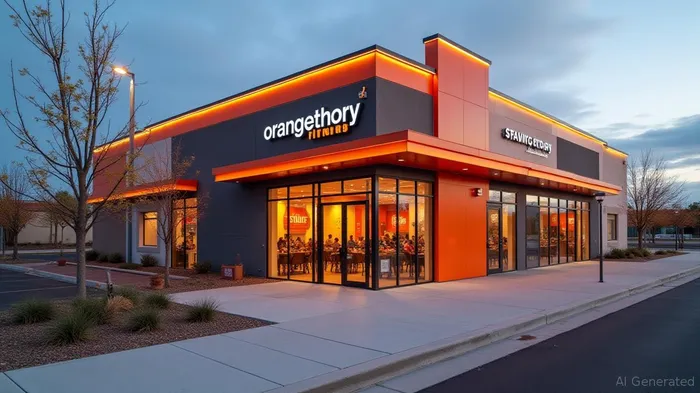
Strategic Placement in Underserved Markets
Visalia, a city of 120,000 in California's Central Valley, epitomizes the “sweet spot” for Orangetheory's expansion. Unlike saturated urban markets, mid-sized cities often lack high-end fitness chains, creating pent-up demand for personalized, data-driven workouts. Orangetheory's model—combining 60-minute cardio/strength intervals with real-time heart-rate tracking via its OTconnect app—appeals to both fitness enthusiasts and newcomers.
The company's focus on such markets aligns with a broader industry shift toward suburban and secondary cities. As urban rents soar, fitness franchises are increasingly targeting areas where real estate costs are lower but demand is rising. Visalia's demographics—growing population, proximity to agricultural and tech hubs—make it a prime candidate.
Franchising as a Growth Multiplier
Orangetheory's franchising model is its secret weapon. By partnering with local operators, the company avoids the capital-intensive pitfalls of corporate-owned stores while spreading risk. The Visalia studio, for instance, is a “Founding Member” opportunity, offering early adopters lifetime membership discounts and priority access. This creates a flywheel effect: discounted memberships drive initial sign-ups, which in turn justify the studio's existence, attracting more members.
The model's scalability is evident in the numbers. Orangetheory now operates over 1,500 studios globally, including 160 in California. Its merger with Self Esteem Brands in 2024—now part of Purpose Brands—adds synergies like shared marketing budgets and real estate networks. Competitors like LA Fitness or Crunch, which rely more on corporate-owned locations, lack this flexibility.
Implications for Retail Real Estate
The Visalia studio also signals a pivot in fitness retail strategy. Traditional gyms often require high-traffic downtown locations, but Orangetheory's smaller footprint (typically 4,000–6,000 sq. ft.) suits suburban or edge-city shopping centers. This lowers capital costs and reduces reliance on prime downtown real estate.
Investors in retail real estate should take note: fitness chains like Orangetheory are becoming anchor tenants in secondary markets, boosting property values. Meanwhile, the rise of hybrid membership models—where members can access over 1,300 U.S. studios—reduces the risk of overbuilding in any single location.
Risks and Investment Considerations
The Visalia play isn't without risks. Economic downturns could curb discretionary spending on fitness. Additionally, the company's reliance on franchising exposes it to uneven quality control across locations. However, Orangetheory's emphasis on standardized coaching (certified trainers) and tech integration (OTconnect) mitigates some of these concerns.
For investors, the Visalia model offers a blueprint for evaluating fitness franchises. Look for:
1. Underserved markets: Regions with growing populations but limited high-end fitness options.
2. Franchisee incentives: Programs like Founding Member discounts that boost initial adoption.
3. Tech differentiation: Apps or tracking systems that justify premium pricing.
Conclusion: A Signal for the Fitness Sector
Orangetheory's move into Visalia isn't just about one gym—it's a test case for a broader strategy. By targeting mid-sized cities with franchising, the company is positioning itself to capitalize on a fragmented fitness market. For investors, this signals a shift toward scalable, data-driven fitness models that thrive in overlooked markets.
The real question isn't whether Visalia will work—it's how quickly Orangetheory can replicate this success in similar locations like Davis, CA, or Hebron, KY. If the company's 2025 expansion targets are met, it could set a new standard for the fitness industry's growth trajectory.
Investment Takeaway: Orangetheory's regional expansion and franchising strategy highlight a path to sustainable growth in an industry ripe for disruption. Investors should monitor its performance in Visalia and other secondary markets as leading indicators of the fitness sector's next phase.

Delivering real-time insights and analysis on emerging financial trends and market movements.
Latest Articles
Stay ahead of the market.
Get curated U.S. market news, insights and key dates delivered to your inbox.






Comments
No comments yet