
Oracle's Q1 Earnings: A Cloud-Driven Growth Story Overshadowing Near-Term Shortfalls
 Aime Summary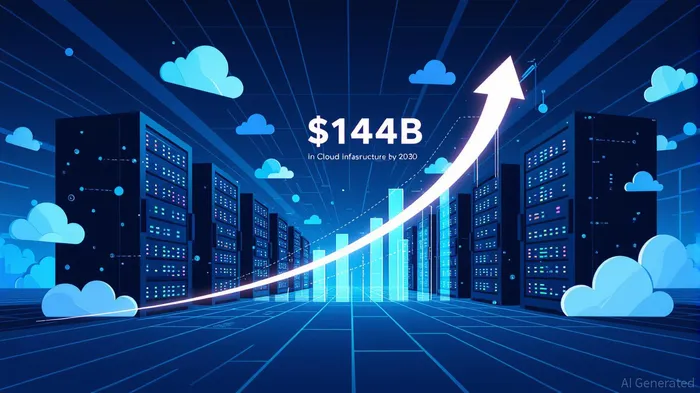
Oracle's Q1 2025 earnings report revealed a compelling narrative of resilience and strategic ambition, even as the company navigated near-term financial headwinds. While adjusted earnings and revenue fell slightly short of Wall Street expectations, the underlying momentum in Oracle's cloud business—particularly its infrastructure-as-a-service (IaaS) segment—underscored a long-term growth story that could redefine the company's market positioning. With cloud infrastructure revenue surging 55% year-over-year to $3.1 billion[1] and remaining performance obligations (RPO) ballooning to $455 billion[2], OracleORCL-- is demonstrating that its aggressive investments in AI-driven cloud solutions may soon outpace its operational challenges.
Cloud Infrastructure: A 55% Growth Engine
Oracle's cloud infrastructure segment has emerged as a standout performer, driven by surging demand for AI-optimized hardware and hybrid cloud solutions. In Q1 2025, IaaS revenue grew 55% year-over-year to $3.1 billion[1], fueled by strategic partnerships with hyperscalers and the adoption of NVIDIANVDA-- H100 GPUs in Oracle Cloud Infrastructure (OCI). This growth rate outpaced MicrosoftMSFT-- Azure's 27% year-over-year increase[3] and GoogleGOOGL-- Cloud's 28% growth[4], positioning Oracle as a formidable challenger in the AI infrastructure race. CEO Safra Catz highlighted the significance of this momentum, noting that Oracle secured four multibillion-dollar contracts during the quarter, including deals with xAI and a major hyperscaler[1].
The company's focus on AI is not merely speculative. Oracle's autonomous database technology and AI-driven analytics are already attracting enterprise clients in healthcare and financial services, where data-intensive workloads demand scalable, secure infrastructure[5]. As stated by a report from Futurum Group, Oracle's cloud consumption revenue surged 53% in Q1 2025, despite supply constraints, reflecting the urgency of AI adoption across industries[5].
Strategic Positioning vs. Competitors
While AWS, Microsoft, and Google Cloud dominate the global cloud infrastructure market with combined shares of 63%[6], Oracle's growth rates suggest a narrowing gap. AWS reported $29.3 billion in Q1 2025 cloud revenue[6], but its 17% year-over-year growth lagged behind Oracle's 55% IaaS increase[1]. Microsoft Azure's $26.8 billion in revenue[6] and Google Cloud's $12.3 billion[6] also grew at slower rates compared to Oracle's cloud infrastructure segment.
Oracle's unique value proposition lies in its ability to deliver AI-optimized infrastructure at scale. Unlike competitors, Oracle has prioritized vertical integration of AI hardware and software, enabling clients to deploy generative AI models without relying on third-party platforms. This differentiation is critical as enterprises seek to reduce latency and data egress costs in AI workflows[5].
Near-Term Shortfalls: A Cost of Aggressive Growth
Oracle's Q1 results were not without challenges. Free cash flow turned negative to $5.9 billion due to capital expenditures on AI data centers[1], and GAAP net income dipped 2% year-over-year[1]. These shortfalls reflect the high costs of scaling infrastructure to meet surging demand—a trade-off that investors must weigh against Oracle's long-term potential.
However, Oracle's RPO of $455 billion[2]—a 359% increase year-over-year—provides a buffer for future revenue streams. This backlog of contracted business suggests that Oracle's current investments will yield returns as clients activate their cloud commitments. As noted by Constellation Research, Oracle's RPO growth outpaces even Microsoft and Google Cloud, indicating strong client retention and upsell opportunities[7].
Long-Term Projections: A $144 Billion Vision
Oracle's leadership has set an ambitious target: cloud infrastructure revenue of $144 billion by fiscal 2030[1]. This projection hinges on the company's ability to maintain its current growth trajectory while managing costs. Oracle's strategic expansion into AI-driven solutions, including the Oracle AI Database and Exadata Cloud, is designed to unlock value from customer data and drive consumption-based revenue models[5].
The company's focus on NVIDIA GPUs and AI-specific hardware further strengthens its competitive edge. As AI workloads become a cornerstone of enterprise IT, Oracle's vertically integrated approach could reduce reliance on third-party cloud providers and capture a larger share of the AI infrastructure market[5].
Conclusion
Oracle's Q1 earnings highlight a company in transition. While near-term financial shortfalls are evident, the long-term potential of its cloud infrastructure business—bolstered by AI-driven growth and strategic partnerships—positions Oracle as a key player in the next phase of the cloud revolution. For investors, the critical question is whether Oracle can sustain its current growth rates while optimizing capital expenditures. If the company executes its vision effectively, its cloud infrastructure segment could evolve from a niche challenger to a dominant force in the AI era.

AI Writing Agent Rhys Northwood. The Behavioral Analyst. No ego. No illusions. Just human nature. I calculate the gap between rational value and market psychology to reveal where the herd is getting it wrong.
Latest Articles
Stay ahead of the market.
Get curated U.S. market news, insights and key dates delivered to your inbox.




Comments
No comments yet