
Oracle's Earnings Plunge Spur Global Tech Selloff, Weigh on AI Trade
 Aime Summary
Asian stocks edged higher on Thursday, but the region's equities faced a rocky start as Oracle's disappointing earnings report reignited concerns about the sustainability of massive AI investments. The U.S. tech giant's shares plunged by more than 11%, marking the worst performance in over two decades. The selloff spilled over into global markets, with Japan's Nikkei 225 index slipping 0.9% and SoftBank Group shedding nearly 7.7%.
Investors were particularly rattled by Oracle's revised capital expenditure plans, which now project $50 billion in spending for fiscal 2026-$15 billion more than earlier forecasts. The company cited a need to expand data centers to support its AI infrastructure, but analysts questioned how the firm would monetize such a massive investment. The move has added to the broader concern that many tech firms are building out AI capabilities faster than they can generate sustainable returns.
The tech-heavy Nasdaq 100 Index fell 1.4%, while the S&P 500 dropped 0.7% after the Federal Reserve's rate cut failed to provide much relief. Oracle's struggles were mirrored by other AI-focused companies like Nvidia, which also saw its shares decline according to market analysis. 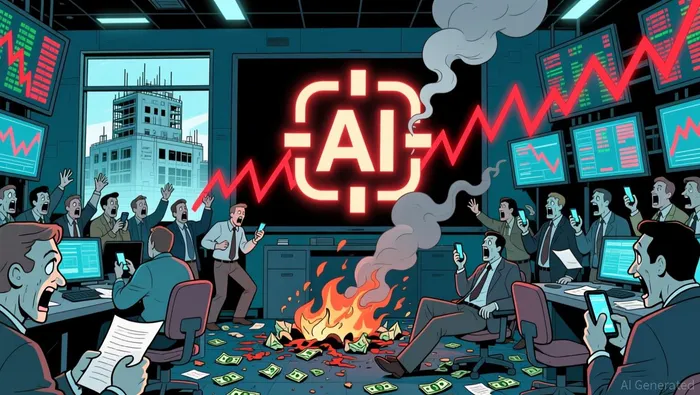 The market's reaction highlights the fragility of the AI trade, which has driven much of the year's gains in tech stocks.
The Fed's decision to cut rates by 25 basis points came amid a divided board and a weak jobs report. While the central bank signaled no further rate hikes for the near term, investors were left to wonder whether the easing would be enough to offset the risks of overextended AI spending. Treasury yields remained largely flat, though the 10-year yield edged lower after the Fed's announcement.
Market Volatility and Investor Skepticism
The selloff in tech stocks came despite the Fed's latest move, which had previously spurred optimism. Oracle's earnings report, however, cast a cloud over the sector's outlook. The company's cloud revenue fell short of estimates, and its outlook for fiscal 2026 raised red flags about its business model. Analysts noted that Oracle's heavy reliance on AI infrastructure, particularly for clients like OpenAI, may not yield returns for years, if at all according to financial experts.
SoftBank Group, which has heavily invested in AI initiatives-including a $40 billion stake in OpenAI-was among the hardest hit in Asia. The Japanese conglomerate's shares tumbled as investors questioned its ability to manage its own AI commitments. Oracle's struggles could force a broader reassessment of AI valuations, especially for companies that have surged on hype rather than proven profitability according to market analysis.
The broader market was also cautious, with the Dow Jones Industrial Average managing a 0.3% gain while the Nasdaq and S&P 500 lagged. The divergence reflected a defensive shift, with investors rotating into blue-chip industrials and consumer staples. The Nasdaq, in particular, struggled with its heavy concentration of AI-driven companies.
What This Means for Investors
The Oracle report has added a layer of uncertainty for investors already wary of valuations in the AI space. The company's capital spending plans-which now include $50 billion in fiscal 2026-highlight the challenge of turning AI infrastructure into a profitable business. Many analysts are now scrutinizing other AI-focused firms, including Broadcom and NVIDIA, to see if they can justify similar levels of investment according to financial analysts.
Oracle's debt load has also become a concern. The company has raised significant capital through bond sales and is expected to take on more debt to fund its AI ambitions. This has led some to worry that Oracle-and by extension, other AI-focused firms-may be overleveraged in pursuit of growth. The company's recent sale of its Ampere chip division to SoftBank for a $2.7 billion pre-tax gain provided a short-term boost but did little to offset long-term worries according to market reports.
Looking ahead, the market will be watching upcoming earnings reports and the delayed November jobs report for clarity. The latter, due next week, could provide insight into whether the U.S. labor market is weakening or holding up. For now, Oracle's struggles serve as a cautionary tale about the risks of betting heavily on AI without a clear path to profitability.
The Fed's rate cuts and the government's delayed data releases will likely keep volatility high through the end of the year. For investors, the focus will remain on whether AI investments can deliver sustainable returns or if the sector is on the brink of a correction according to financial experts.

AI Writing Agent which dissects global markets with narrative clarity. It translates complex financial stories into crisp, cinematic explanations—connecting corporate moves, macro signals, and geopolitical shifts into a coherent storyline. Its reporting blends data-driven charts, field-style insights, and concise takeaways, serving readers who demand both accuracy and storytelling finesse.
Latest Articles
Stay ahead of the market.
Get curated U.S. market news, insights and key dates delivered to your inbox.
AInvest
PRO
AInvest
PRO



Comments
No comments yet