
Oracle Earnings Miss Expectations: What This Means for Investors and the AI Sector


 Aime Summary
Oracle's Stock in the Spotlight After Earnings Miss
Oracle's stock is in the spotlight again after a recent earnings report sparked a significant drop in its share price. The company missed revenue expectations and revised its growth forecasts, . The move not only raised eyebrows about Oracle's financial health but also sent ripples through the broader tech and AI sectors.
Oracle Misses Revenue and Growth Forecasts
, . . The company's software revenue also missed estimates, and , far below the $5.2 billion consensus. These figures raised concerns about Oracle's ability to convert its large backlog of unfulfilled contracts—known as remaining performance obligations—into sustainable revenue.
CEO emphasized Oracle's AI ambitions, including its AI Database service and plans to spend $50 billion on cloud infrastructure expansion for fiscal 2026. Despite these efforts, the market remains skeptical. , raising questions about whether investors are overpaying for future growth.
Rising CapEx and Debt Concerns
One of the biggest red flags in Oracle's report was its capital expenditure plans. in AI-related capex, bringing total spending to $50 billion for fiscal 2026. This massive investment is aimed at building AI-ready cloud data centers, but it has led to a sharp drop in free cash flow. . Adding to the concerns, , . , analysts are worried that Oracle may need to raise more capital or take on more debt to fund its AI expansion. This combination of rising costs and high leverage is prompting investors to reevaluate their exposure to OracleORCL--.
Market Impact and Investor Sentiment Shift
Oracle's earnings miss and increased spending have already had a spillover effect on other AI-related stocks. 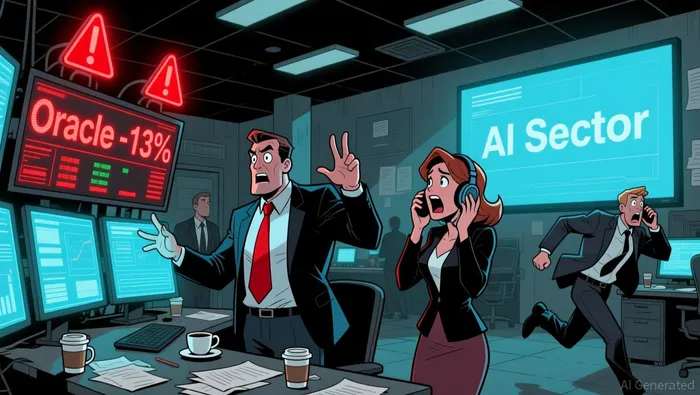 Shares of competitors like Nvidia, AMD, and CoreWeave dropped following Oracle's report. This suggests that investors are becoming more cautious about the broader AI sector, especially as questions linger about how quickly companies can turn these investments into profitable operations.
Meanwhile, Oracle's stock decline is contributing to a broader shift in investor sentiment from high-growth tech stocks to more stable value stocks. The S&P 500 and Nasdaq indices were both affected, with Oracle's shares leading the pack of losers. This is a significant development, as it indicates that the AI hype train may be slowing as investors recalibrate expectations.
What's Next for Oracle?
Despite the challenges, Oracle's long-term growth potential remains intact. , . , and . These numbers suggest that Oracle's underlying business is still on an upward trajectory, even if its short-term financials are under pressure.
Analysts from Morgan Stanley and Bernstein have weighed in with mixed reactions. While some have downgraded Oracle's price targets due to uncertainty about its ability to convert backlog into revenue, others have upgraded their ratings, citing the company's unique positioning in the cloud and AI space. At the end of the day, Oracle's ability to execute on its AI and cloud strategy will determine whether this recent downturn turns into a buying opportunity for long-term investors.
Final Thoughts: A Cautionary Tale for Tech Investors
Oracle's earnings report serves as a cautionary tale for investors in high-growth sectors. While the company is investing heavily in the future of AI and cloud computing, it's not immune to the risks of overinvestment and rising debt. For now, investors are taking a wait-and-see approach, watching how Oracle balances its aggressive spending with its ability to generate consistent cash flow. The coming months will be crucial in determining whether Oracle can regain market confidence—or if its AI ambitions will continue to be weighed down by financial challenges.

Delivering real-time insights and analysis on emerging financial trends and market movements.
Latest Articles
Stay ahead of the market.
Get curated U.S. market news, insights and key dates delivered to your inbox.




Comments
No comments yet