
Oracle's AI-Powered Ascendancy: Why Larry Ellison's Second Place is No Accident
Larry Ellison's rise to the second-richest person in the world—surpassing tech titans like Mark Zuckerberg and Jeff Bezos—reflects a seismic shift in the tech sector. The driving force? Oracle's transformation into a leader in AI-driven enterprise software. As Ellison's net worth surged by $56 billion in 2025 alone, fueled by a 32% jump in Oracle's stock price following its Q2 earnings, the question arises: Is Oracle's AI strategy undervalued, and what does this mean for investors?
The AI Revolution's Hidden Giant
While Silicon Valley's spotlight shines on generative AI startups and cloud giants, OracleORCL-- has quietly positioned itself as a powerhouse in enterprise AI integration. Ellison's vision is clear: leverage Oracle's decades-old dominance in enterprise software to build AI solutions that scale for businesses. This isn't just about chatbots; it's about embedding AI into core systems like supply chain management, customer analytics, and data security.
Key Move: The Stargate Project
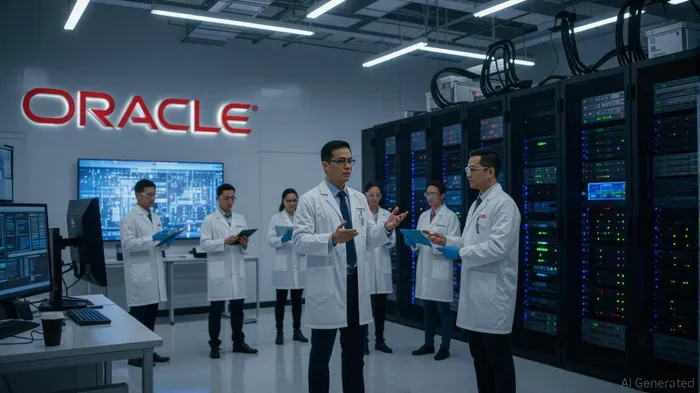
Oracle's $500 billion Stargate initiative—a partnership with NVIDIA—aims to build an AI infrastructure that democratizes large-scale language models (LLMs) for enterprises. Unlike rivals like MicrosoftMSFT-- Azure or AWS, which rely on third-party tools, Oracle is integrating its own AI capabilities directly into its cloud platform. This vertical integration reduces dependency on external providers and creates a defensible competitive moat.
Why Oracle Outperforms in Enterprise AI
- Existing Enterprise Footprint: Oracle's 500,000+ business customers provide a ready audience for AI tools. Microsoft and AmazonAMZN-- may have cloud scale, but Oracle's deep integration into ERP, CRM, and databases gives it an edge in tailored AI solutions.
- Hardware-Software Synergy: Oracle's recent $1 billion investment in AI-specific servers (co-designed with Intel) ensures its cloud can run complex models faster than competitors' generic hardware.
- AI-as-a-Service Pricing: Oracle's subscription model for AI tools (e.g., Oracle Cloud Infrastructure AI Platform) offers predictable revenue streams, unlike the volatile valuations of standalone AI startups.
Oracle's 2025 surge (32% YTD) contrasts with NASDAQ's 12% gain, reflecting investor recognition of its AI pivot.
Ellison's Track Record: Betting on Enterprise Resilience
Ellison's tenure as Oracle's chairman and CTO (despite stepping down as CEO) underscores his hands-on approach to innovation. His 42% stake in Oracle aligns his interests with long-term value creation—unlike executives who prioritize short-term gains.
Critics argue Oracle's AI is “late to the game,” but this misses the point. Enterprise AI isn't about flashy demos; it's about reliability, security, and scalability—Oracle's bread and butter. While startups like Anthropic or OpenAI chase consumer use cases, Oracle is solving the harder problem: How do you make AI work for Fortune 500 companies?
Why the Market Underestimates Oracle's AI
Oracle's P/E ratio of 18x is far below peers like NVIDIANVDA-- (45x) or Microsoft (30x), despite its AI investments. This undervaluation stems from two misconceptions:
1. Legacy Software Bias: Investors still see Oracle as a “dinosaur” database company, not a tech innovator.
2. AI as a Commodity: The market assumes AI tools are interchangeable, ignoring Oracle's enterprise-specific advantages (e.g., compliance, data privacy).
Oracle trades at a discount despite its AI-driven growth, suggesting upside potential.
Investment Thesis: Buy Oracle for Long-Term AI Dominance
Case for Buying ORCL:
- Valuation: At $85/share (as of July 2025), Oracle is undervalued relative to its AI-driven growth. A 2025 revenue target of $100 billion (up from $53 billion in 2024) is achievable with AI adoption.
- Dividend Yield: A 1.2% yield provides downside protection while the AI story unfolds.
- Competitive Edge: Oracle's vertical integration in AI infrastructure could carve out a $50+ billion annual revenue stream by 2030.
Risks:
- Short-term volatility due to macroeconomic headwinds.
- Overvaluation of rivals' AI plays (e.g., AWS SageMaker) could compress margins.
Conclusion: Ellison's Second Place is a Buying Signal
Larry Ellison's ascent isn't a fluke—it's the result of a deliberate strategy to own enterprise AI. While Oracle's stock may face near-term headwinds, its AI infrastructure and customer base position it as a decade-long growth story. Investors ignoring this are missing a rare opportunity to buy a tech titan at a discount.
Recommendation: Add Oracle to your portfolio for long-term exposure to enterprise AI. The market will catch up—just ask Larry.
Data as of July 2025. Past performance does not guarantee future results.

Stay ahead of the market.
Get curated U.S. market news, insights and key dates delivered to your inbox.




Comments
No comments yet