
Options-Based ETFs: Navigating Income Generation Amid Volatility and Risk
 Aime Summary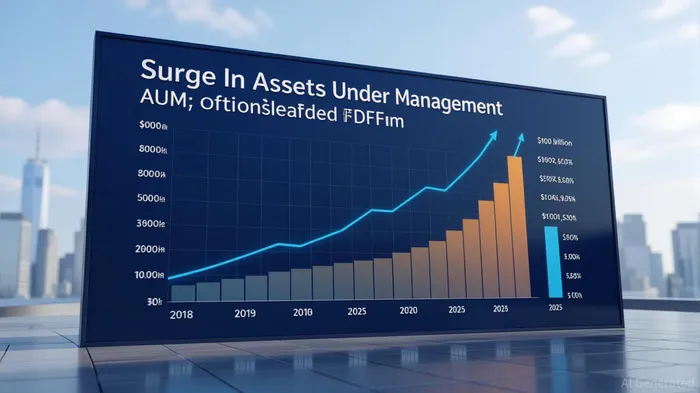
In the wake of 2025's seismic market shifts—driven by aggressive tariff policies, geopolitical tensions, and the specter of stagflation—investors have increasingly turned to options-based exchange-traded funds (ETFs) as a dual-purpose tool for yield generation and risk mitigation. These instruments, which leverage derivatives to enhance income and hedge volatility, have evolved from niche products to cornerstones of modern portfolios. Yet their allure comes with a complex calculus of trade-offs, demanding a nuanced understanding of both their potential and their pitfalls.
The Catalyst: Volatility and the Yield Gap
The first half of 2025 saw the S&P 500 (^GSPC) plummet 12.9% around April 2, 2025, while the VIX surged 30.8 points, reflecting the market's panic over Trump-era tariffs. Such turbulence, combined with historically low interest rates and the One Big Beautiful Bill Act's fiscal implications, created a vacuum for yield. Traditional fixed-income assets, already stretched by inflationary pressures, failed to deliver the returns investors craved. This gap spurred innovation: options-based ETFs, which generate income through premiums from call or put options, emerged as a compelling alternative.
The Morningstar Derivative Income category exemplifies this trend. By November 2024, the category had grown from 10 funds to over 100, amassing $100 billion in AUM. These ETFs employ strategies like covered call writing—selling call options on underlying assets to collect premiums—which can yield double-digit returns. For example, the Natixis Gateway Quality Income ETF (GQI) delivered an 8.2% average yield by leveraging high-quality equities, while the Yieldmax MSTR Option Income Strategy ETF (MSTY) pushed the envelope further, offering a staggering 151% annualized yield through Bitcoin-linked options.
Risk-Reward Dilemmas: The Double-Edged Sword of Derivatives
Options-based ETFs are not without their caveats. The same strategies that generate income can limit upside potential. For instance, GQI's covered call overlay on 50% of its portfolio caps gains if the underlying equities surge. Conversely, MSTY's aggressive approach exposes it to the volatility of MSTR and Bitcoin, risking significant capital erosion if prices collapse.
The 2008 financial crisis and 2020 pandemic offer instructive parallels. During the 2008 downturn, low-volatility ETFs outperformed broad-market benchmarks, preserving capital in a deflationary environment. In contrast, 2020's V-shaped recovery rewarded growth-oriented strategies, while income-focused options ETFs struggled to adapt to the rapid market rebound. These examples underscore the importance of aligning an ETF's structure with macroeconomic conditions.
Long-Term Viability: Stagflation, Expansion, and Strategic Allocation
As 2025 progresses, the risk of stagflation—a blend of high inflation and weak growth—looms large. Bank of AmericaBAC-- analysts warn that 70% of global money managers anticipate stagflation by Q1 2026. In such an environment, options-based ETFs could serve as defensive tools. For instance, buffer ETFs like Goldman Sachs' GBXA, which protect against 5%–25% market declines, may gain traction. However, their effectiveness hinges on accurate market timing and asset selection.
Conversely, during economic expansions or low-inflation periods, these ETFs can enhance returns while capping downside risk. The Goldman SachsGS-- S&P 500 Premium Income ETF (GPIX), with its 8.5% trailing yield, outperformed SPDR S&P 500 (SPY) in 2025 by leveraging dynamic call options. Yet, this strategy requires careful calibration to avoid overexposure to interest rate hikes or inflation spikes.
Investment Advice: Balancing Innovation with Prudence
For income-seeking investors, options-based ETFs present a compelling, but not universal, solution. Here's how to navigate the landscape:
1. Diversify the Yield Sources: Combine options-based ETFs with inflation-linked bonds (TIPS) or short-duration Treasuries to mitigate sector-specific risks.
2. Assess Risk Tolerance: Aggressive strategies like MSTY's Bitcoin-linked options suit high-risk appetites, while conservative options like GQI are better for capital preservation.
3. Monitor Macro Shifts: Stagflation scenarios may favor buffer ETFs or cash-heavy allocations, while expansionary periods could justify higher exposure to growth-oriented options strategies.
4. Leverage Expert Insights: J.P. Morgan's projection of a 40% recession risk in 2025's second half underscores the need for dynamic rebalancing.
Conclusion: A Strategic, Not a Singular, Tool
Options-based ETFs are a testament to the adaptability of modern finance, offering yield in a low-interest-rate world while hedging against volatility. However, their success depends on aligning their structures with both investor goals and macroeconomic realities. As markets evolve, these instruments will likely remain a key component of diversified portfolios—provided their trade-offs are understood and managed with rigor.

Stay ahead of the market.
Get curated U.S. market news, insights and key dates delivered to your inbox.






Comments
No comments yet