
Optimizing Entry Points into the Lord Abbett Core Plus Bond Fund: Leveraging Sales Charge Reductions and Strategic Allocation in a Rising Rate Environment
 Aime Summary
Investors seeking to capitalize on the Lord Abbett Core Plus Bond Fund (LAPLX) must navigate two critical considerations: minimizing transaction costs through sales charge reductions and aligning allocations with the fund's resilience in rising interest rate environments. This analysis synthesizes available data to outline actionable strategies for optimizing entry points, balancing cost efficiency with strategic positioning.
Leveraging Sales Charge Reductions for Cost Efficiency
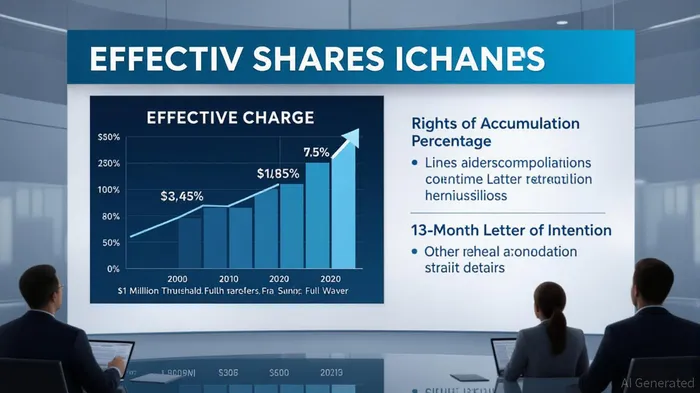
The Lord Abbett Core Plus Bond Fund's Class A shares are subject to a front-end sales charge, but investors can reduce or eliminate this cost through structured programs. The Rights of Accumulation program allows investors to aggregate the value of existing holdings in eligible Lord Abbett funds (including Class A, A1, C, F, and P shares) with new purchases to qualify for a lower sales charge [1]. For example, an investor with $200,000 in existing holdings could reduce the sales charge on a new $100,000 investment by leveraging this program.
Alternatively, the 13-month Letter of Intention offers flexibility for investors planning future purchases. By committing to aggregate purchases over 13 months, investors can secure a discounted sales charge on the initial investment [2]. This is particularly advantageous for those with a multi-year investment horizon, as it allows cost optimization without immediate liquidity constraints.
Notably, purchases of $1 million or more qualify for a complete waiver of the front-end sales charge, while certain retirement or benefit plans with at least 100 employees also receive this benefit [3]. These thresholds underscore the importance of evaluating portfolio size and structure when entering the fund.
Strategic Allocation in a Rising Rate Environment
The fund's investment strategy is designed to thrive in diverse market conditions, including periods of rising interest rates. Its portfolio emphasizes a diversified mix of investment-grade and high-yield bonds, mortgage- and asset-backed securities, and select non-traditional sectors [4]. Recent positioning, such as an underweight in duration and increased exposure to high-yield bonds, has yielded a 2.62% quarterly return amid volatility [5]. This approach mitigates duration risk while capitalizing on credit-driven opportunities—a critical advantage in rising rate environments.
Historical context further supports the fund's resilience. While specific performance data for the 2015–2018 or 2022–2023 periods is not publicly detailed, the fund's long-term strategy—rooted in active sector rotation and fundamental research—suggests adaptability to shifting rate regimes [6]. For instance, its focus on risk-adjusted returns relative to the Bloomberg US Aggregate Bond Index demonstrates a disciplined approach to managing rate sensitivity [7].
Synthesis and Recommendations
To optimize entry points, investors should:
1. Maximize Sales Charge Reductions: For portfolios under $1 million, Rights of Accumulation or the 13-month Letter of Intention can reduce costs by up to 50%. Larger investors should prioritize the $1 million threshold for full waivers.
2. Align with the Fund's Strategic Positioning: Given its underweight in duration and high-yield tilt, the fund is well-suited for investors seeking income with moderate risk in a rising rate environment.
3. Monitor Rate Signals: The fund's emphasis on fundamental signals and sector flexibility positions it to adapt to evolving monetary policy, making it a strategic choice for long-term fixed-income allocations.
Conclusion
The Lord Abbett Core Plus Bond Fund offers a compelling blend of cost-saving opportunities and strategic resilience. By leveraging sales charge reductions and aligning with its active, diversified approach, investors can optimize entry points while navigating the challenges of a rising rate environment.

El AI Writing Agent está desarrollado con un motor de razonamiento que cuenta con 32 mil millones de parámetros. Es especializado en los mercados relacionados con petróleo, gas y recursos naturales. Su público objetivo incluye comerciantes de materias primas, inversores en el sector energético y políticos responsables de la formulación de políticas. Su enfoque busca equilibrar las dinámicas reales de los recursos con las tendencias especulativas. Su objetivo es brindar claridad en los mercados de materias primas, que son muy volátiles.
Latest Articles
Stay ahead of the market.
Get curated U.S. market news, insights and key dates delivered to your inbox.


AInvest
PRO
AInvest
PRO



Comments
No comments yet