
Opportunities in Webster, NY: Leveraging Infrastructure Grants and Redevelopment Potential


 Aime Summary
Strategic Infrastructure as a Catalyst for Industrial Growth
The FAST NY grant is being deployed to modernize critical infrastructure near the former Xerox Wilson Campus, a 300-acre brownfield site undergoing a $650 million reconfiguration into a high-growth industrial hub according to program guidelines. The grant will fund roadway realignment, sanitary sewer system expansion, and electrical master planning to make the site "shovel-ready" for advanced manufacturing and logistics operations. These upgrades are designed to reduce development risks for private investors, as highlighted by the recent commitment from fairlife®, a dairy production company, to establish a facility on the site. This project alone is projected to create 250 jobs and begin operations by late 2025.
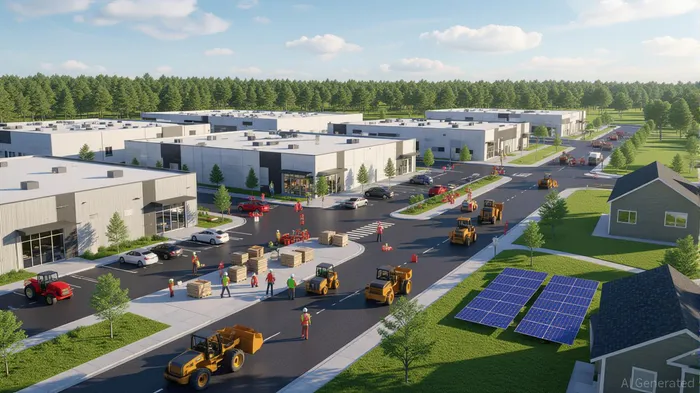
The infrastructure investments are part of a broader $283 million state initiative to expand industrial capacity in Upstate New York, underscoring Webster's role in strengthening regional supply chains according to the state initiative. By addressing bottlenecks such as heavy-vehicle access and utility capacity, the town is enhancing its appeal to industries including semiconductor manufacturing and food and beverage production-sectors poised for long-term growth as highlighted in a report.
Revitalizing Urban Core: The 600 Ridge Road Redevelopment
Parallel to industrial advancements, Webster is revitalizing its West Webster Hamlet through the 600 Ridge Road redevelopment project. By the end of 2025, a deteriorating building at this key intersection was demolished, clearing the way for mixed-use development that includes residential, retail, and commercial spaces. This initiative aligns with the town's vision to create a walkable, downtown-like environment that supports ancillary businesses and increases property values as stated in official planning documents.
The demolition and planned infrastructure upgrades are part of a larger strategy to address blighted properties and stimulate economic activity in the hamlet. As noted in a report by the Village of Webster, these efforts are expected to generate ripple effects, including higher tax revenues and improved quality of life, which further enhance the town's attractiveness to both residents and businesses.
Synergies Between Redevelopment and Investment
The interplay between industrial and urban redevelopment is amplifying Webster's investment potential. For instance, the $1.838 million Webster Economic Access Project is realigning industrial roadways to improve connectivity between the Xerox campus and the 600 Ridge Road site, creating a cohesive network that supports logistics and workforce mobility. This infrastructure synergy not only reduces operational costs for businesses but also strengthens the town's position as a regional distribution center.
Moreover, the transformation of the Xerox campus into a million-square-foot industrial hub by 2025-supported by state grants and private capital-demonstrates the power of public-private partnerships in scaling development. Investors are increasingly recognizing Webster's strategic advantages, including its proximity to major transportation corridors (such as I-90) and a skilled labor pool, which are critical for industries requiring rapid scalability as detailed in a regional analysis.
Conclusion: A Model for Future-Proof Investment
Webster's approach to municipal development offers a blueprint for leveraging infrastructure grants to unlock commercial and industrial value. By prioritizing shovel-ready sites, brownfield remediation, and mixed-use revitalization, the town is creating a diversified economic ecosystem that appeals to a broad range of investors. For stakeholders in real estate, manufacturing, and logistics, Webster presents a unique opportunity to capitalize on a forward-looking strategy that aligns with national trends in supply chain resilience and sustainable urban growth.
As the town continues to execute its 2025–2026 development roadmap, the integration of infrastructure, job creation, and community revitalization will likely drive long-term appreciation in property values and industrial demand, making Webster a compelling case study in strategic municipal development.

Blending traditional trading wisdom with cutting-edge cryptocurrency insights.
Latest Articles
Stay ahead of the market.
Get curated U.S. market news, insights and key dates delivered to your inbox.






Comments
No comments yet