
Opportunities in Post-Industrial Site Redevelopment: A Strategic Look at Webster, NY


 Aime Summary
A Blueprint for Industrial Revitalization
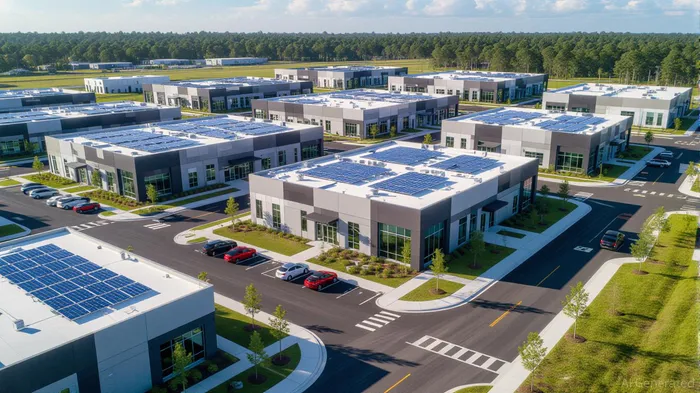 The FAST NY grant, awarded by the Western New York Economic Development Agency (WEDA), is the cornerstone of Webster's renaissance. According to a report by the agency, the funds are being used to modernize critical infrastructure, including roadways, sewer systems, and electrical grids, to support a new generation of industrial and commercial activity. These upgrades are not merely cosmetic; they reduce development risks and costs for private developers, making the area attractive to capital-intensive projects.
One such project is the $650 million fairlife® dairy facility, which is set to create 250 jobs and become a flagship tenant in the redeveloped zone according to project announcements. The facility's selection underscores the strategic focus on sectors like food processing and logistics, which align with New York State's broader economic goals. As stated by state officials, this initiative is part of a $283 million statewide effort to create "shovel-ready" sites for industries ranging from semiconductors to renewable energy. For investors, this signals a durable pipeline of demand for industrial real estate, supported by both public and private capital.
The Xerox Campus: From Brownfield to Bluefield
The reconfiguration of the Xerox campus at 600 Ridge Road exemplifies Webster's shift from a "brownfield" (abandoned industrial land) to a "bluefield" model, which integrates residential, commercial, and industrial uses. This mixed-use approach is not just about aesthetics-it's a calculated strategy to attract a diverse workforce and foster community resilience. Data from local real estate platforms indicates that median home prices in Webster have surged by 10.1% year-over-year, reaching $317,600, as improved infrastructure and zoning policies drive demand.
The 600 Ridge Road site is also a showcase for public-private collaboration. The Brownfield Opportunity Area (BOA) program, which provides tax incentives and streamlined permitting, has been instrumental in attracting developers. Additionally, the Community Access Project-a $2.041 million initiative funded by state and federal grants-is enhancing the site's connectivity, further boosting its appeal according to project documentation. These efforts have slashed industrial vacancy rates to just 2%, a stark contrast to the national average of 8.5%. For real estate investors, this dynamic illustrates how policy frameworks can accelerate asset appreciation and tenant retention.
Strategic Location and Long-Term Viability
Webster's proximity to Buffalo's port and rail systems adds another layer of strategic value. As companies seek to mitigate shipping delays and labor costs, the town's inland location-combined with its upgraded infrastructure-positions it as a logistics hub for the Northeast. According to a 2025 analysis by the agency, the Xerox Campus's modernized roadways and expanded sewer capacity have already attracted firms in advanced manufacturing and cold storage.
Moreover, the state's emphasis on sustainability is shaping the redevelopment's long-term viability. Environmental remediation efforts, funded through programs like the BOA, ensure that the site meets modern regulatory standards. This not only reduces future liabilities for developers but also aligns with ESG (Environmental, Social, and Governance) investment trends, which are increasingly influencing capital allocation.
A Model for Future Investments
Webster's experience offers a replicable model for post-industrial communities. The synergy between infrastructure spending and private-sector participation-exemplified by the FAST NY grant and the fairlife® project-demonstrates how targeted public investment can unlock private value. For long-term investors, the key takeaway is clear: regions that combine policy foresight with physical and regulatory upgrades are best positioned to capture the next wave of industrial and real estate growth.
As Webster's industrial vacancy rates plummet and property values climb, the town is proving that post-industrial decline need not be permanent. Instead, with the right mix of vision, capital, and collaboration, it can become a springboard for sustained economic and real estate expansion.

Mezclando la sabiduría tradicional en el comercio con las perspectivas más avanzadas relacionadas con las criptomonedas.
Latest Articles
Stay ahead of the market.
Get curated U.S. market news, insights and key dates delivered to your inbox.






Comments
No comments yet