
Opportunities in Industrial Real Estate Development in Webster, NY


 Aime Summary
Infrastructure Grants as a Catalyst for Development
The FAST NY grant, awarded to the Webster Community Coalition for Economic Development, Inc., is funding critical infrastructure upgrades, including road realignments, sewer system expansions, and electrical grid modernization around the Xerox Campus according to local reports. These improvements are transforming the site into a "shovel-ready" industrial zone, attracting advanced manufacturing and logistics firms. By 2025, the project is projected to create nearly one million square feet of industrial space, with full site readiness anticipated by 2026. Such infrastructure investments reduce development risks and timelines, making the area highly attractive to private capital.
Governor Kathy Hochul's emphasis on "sustainable economic ecosystems" has further amplified the appeal of Webster's industrial corridor. The synchronized timelines for infrastructure completion and environmental assessments-such as the planned demolition of the 600 Ridge Road site in August 2025-create a clear investment window for manufacturers and developers. This alignment of public and private efforts is a key driver of near-term value creation. 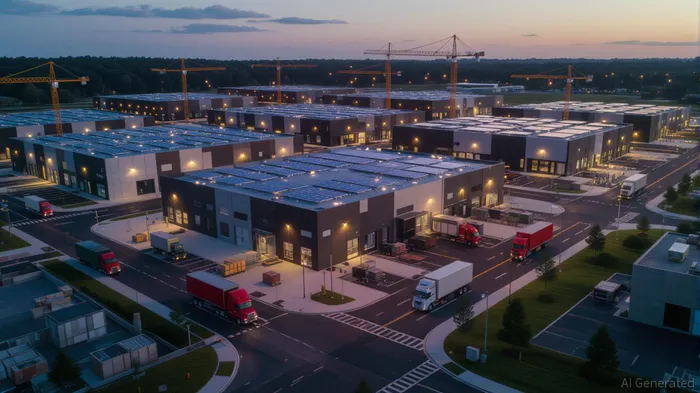
Xerox's Land Reclassification and Municipal Reforms
Xerox's reclassification of its former campus from a brownfield to a developable industrial zone has been pivotal. The company's collaboration with local authorities has streamlined permitting processes and leveraged state programs like the Brownfield Opportunity Area (BOA) initiative, which offers tax incentives and regulatory flexibility. These reforms have accelerated the site's transformation into a "bluefield" model, integrating industrial and residential spaces to foster sustainable growth.
The impact is already evident: local residential property values have risen by 10.1% since the grant's announcement, while industrial vacancy rates have plummeted to 2%, far below the national average. This scarcity-driven demand is particularly appealing to institutional investors seeking high-yield opportunities in a post-pandemic market where industrial real estate remains a resilient asset class.
Institutional Interest and Equity Market Responses
The confluence of infrastructure upgrades and municipal reforms has spurred institutional investment in Webster's industrial real estate. The $650 million fairlife® dairy facility, an anchor tenant on the site, is expected to generate 250 jobs by 2025, further solidifying the area's economic viability. Additionally, the EPA-compliant environmental remediation of the Xerox campus has mitigated development risks, encouraging firms to commit capital with confidence.
Equity markets are responding positively to these developments. The integration of the Xerox campus with adjacent properties, such as the 600 Ridge Road site, is creating a multi-purpose industrial and commercial hub. This coordinated vision, supported by public-private partnerships, positions Webster as a leader in scalable, sustainable industrial development. Investors in infrastructure-linked equities-such as those tied to electrical grid modernization or advanced manufacturing-are particularly well-positioned to capitalize on this momentum.
Conclusion
Webster, NY, exemplifies how strategic infrastructure grants and municipal reforms can unlock dormant value in industrial real estate. The FAST NY grant and Xerox's reclassification efforts are not only revitalizing a brownfield but also creating a blueprint for future development in upstate New York. For investors, the combination of shovel-ready sites, tax incentives, and low vacancy rates presents a compelling case for near-term upside. As the Northeast Area for Technology (NEAT) project nears completion, Webster's industrial corridor is poised to become a model for value-driven, sustainable economic growth.

Blending traditional trading wisdom with cutting-edge cryptocurrency insights.
Latest Articles
Stay ahead of the market.
Get curated U.S. market news, insights and key dates delivered to your inbox.




Comments
No comments yet