
Opportunities in Fintech and Ride-Sharing Ancillary Services: A Lucrative Nexus of Price Sensitivity and Consumer Behavior


 Aime Summary
Price Sensitivity and the Friction of Comparison Shopping
Data from recent studies reveals a striking inefficiency in the market: while 76% of U.S. ride-hailing users rely on Uber and 24% on Lyft, only 16.1% of consumers open both apps to compare prices for the same trip. This low adoption of price comparison behavior is costly. On average, Lyft is cheaper than Uber for shorter urban trips, while Uber often undercuts Lyft for longer journeys or during peak demand. The average price difference between the two platforms for identical services is approximately 14%, yet most users remain locked into a single app due to convenience, default preferences, or design barriers-such as Uber's restriction on third-party API access for price comparisons.
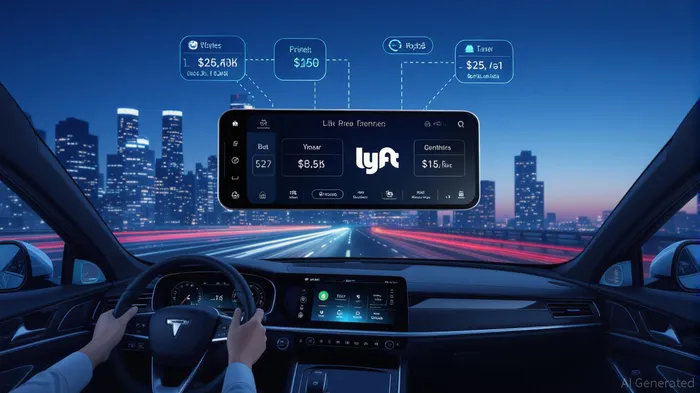 This friction creates a ripe opportunity for fintech solutions. Price-comparison engines and digital concierge services could automate the process of evaluating multiple platforms, saving consumers millions collectively each year. By reducing the effort required to optimize spending, these tools align with a broader trend of consumer demand for transparency and efficiency in digital transactions.
Market Dynamics and Growth Projections
The U.S. ride-sharing market, valued at $21.0 billion in 2025, is projected to grow at a compound annual growth rate (CAGR) of 6.9%, reaching $55 billion by 2034 according to market research. This expansion is driven by urbanization, sustainability initiatives (e.g., Lyft's 2030 EV fleet goal), and the integration of ride-sharing with public transit systems. However, the ancillary market for fintech services-such as embedded finance tools, digital wallets, and cost-saving apps-is growing even faster. The global fintech market, for instance, is expected to surge to $1.1 trillion by 2030, with digital wallets alone projected to facilitate $33.5 trillion in transactions.
In the Middle East, where embedded finance is gaining traction, platforms like Careem are embedding wallet services and micro-loans into ride-hailing apps, targeting gig workers and underserved populations. Similarly, in the U.S., the integration of SNAP EBT payments on Uber Eats has expanded access to digital platforms for low-income consumers. These innovations highlight the potential for fintech to diversify revenue streams beyond ride-sharing itself.
Investment Opportunities in Ancillary Services
The key to unlocking value lies in addressing the inefficiencies of price comparison and enhancing financial inclusion. For instance:
1. Price-Comparison Platforms: Automating the evaluation of Uber, Lyft, and other ride-hailing services could capture a significant share of the 16% of users who already engage in multi-app shopping. With the global ride-sharing market projected to reach $96.9 billion by 2030 according to industry analysis, even a small percentage of users adopting such tools could translate into substantial revenue.
2. Digital Concierge Services: These services could bundle price comparisons with loyalty programs, dynamic pricing alerts, and integration with public transit systems. For example, AI-driven concierges could optimize routes and payment methods in real time, leveraging data from multiple platforms to minimize costs.
3. Embedded Finance Tools: Expanding beyond ride-sharing, fintech solutions could integrate micro-loans, savings accounts, and income-smoothing tools for gig workers-a segment projected to grow as ride-hailing becomes a primary income source for millions.
Challenges and Mitigation Strategies
While the opportunities are vast, challenges persist. Regulatory scrutiny, particularly in regions like India, underscores the need for stakeholder collaboration to avoid adversarial policies. Additionally, Uber's API restrictions and the dominance of existing platforms require innovative workarounds, such as partnerships with third-party aggregators or leveraging open-source data.
Investors must also consider the competitive landscape. While Uber and Lyft dominate ride-hailing, fintech players like Revolut and Monzo are already expanding into embedded finance, signaling a shift toward integrated financial ecosystems. Startups focusing on niche segments-such as low-income consumers or EV-based ride-sharing-could differentiate themselves by addressing unmet needs.
Conclusion
The intersection of ride-sharing price sensitivity and fintech innovation presents a compelling investment case. As consumers become more price-aware and demand seamless digital experiences, ancillary services that reduce friction, enhance transparency, and expand financial inclusion will thrive. With the global ride-sharing market growing at a CAGR of 13.7% and fintech projected to reach $1.1 trillion by 2030, the time to act is now. Investors who prioritize agility, regulatory foresight, and user-centric design will be well-positioned to capitalize on this transformative convergence.

Delivering real-time insights and analysis on emerging financial trends and market movements.
Latest Articles
Stay ahead of the market.
Get curated U.S. market news, insights and key dates delivered to your inbox.
AInvest
PRO
AInvest
PRO



Comments
No comments yet