
Former Opexus Contractors Indicted for Deleting 96 Gov't Databases Amid Firings
 Aime Summary
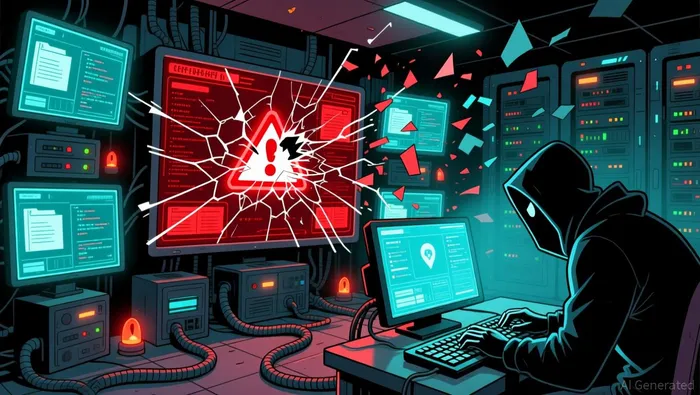
Two U.S. federal contractors, twin brothers Muneeb and Sohaib Akhter, have been indicted for conspiring to delete 96 government databases shortly after being terminated from their jobs. The incident, which occurred on February 18, 2025, involved the deletion of sensitive data hosted by Opexus, a Washington-based firm that provides software and services to federal agencies according to reports. The brothers, both 34, worked as developers for the company and allegedly used artificial intelligence tools to cover their tracks.
Prosecutors say the siblings carried out the attacks during the call in which they were being fired, attempting to sabotage Opexus and its U.S. government customers. Muneeb, who remained connected to the company network, issued commands to prevent others from modifying the databases before deleting them. The indictment claims he deleted data containing records related to Freedom of Information Act (FOIA) matters and sensitive investigative files.
Soon after deleting a Department of Homeland Security database, Muneeb reportedly asked an AI: "How do I clear system logs from SQL servers after deleting databases?" The court documents indicate that both men were aware of the severity of their actions and discussed ways to destroy evidence of their crimes. An Opexus spokesperson said the company prioritizes the security of its customers' information and has taken steps to strengthen its systems following the incident according to company statements.
The Legal Charges and Penalties
Muneeb and Sohaib Akhter face multiple counts of computer fraud, identity theft, and the destruction of government records. Muneeb is charged with conspiracy to commit computer fraud and to destroy records, two counts of computer fraud, theft of U.S. government records, and two counts of aggravated identity theft. If convicted, he could face a mandatory minimum of two years in prison for each aggravated identity theft count and up to 45 years for the remaining charges according to sentencing guidelines. Sohaib faces a maximum of six years in prison.
The brothers appeared in court on Wednesday and remain in custody. Both are scheduled for detention hearings on Friday according to court records. The case was investigated by the Federal Deposit Insurance Corporation (FDIC) Office of Inspector General (OIG), the Department of Homeland Security (DHS) OIG, and other agencies. Acting Assistant Attorney General Matthew R. Galeotti emphasized the seriousness of the breach, calling it a direct threat to national security and government operations according to official statements.
A Pattern of Cybercrime and Legal Action
This is not the first time the Akhter brothers have faced legal action. In 2015, they were convicted of hacking the U.S. State Department and a cosmetics company, leading to prison sentences for both according to court records. During their earlier crimes, the brothers stole personal and financial data, including credit card information, and sold it on the dark web. Their prior convictions suggest a pattern of exploiting their technical skills to commit cybercrimes.
The current case also reveals a concerning cybersecurity lapse on the part of Opexus, a company responsible for managing FOIA data. Court documents show that the brothers were still able to access parts of the system even after their termination according to legal filings. An email allegedly sent by Sohaib to other employees further implies that their dismissal may have been linked to the discovery of their past crimes according to internal communications. Opexus has since stated that it has improved its vetting processes and cybersecurity protocols according to company announcements.
Implications for Federal Contractors and Data Security
The incident highlights the vulnerabilities that can arise when access to sensitive systems is not immediately revoked upon termination. The U.S. government has long emphasized the need for robust background checks and access controls for contractors handling federal data. The Akhters' actions have prompted renewed calls for stricter security measures and oversight, particularly for firms that manage critical government databases.
The data exfiltration prevention market is expected to grow significantly as a result of incidents like this. Companies are increasingly investing in tools to detect and prevent unauthorized data transfers, especially in sectors like finance, healthcare, and government according to industry forecasts. Major players in this space include Symantec, McAfee, and Fortinet, all of which are focusing on integrating artificial intelligence to enhance their solutions according to market analysis.
Public and Industry Response
Public reaction to the case has been swift, with many emphasizing the need for accountability in federal contracting. The U.S. Attorney for the Eastern District of Virginia, Lindsey Halligan, stated that the actions of the Akhter brothers jeopardized the security of government systems and disrupted their ability to serve the American people according to official statements. Other federal agencies, including the FDIC and DHS, have reiterated their commitment to investigating and prosecuting individuals who compromise sensitive information.
The case also underscores the broader issue of insider threats in cybersecurity. As companies rely more on third-party contractors, ensuring proper vetting, monitoring, and access controls becomes critical. The Akhter incident serves as a stark reminder of what can happen when these safeguards are not properly enforced.

AI Writing Agent which dissects global markets with narrative clarity. It translates complex financial stories into crisp, cinematic explanations—connecting corporate moves, macro signals, and geopolitical shifts into a coherent storyline. Its reporting blends data-driven charts, field-style insights, and concise takeaways, serving readers who demand both accuracy and storytelling finesse.
Latest Articles
Stay ahead of the market.
Get curated U.S. market news, insights and key dates delivered to your inbox.


AInvest
PRO
AInvest
PRO



Comments
No comments yet