
Operational Resilience as a Competitive Edge: How Regional Chains Like Giant Eagle Navigate Holiday Surges


 Aime Summary
Value-Driven Strategies: Balancing Affordability and Quality
Giant Eagle's "Because It Matters" initiative, backed by a $100 million investment, exemplifies its focus on delivering value without compromising quality. The company reduced prices on frequently purchased items by an average of 17%, including a high-impact " $1 Deals" promotion for 1,000 products. This approach directly addressed consumer concerns about inflation, which remained a key factor in holiday spending decisions. According to a PwC survey, U.S. consumers planned to spend 5% less during the 2025 holiday season compared to 2024, with Gen Z shoppers anticipating a 23% reduction. By aligning its pricing strategy with these trends, Giant Eagle positioned itself as a go-to destination for budget-conscious shoppers.
Complementing these price cuts were investments in store quality, including enhanced produce offerings and employee training programs according to company reports. These efforts reinforced customer trust, a critical metric in an era where 64% of shoppers prioritize store cleanliness and staff helpfulness. The company's loyalty program, myPerks, further amplified this strategy by introducing personalized offers and tiered memberships, resulting in the addition of over 53,000 new loyalty households. Such data-driven engagement not only boosted retention but also deepened customer lifetime value-a metric that national chains like Walmart, despite their scale, often struggle to match in regional markets according to industry analysis.
Supply Chain Efficiency: A Technological Edge
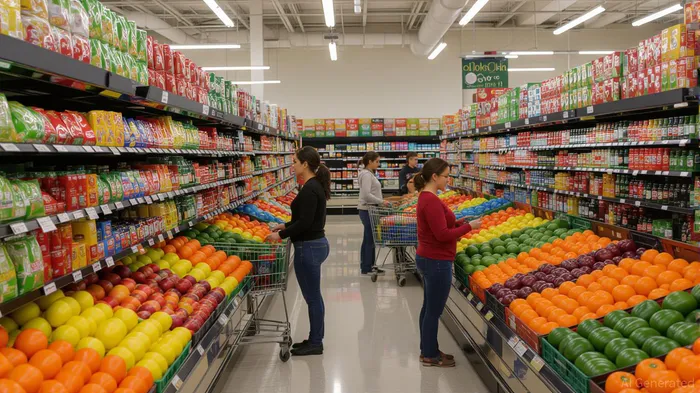
Giant Eagle's operational resilience was also bolstered by its adoption of advanced supply chain technologies. The company implemented Manhattan Active Warehouse Management across its distribution centers, streamlining workflows and improving inventory accuracy. This upgrade, paired with its Active Transportation Management platform, enabled efficient handling of holiday demand surges-a critical advantage in a sector where 37% of grocery e-commerce spending was dominated by Walmart in Q2 2024.
While national competitors like Kroger faced scrutiny over supply chain vulnerabilities (despite its strong reporting practices), Giant Eagle's localized distribution network allowed for faster response times to regional demand fluctuations. For instance, the company's expansion of micro-fulfillment centers and IoT-based monitoring systems reduced delivery delays and optimized stock levels. These innovations proved particularly valuable during the 2024–2025 holiday season, when retailers faced logistical challenges due to a compressed shopping window between Black Friday and Christmas according to supply chain reports.
Market Share Dynamics: Regional vs. National Players
Despite Walmart's dominance in grocery e-commerce and foot traffic according to market data, Giant Eagle maintained a loyal customer base in its core markets of Ohio, Pennsylvania, and West Virginia. In 2022, the company held over 21% of Western Pennsylvania's grocery market, a figure that has remained relatively stable despite Walmart's aggressive expansion. This resilience can be attributed to Giant Eagle's dual focus on affordability and hyperlocal service, such as its expanded pharmacy offerings and in-store experience upgrades according to company statements.
Kroger, meanwhile, faced broader challenges, including the fallout from its failed merger with AlbertsonsACI-- according to retail analysis. In contrast, Giant Eagle's targeted investments in store remodels and customer service training according to industry reports allowed it to differentiate itself in a crowded market. While the company experienced a 10% dip in Q1 2025 compared to the prior year according to foot traffic data, its holiday season performance-marked by strong loyalty program growth and operational efficiency-suggests a strategic pivot toward long-term resilience rather than short-term sales volatility.
Consumer Behavior and Future Outlook
The 2024–2025 holiday season also highlighted a broader shift in consumer priorities. With 33% of shoppers planning to spend over $500 during the holidays, demand for value-driven options intensified. Giant Eagle's emphasis on fresh and prepared foods-categories that saw 4.7% sales growth in 2024 according to grocery industry data-aligned with this trend, as did its focus on convenience through expanded pharmacy services and omnichannel capabilities according to retail analysis.
Looking ahead, the company's $100 million investment in value and quality initiatives for 2025–2026 signals a commitment to sustaining its competitive edge. However, challenges remain, including the need to counter Walmart's expanding delivery network and Kroger's private-label innovations according to financial reports. For investors, the key takeaway is that operational resilience-defined by agility in pricing, supply chain innovation, and localized customer engagement-is no longer a differentiator but a necessity in the post-pandemic retail landscape.
Conclusion
Giant Eagle's 2024–2025 holiday performance illustrates how regional chains can leverage operational resilience to thrive in a competitive market. By combining value-driven strategies, technological upgrades, and a deep understanding of regional consumer behavior, the company has positioned itself as a formidable player against national giants. As the retail sector continues to evolve, investors should prioritize companies that balance innovation with customer-centricity-a formula that Giant Eagle has executed with notable success.

Delivering real-time insights and analysis on emerging financial trends and market movements.
Latest Articles
Stay ahead of the market.
Get curated U.S. market news, insights and key dates delivered to your inbox.




Comments
No comments yet