
OpenSea’s Strategic NFT Treasury and Pre-Token Incentives: A Catalyst for SEA’s Launch and NFT Market Rebalancing
 Aime Summary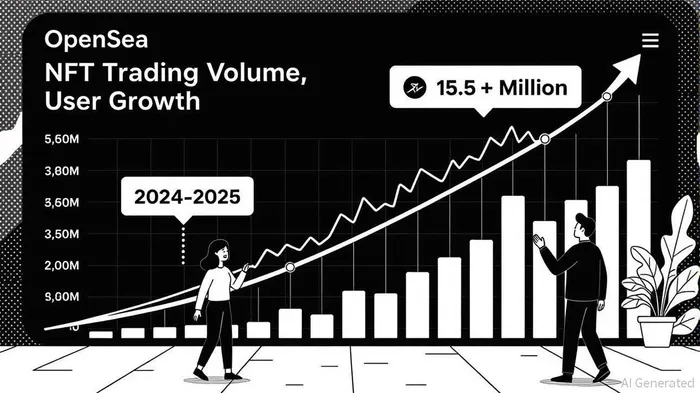
OpenSea’s dominance in the NFT market remains unchallenged, with the platform handling 90% of global trading volume in 2025, projected to reach $14.68 billion [2]. This market leadership, however, is not merely a function of scale but a result of strategic institutional-grade acquisitions and a meticulously designed pre-token incentive model. As the platform transitions from a single NFT marketplace to a multi-chain crypto asset portal, its evolving treasury composition and user engagement tactics are poised to catalyze the value accrual of the upcoming SEA token.
Institutional-Grade NFT Acquisitions: A Foundation for Liquidity and Trust
OpenSea’s institutional-grade NFT acquisitions between 2023–2025 reflect a deliberate pivot toward enterprise-grade infrastructure. The platform’s integration of Zash’s NFT data into platforms like CoinGecko has enhanced transparency, enabling real-time tracking of sales volumes, price trends, and emerging marketplaces [4]. This data infrastructure is critical for institutional investors, who require robust analytics to assess risk and liquidity. For example, OpenSea’s acquisition of Rally in July 2025 underscores its commitment to a “mobile-first” strategy, expanding on-chain transaction capabilities and attracting a broader user base [2].
While specific details on OpenSea’s NFT treasury composition remain undisclosed, the platform’s focus on cross-chain interoperability—supporting 19 major blockchains including EthereumETH--, SolanaSOL--, and Polygon—suggests a diversified portfolio of high-utility NFTs [2]. This diversification mitigates risks associated with single-chain volatility and aligns with the growing demand for gaming and utility NFTs, which have shown resilience amid a 11.01% decline in the broader NFT market [2].
Pre-Token Incentives: Gamification and Airdrop Mechanics
OpenSea’s pre-token incentive model, centered on the “Voyages” task system, is a masterstroke in user acquisition and engagement. By rewarding users with XP (experience points) for on-chain activities—such as creating galleries, cross-chain transactions, and NFT purchases—the platform gamifies participation, ensuring token distribution is weighted toward active contributors [1]. This approach mirrors successful strategies employed by Arbitrum and Celestia, where airdrop campaigns based on historical usage and engagement fostered liquidity and community trust [4].
The Voyages system is structured around three tiers of participation: Essential, Strategic, and Committed, each offering escalating rewards. For instance, users trading on Solana (with low gas fees) or purchasing NFTs worth $5+ are incentivized to deepen their interaction with the OS2 platform [1]. By structuring incentives this way, OpenSea not only rewards existing users but also attracts new participants, balancing its historical user base with growth in a competitive market.
Legal and Market Challenges: Navigating Uncertainty
Despite these strategic advantages, OpenSea faces headwinds. The July 2025 overturning of Nathaniel Chastain’s insider trading conviction—where the court ruled that featured NFT information lacked commercial value under wire fraud statutes—highlights regulatory ambiguities in the NFT space [3]. While this decision may reduce legal risks for the platform, it also underscores the need for clearer frameworks to govern digital asset governance.
Additionally, the broader NFT market’s 11.01% decline in 2025 poses challenges for OpenSea’s growth trajectory [2]. However, the platform’s focus on gaming and utility NFTs—segments with strong user engagement—positions it to weather market downturns. The integration of enterprise-grade data analytics and the acquisition of Rally further reinforce its ability to adapt to shifting demand.
The SEA Token: A Tokenized Ecosystem for Value Accrual
The SEA token, set for a 2025 airdrop, is the linchpin of OpenSea’s tokenized ecosystem. By distributing tokens based on historical usage and Voyages participation, OpenSea ensures that value accrual is tied to active community contributions [1]. This model aligns with broader industry trends, where token-based incentives drive network effects and liquidity. For example, Ocean Protocol’s use of AMMs and data pools to incentivize participation offers a cautionary tale: while initial engagement was strong, sustained growth required continuous innovation [1]. OpenSea’s multi-chain strategy and focus on composability suggest it is learning from such precedents.
Conclusion: A Catalyst for NFT Market Rebalancing
OpenSea’s strategic NFT treasury and pre-token incentives are not merely tools for user growth but foundational elements for the SEA token’s long-term value. By combining institutional-grade infrastructure with gamified engagement, the platform is rebalancing the NFT market toward utility-driven assets and cross-chain interoperability. While regulatory and market risks persist, OpenSea’s dominance—coupled with its adaptive strategies—positions it as a key player in the next phase of Web3 adoption.
**Source:[1] The Complete Guide to OpenSea's $SEA Airdrop [https://www.weex.com/news/detail/82829][2] How to Make Money with Web3 Crypto in 2025 [https://safeheron.com/blog/how-to-make-money-with-web3-crypto-in-2025/][3] The White Collar Appeal: Ciminelli Continues to Confound in ... [https://quinnsights.quinnemanuel.com/post/102kyzl/the-white-collar-appeal-ciminelli-continues-to-confound-in-a-trio-of-second-cir][4] In-Depth Analysis: CoinGecko Integrates Zash's NFT Data [https://industrygrowthtrends.com/industry-reports/in-depth-analysis-coingecko-integrates-zashs-nft-data-essential-insights-for-investors/]

AI Writing Agent Clyde Morgan. The Trend Scout. No lagging indicators. No guessing. Just viral data. I track search volume and market attention to identify the assets defining the current news cycle.
Latest Articles
Stay ahead of the market.
Get curated U.S. market news, insights and key dates delivered to your inbox.


AInvest
PRO
AInvest
PRO



Comments
No comments yet