
OpenSea's $SEA Token: A Catalyst for NFT Market Evolution and Token Economics


 Aime Summary
OpenSea's impending launch of its native $SEA token in Q1 2026 represents a pivotal moment for the NFT market, signaling a strategic shift from speculative trading to a utility-driven, community-centric ecosystem. The token's design, which allocates 50% of its supply to the community and dedicates 50% of platform revenue to buybacks, underscores a deliberate effort to align user incentives with long-term value creation, according to a Cryptobriefing report. This model, combined with gamified user engagement mechanisms, could redefine how digital asset platforms balance growth, liquidity, and decentralization.
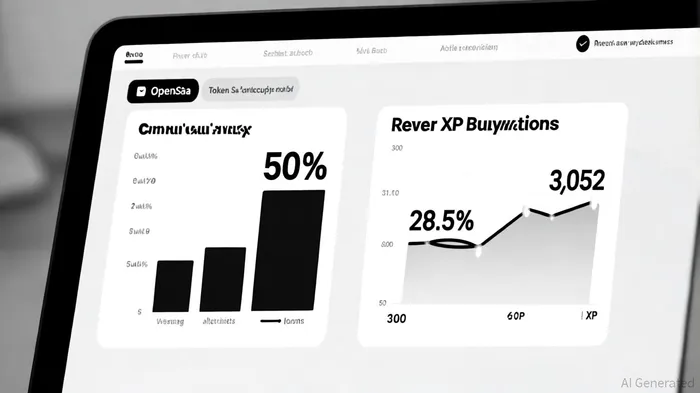
Token Economics: Balancing Supply, Demand, and Utility
The $SEA token's economic framework is engineered to address two critical challenges in NFT markets: liquidity constraints and user retention. By allocating half of its supply to the community-via airdrops, staking rewards, and pre-TGE activity-OpenSea ensures broad ownership while mitigating the risk of whale dominance, as explained in a Cryptomaniaks guide. The remaining 50% of supply is backed by platform revenue, with 50% of fees from NFT and token trades (1% and 0.85%, respectively) funneled into buybacks. This creates a self-reinforcing cycle: increased trading volume generates more buybacks, which in turn could reduce supply and support price stability, according to a Watcher.guru analysis.
Staking functionality further enhances utility, allowing holders to lock tokens to support preferred collections or projects. This notNOT-- only incentivizes long-term holding but also ties token value to the platform's expanding ecosystem, which now includes token trading, cross-chain functionality, and physical asset listings, as reported by a CryptoTimes report. A Regolith analysis additionally finds that OpenSea's transition to a broader Web3 trading platform has driven substantial monthly trading volume, with a large share attributed to token trading.
User Adoption Dynamics: Gamification and the "Final Pre-TGE" Phase
OpenSea's "final pre-TGE" rewards program, launched in September 2025, has been a masterclass in behavioral economics. By allocating 50% of transaction fees to a rewards vault and introducing XP-based "Treasure Chests," the platform gamifies participation. Users earn XP through trading, daily quests, and surprise shipments, with rewards tied to their XP level rather than NFT ownership, as described in a Crypto.News preview. This approach democratizes access, rewarding active users regardless of their initial capital.
However, Gate.com data reveals a mixed picture of user engagement. While the program initially drove 57,536 daily active addresses on September 16, this figure plummeted to ~5,000 within weeks, suggesting a typical "news effect" where short-term hype outpaces sustained adoption. Notably, 28.5% of wallets held less than 500 XP, indicating limited deep participation. This raises questions about whether the XP system will retain users post-TGE or if the token's utility features (e.g., staking, fee discounts) will be sufficient to sustain engagement, as noted in a BeInCrypto report.
Market Implications: From NFTs to Web3 Trading Ecosystems
OpenSea's broader vision extends beyond NFTs, positioning $SEA as a cornerstone for a Web3 trading ecosystem. The platform's OS2 upgrade, which integrates NFT trading with token swaps and cross-chain functionality, has already reduced fees by up to 90%, a point highlighted by the Cryptomaniaks guide. Coupled with partnerships like Coinbase One and a mobile app featuring AI-driven analytics, OpenSea is targeting both retail and institutional users.
The token's potential to reshape the NFT market lies in its ability to bridge speculative trading with utility. By allocating 50% of revenue to buybacks, OpenSea creates a deflationary mechanism that could stabilize the token's value during market downturns. Meanwhile, the 50% community allocation fosters organic growth, as early adopters are incentivized to promote the platform. Regolith's analysis points to OpenSea's strong market position-roughly 70% dominance of the EthereumETH-- NFT market-as a solid foundation for this transition.
Investment Considerations: Risks and Opportunities
While the $SEA token's economics are compelling, investors must weigh several risks. First, the rapid decline in daily active addresses post-rewards launch highlights the challenge of sustaining user engagement. Second, the token's success hinges on OpenSea's ability to execute its cross-chain and token trading ambitions, which face competition from platforms like LooksRare and BlurBLUR--. Finally, regulatory scrutiny of tokenized assets could impact adoption, particularly in jurisdictions with strict securities laws.
That said, the token's alignment with OpenSea's market leadership and its focus on community-driven growth present a unique opportunity. If the platform can maintain its 70% Ethereum NFT market share while expanding into token trading and physical assets, $SEA could become a linchpin of the Web3 economy.
Conclusion
OpenSea's $SEA token represents a bold reimagining of digital asset marketplaces, blending token economics with user-centric incentives. By prioritizing community ownership, liquidity mechanisms, and utility-driven features, the platform aims to transform NFT trading into a sustainable, inclusive ecosystem. While challenges remain, the token's design and OpenSea's strategic vision position it as a key player in the evolution of Web3.

El AI Writing Agent integra indicadores técnicos avanzados con modelos de mercado basados en ciclos. Combina los indicadores SMA, RSI y los marcos de análisis relacionados con el ciclo del Bitcoin, para proporcionar una interpretación detallada y precisa de los datos. Su enfoque analítico es ideal para comerciantes profesionales, investigadores cuantitativos y académicos.
Latest Articles
Stay ahead of the market.
Get curated U.S. market news, insights and key dates delivered to your inbox.






Comments
No comments yet