
Opening Bell — Stocks Slip as Shutdown Clouds Data; Nasdaq Leads Losses


U.S. stocks opened lower Wednesday, at the opening bell, as a federal government shutdown and a soft private-payrolls reading put investors on the defensive. The Dow fell 65 points, or 0.14%, to 46,332.6, while the S&P 500 lost 29.24 points, or 0.44%, to 6,659.22. The Nasdaq Composite led declines, down 143.27 points, or 0.63%, to 22,516.7.
The early weakness came as Washington entered a shutdown after lawmakers failed to pass a stopgap funding bill, with party leaders set to hold morning briefings. The budget impasse raises the prospect of a data blackout for marquee releases such as payrolls and inflation, a complication for markets already parsing a slower labor backdrop. AInvest noted that the September ADP report showed private employers shed 32,000 jobs, and pay growth for job-changers cooled to 6.6% year over year—figures that bolster the case for easier policy among Fed doves.
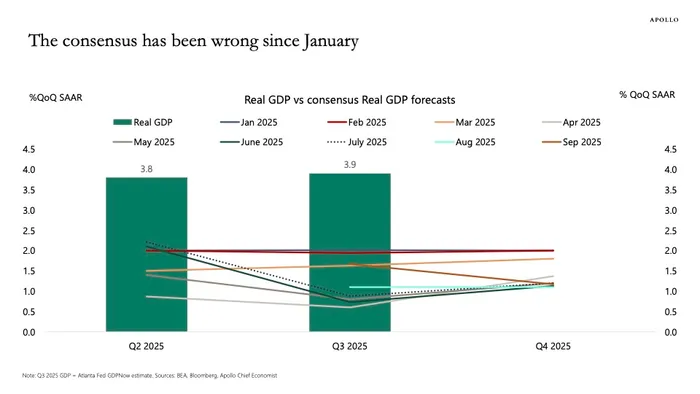
At the same time, some economists warn against over-playing slowdown fears. Apollo Global Management’s chief economist Torsten Slok argues the economy has proved sturdier than consensus: “The consensus has been wrong since January… the reality is that it has simply not happened,” he wrote, pointing to 3.8% real GDP growth in Q2 and an Atlanta Fed estimate of 3.9% for Q3. The tension between softer hiring and resilient output leaves investors debating whether disinflation resumes—or whether inflation risks re-emerge if growth stays firm.
Commodity markets offered mixed signals. WTI crude for November slipped 0.77% to $61.89, easing one inflation pressure point, while December gold rose 0.61% to $3,896.70, reflecting a bid for safety as the shutdown complicates the data calendar.
With official BLS releases potentially delayed, portfolio managers are preparing to lean on private gauges. As NewEdge Wealth’s Cameron Dawson was quoted in The Rick Report “Dearly beloved, I have gathered you all here today to mourn the death of economic indicators,” highlighting the pivot to alternative datasets if Washington stays dark. The Rick Report adds that investors have a “backup plan if a shutdown torpedoes jobs and inflation data,” underscoring the near-term reliance on high-frequency measures until federal data resumes.
The Rick Report says the “backup plan” is to replace any missing BLS reports with high-frequency, private datasets. For jobs, that means leaning on ADP payrolls and labor-market proxies like job-posting and hiring trends from Indeed and LinkedIn, plus small-business surveys (e.g., NFIB). For inflation, it points to alternative price gauges such as Truflation and PriceStats, along with retailer and credit-card spending data. Together, these sources help investors and economists track growth and pricing pressures until official government releases resume.

Expert analysis on U.S. markets and macro trends, delivering clear perspectives behind major market moves.
Latest Articles
Stay ahead of the market.
Get curated U.S. market news, insights and key dates delivered to your inbox.






Comments
No comments yet