
OpenAI Warns of AI Bubble as Spending Surges to Trillions
 Aime Summary
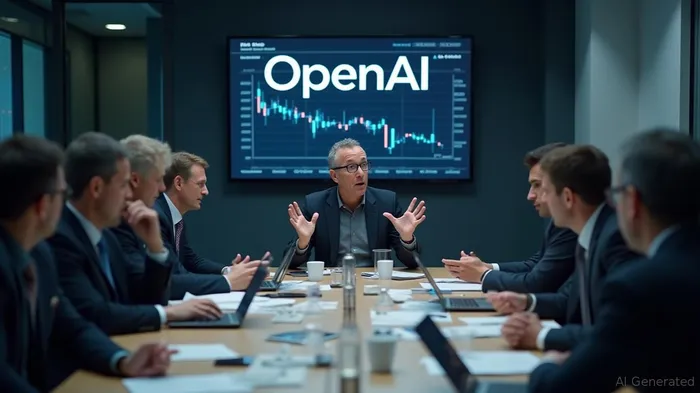
Sam Altman, the CEO of OpenAI, has found himself in the midst of an AI paradox—publicly warning of a market bubble while steering his company toward a data center expansion that could cost trillions of dollars. At a recent dinner with reporters in San Francisco, Altman reportedly stated that investors as a whole are overexcited about AI, likening the current market dynamics to the dotcom bubble of the 1990s. Yet, within the same conversation, he suggested that OpenAI is prepared to push forward with massive capital expenditures despite the warnings, saying, “we’ll just be like, ‘You know what? Let us do our thing’” [1]. The juxtaposition of caution and ambition highlights the complex and contradictory nature of the AI industry’s trajectory.
This tension is underscored by OpenAI’s recent fundraising activity. In early August, the company secured $8.3 billion in new funding at a valuation of $300 billion, with plans to raise $40 billion in total in 2024. The round was reportedly five times oversubscribed. Additionally, employees are set to sell about $6 billion in shares to major investors, potentially boosting the company’s valuation to $500 billion [1]. These figures contrast sharply with Altman’s public concerns about AI overvaluation, raising questions about the logic and coherence of the company’s strategy.
OpenAI is not alone in its aggressive capital expenditure plans. Tech giants like MicrosoftMSFT-- and MetaMETA-- are also ramping up AI investments. Microsoft alone plans to spend $80 billion on AI data centers this fiscal year, while Meta is projecting up to $72 billion in AI and infrastructure spending. OpenAI’s competitors, including Anthropic, are also pursuing multibillion-dollar funding rounds [1]. These collective efforts suggest that the AI industry is in a high-growth phase, with infrastructure development at the forefront.
Despite these large-scale investments, some investors remain unfazed by the prospect of a bubble. Wall Street analysts like Wedbush’s Dan Ives argue that the surge in AI infrastructure spending is a validation of the industry’s potential. Ives described the current moment as a “validation moment” and emphasized that the AI revolution is only beginning, referring to the current stage as the “second inning of a nine-inning game” [1]. This optimismOP-- is rooted in the belief that the long-term value of AI technology outweighs the short-term risks of overinvestment.
However, not all AI developments are meeting expectations. OpenAI’s recent release of GPT-5 was met with mixed reactions, with many users disappointed by the model’s performance and lack of significant improvements [1]. This outcome raises concerns about whether current spending is justified and whether the market is being driven by hype rather than real progress.
Sam Altman’s remarks and OpenAI’s actions illustrate a broader pattern in the AI industry: the coexistence of caution and ambition, skepticism and optimism. While Altman acknowledges the risks of overinflation, his company is moving forward with a strategy that depends on sustained high levels of investment. This paradox may reflect the broader dynamics of a market still in its early stages, where the potential for transformative innovation is balanced against the real risk of speculative excess.
[1] Source: [1] Sam Altman’s AI paradox: Warning of a bubble while raising trillions (https://fortune.com/2025/08/19/sam-altmans-open-ai-paradox-warning-of-ai-bubble-while-raising-trillions/)

Stay ahead of the market.
Get curated U.S. market news, insights and key dates delivered to your inbox.




Comments
No comments yet