
OpenAI's Valuation Surpasses S&P 500 Giants: What Retail Investors Should Know
 Aime Summary
, surpassing companies like Goldman Sachs and Netflix. - Strategic investors like , , . , signaling continued support and confidence in the AI sector. , driven by AI service subscriptions and advertising expansion. - MicrosoftMSFT-- reaffirmed OpenAI as a key Azure customer, emphasizing AI-related capital expenditures will eventually moderate after recent acceleration.
In a stunning turn for the AI sector, OpenAI has become one of the most valuable private companies in the world, . That's more than the market cap of well-known public companies like Goldman Sachs and Netflix. , with strategic investors like NvidiaNVDA--, SoftBank, and AmazonAMZN-- leading the charge.
For retail investors and financially curious readers, this is a pivotal moment. OpenAI's trajectory reflects a broader shift in how venture capital and tech giants are betting on artificial intelligence. 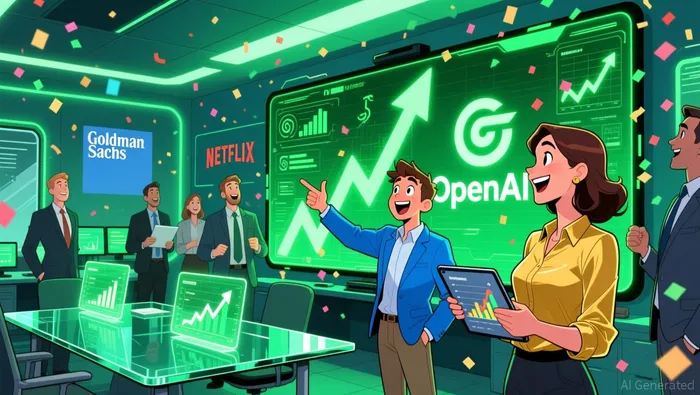 The company's valuation isn't just a number—it's a sign of how much market players believe in AI's potential to reshape industries from finance to healthcare.
What Is Driving OpenAI's Skyrocketing Valuation?
OpenAI has secured multiple funding rounds in recent months. The most recent notable investment was a $1 billion infusion from Thrive Capital , separate from the larger $100 billion round being finalized. This move not only underscores the company's current financial strength but also highlights the deep, long-term commitment from top-tier investors.
The company's valuation is being fueled by several key factors:
- Revenue growth: , driven by AI service subscriptions and advertising.
- Infrastructure expansion.
- Strategic partnerships: Microsoft reaffirmed OpenAI as a major Azure customer, with AI margins already outperforming traditional cloud margins.
Why Retail Investors Should Pay Attention to OpenAI
OpenAI isn't just a private company—it's a major player shaping the future of AI, and its developments will ripple through the broader economy. The company's valuation is now surpassing many S&P 500 companies, which means its success or failure could have far-reaching implications for investors across the board.
For now, OpenAI isn't listed on public markets, but its influence is already being felt. Microsoft, for example, . As more companies adopt AI solutions, the ecosystem around OpenAI—and the investors backing it—will likely grow in power and reach.
Investors should also keep an eye on how OpenAI uses its massive funding rounds. With capital coming in from firms like Thrive Capital and big tech players, the company is in a strong position to scale its infrastructure, hire top talent, and expand globally. That kind of growth can drive further valuation increases, but it also raises questions about long-term sustainability and market competition.
What to Watch Next
While OpenAI's valuation is staggering, it's still in its private phase. Retail investors can't directly invest in OpenAI itself, but they can look to its ecosystem for opportunities. Microsoft, for example, is a key partner and already benefits from OpenAI's success through Azure AI. Similarly, investors might consider how companies like Nvidia and Amazon plan to leverage their positions in OpenAI's funding and development.
The AI landscape is evolving rapidly, and OpenAI is at the forefront. For now, its valuation is a clear signal that the market sees huge potential in AI-driven innovation. Whether that potential translates into long-term value for investors—and how it will shape the next wave of tech disruption—remains to be seen.
What Does OpenAI's Valuation Mean for the Future of AI?
OpenAI's valuation is not just a financial milestone—it's a signal of broader investor sentiment. The company is being backed by some of the most powerful firms in tech, and its financial forecasts are ambitious. If it achieves its goals, it could redefine what's possible with artificial intelligence.
Still, investors should remain cautious. High valuations can come with high expectations, and the AI space is becoming increasingly competitive. For now, OpenAI is in a unique position—but that could change as more players enter the market and new technologies emerge. Retail investors should keep a close eye on how OpenAI uses its capital, its ability to meet revenue targets, and how its ecosystem partners like Microsoft and Nvidia perform in the AI race.
What to Know About OpenAI's Revenue Projections and AI Infrastructure Spending
OpenAI's revenue is projected to grow . That's a remarkable jump, and it's being driven by a combination of subscription sales and advertising. The company is also planning to invest heavily in infrastructure, . This spending is expected to support faster model iterations, broader deployment, and increased research into specialized AI applications.
This level of investment is unusual for a company that isn't yet public, but it reflects a broader trend in the AI space. Startups are increasingly relying on private capital to scale before going public, and OpenAI is one of the most prominent examples of this shift. For investors, it means that the traditional path of public market investment may not always be the most direct way to participate in the AI boom.
That said, the ecosystem around OpenAI is still evolving. Companies that partner with the startup—whether through funding, infrastructure, or integration—could see their own valuations rise in tandem with OpenAI's success.
What Retail Investors Can Do in the AI Era
If OpenAI's valuation feels out of reach for now, there are still ways to participate in the AI wave. The company's ecosystem includes major tech players like Microsoft, which is deeply invested in OpenAI's technology and infrastructure. By investing in these partners, retail investors can gain indirect exposure to the AI market without needing to buy shares in OpenAI itself.
Another angle is to follow the capital flows. OpenAI's funding round is being led by companies like Nvidia, SoftBank, and Amazon, all of which have their own AI strategies and stock valuations. As OpenAI grows, these partners are likely to benefit as well.
For now, OpenAI is at the top of the AI food chain. But as the market evolves, new opportunities will emerge for investors who are willing to look beyond the headlines and into the long-term potential of AI innovation.

Stay ahead of the market.
Get curated U.S. market news, insights and key dates delivered to your inbox.


AInvest
PRO
AInvest
PRO



Comments
No comments yet