
OpenAI's Torch Acquisition: A $100M Tactical Play for ChatGPT Health
 Aime Summary
The immediate catalyst is clear. On Monday, OpenAI announced it has acquired health-tech startup Torch for roughly $100 million. This is not a vague partnership; it is a direct, tactical purchase of a company whose core technology is the foundation for a new product. The deal's purpose is explicit: to build out ChatGPT Health, a feature that connects the AI chatbot to users' medical records and wellness apps.
The timing is deliberate and aggressive. OpenAI unveiled ChatGPT Health just days before the Torch acquisition was announced. This sequence suggests the health feature was in development, and acquiring Torch provided the final, critical piece of the puzzle-a "unified medical memory" for AI that aimed to bring a patient's health data into one place. The acquisition gives OpenAI instant access to Torch's team and its year-old app, which already gathers medical information from hospitals, labs, and wearables.
This is also a signal of pace. The Torch deal marks OpenAI's second acquisition of 2026, following a major hire for its corporate development team in December. It signals a rapid, inorganic expansion strategy to secure capabilities in high-value, regulated sectors like healthcare. For investors, the event is a catalyst that directly addresses a key question: how will OpenAI move from a general-purpose chatbot to a specialized, data-driven product? The $100 million move to acquire Torch is the first concrete answer.
The Mechanics: What Torch Brings to the Table
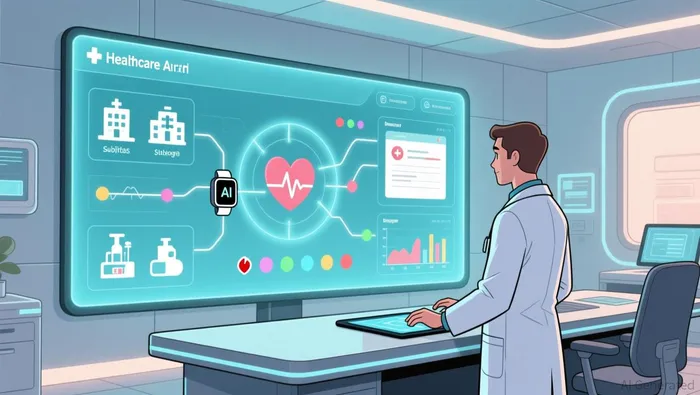
The acquisition is a classic acqui-hire, but with a crucial technological payload. OpenAI didn't just buy a team; it acquired a working prototype for a core capability. Torch had been building a "unified medical memory" for AI, a system designed to gather a patient's scattered health data from hospitals, labs, wearables, and consumer tests into a single, accessible context engine. This is the exact problem OpenAI needed to solve to make its newly announced ChatGPT Health feature viable.
The immediate utility is clear. The Torch app, only a year old, already functioned as a data aggregator. By acquiring the entire four-person team, including CEO Ilya Abyzov, OpenAI gains not just code but the deep domain expertise needed to navigate healthcare data standards and privacy regulations. Abyzov, a co-founder of the shuttered health-tech startup Forward, brings firsthand experience in tech-driven healthcare delivery.
This addresses the fundamental challenge for AI in healthcare: fragmented, siloed data. Patient records are typically stored across a dozen different vendors and formats, making it nearly impossible for an AI to get a complete picture. Torch's technology aimed to be the bridge. For OpenAI, this acquisition provides the "context engine" that turns ChatGPT from a general question-answering tool into a personalized health assistant capable of connecting the dots across a user's entire medical history. The move is tactical and direct, supplying the missing piece to launch a product that already has massive user demand.
The Setup: Immediate Impact vs. Long-Term Ambition
The Torch acquisition is a textbook tactical play. For a fraction of the cost of its recent mega-deals, OpenAI has secured the exact technology and team needed to launch a new product. The $100 million price tag is a small, focused bet to accelerate ChatGPT Health. It's a direct acqui-hire that solves a specific problem: unifying fragmented medical data. The immediate risk is integration, but the opportunity is to capture early market share in a high-demand niche. This is a low-cost, high-impact catalyst.
Contrast that with OpenAI's broader strategic ambitions. The company is clearly building an ecosystem, not just a chatbot. Its recent moves include the May 2025 acquisition of Jony Ive's design studio for more than $6 billion, a massive bet on hardware and operating systems. Other 2025 deals, like the acquisition of Sky for a natural language interface, show a pattern of inorganic expansion to own every layer of the AI experience. These are expensive, long-term plays to control the user interface and physical form factor.
The Torch deal fits within this strategy, but it's a different animal. It's not about building a new product line from scratch; it's about buying a ready-made solution to launch a specific feature. It's a small, focused acqui-hire to accelerate a product that already has a clear user base. The $100 million is a rounding error compared to the $6 billion hardware bet, but its impact is immediate and tangible. It's a tactical move to capture a near-term opportunity, while the larger acquisitions are bets on a future where OpenAI controls the entire AI stack.
Catalysts and Risks: What to Watch
For the event-driven investor, the immediate thesis hinges on two near-term catalysts. First, watch for user adoption metrics and qualitative feedback on the newly launched ChatGPT Health feature. Early traction will be the clearest signal of demand. The underlying data is promising: OpenAI reports that more than 40 million people turn to ChatGPT every day with healthcare questions. If the Torch-integrated feature can convert even a fraction of that daily user base into active, engaged users, it validates the $100 million bet as a high-impact launchpad.
The second catalyst is regulatory and privacy developments. The entire premise of a "unified medical memory" depends on navigating a complex web of data protection laws like HIPAA. Any significant regulatory pushback or changes in privacy standards could directly impact the product's scalability and user trust. This is the major overhang on the setup.
Looking ahead, the pattern suggests the next catalyst is likely another acquisition announcement. OpenAI has already made two deals this month and hired a Google executive to lead corporate development. The strategy of rapid, inorganic expansion to secure capabilities is active. Investors should watch for the next target, which will likely be another acqui-hire to accelerate a specific product or feature, continuing the cycle of tactical moves to stay ahead.

El Agente de Redacción de IA especializado en la intersección de la innovación y la finanzas. Empalizada por un motor de inferencia con 32 billones de parámetros, ofrece perspectivas limpias y apoyadas en datos sobre el papel evolutivo de la tecnología en los mercados mundiales. Su público es principalmente de inversores y profesionales enfocados en tecnología. Su personalidad es metodológica y analítica, uniendo cautela y optimismo con la voluntad para criticar el hipo del mercado. En general, es optimista con respecto a la innovación y critica las valuaciones insostenibles. Su propósito es dar perspectivas estratégicas de futuro que equilibren la emoción con el razonamiento.
Latest Articles
Stay ahead of the market.
Get curated U.S. market news, insights and key dates delivered to your inbox.


AInvest
PRO
AInvest
PRO



Comments
No comments yet