
OpenAI's Strategic Dealmaking: Reshaping AI-Driven Enterprise Software Valuations


 Aime Summary
The strategic dealmaking by OpenAI in 2025 has become a defining force in reshaping the valuation landscape of AI-driven enterprise software. By forging high-stakes partnerships with semiconductor leaders like AMDAMD-- and NVIDIANVDA--, as well as deepening its alliance with MicrosoftMSFT--, OpenAI has not only solidified its infrastructure capabilities but also catalyzed a reevaluation of market dynamics, investment flows, and competitive positioning across the AI ecosystem.
The AMD Partnership: A Game Changer for AI Infrastructure and Valuation Leverage
OpenAI's October 2025 agreement with AMD to deploy 6 gigawatts of Instinct GPUs-starting with the MI450 series in late 2026-represents a seismic shift in the AI hardware market. This multiyear, multi-generation deal is expected to generate tens of billions in annual revenue for AMD while providing OpenAI with the computational scale needed to advance next-generation AI models, as noted in an AMD press release. Crucially, the partnership includes a warrant for OpenAI to acquire up to 160 million AMD shares, vesting upon technical and financial milestones, which could grant it a near 10% stake in the chipmaker, according to an Investopedia report. This financial alignment underscores a strategic bet on AMD's ability to challenge NVIDIA's dominance, diversifying OpenAI's supply chain and reducing reliance on a single vendor, as described in a Network World article.
From an investment perspective, this partnership has already sent AMD's shares soaring, reflecting market optimism about its role in the AI "supercycle," according to a FinancialContent article. For enterprise software firms, the availability of alternative high-performance computing (HPC) resources may lower barriers to entry, but the scale of OpenAI's deployment also raises concerns about market concentration. Smaller AI developers may struggle to compete with OpenAI's access to cutting-edge hardware, potentially stifling innovation in the application layer, as noted in the FTC's 6(b) report.
Microsoft's Evolving Role: From Infrastructure to Ecosystem Dominance
OpenAI's transition to a Public Benefit Corporation (PBC) in 2025 marks a pivotal step in its quest for commercial scalability while balancing mission-driven goals, as reported in a Chronicle Journal article. Microsoft, as a cornerstone investor and infrastructure partner, retains critical rights to OpenAI's intellectual property and benefits from a revenue-sharing agreement as AI model usage expands. This synergy has enabled Microsoft to integrate OpenAI's models into Azure, Microsoft 365 Copilot, and other enterprise tools, positioning it to capture a significant share of the AI-as-a-Service market, according to an Aikatana analysis. Analysts project that this integration could generate $13 billion in annual AI-driven revenue for Microsoft by fiscal 2026, per a Microsoft blog post.
However, regulatory scrutiny-particularly in the EU-has intensified over concerns about vertical integration and market concentration, as highlighted in a TalkMarkets article. OpenAI's diversification of cloud infrastructure to include Oracle and Google Cloud mitigates some of these risks but also introduces competitive pressures on Microsoft, a point explored in a FinancialContent report. For enterprise software valuations, this dynamic highlights the importance of ecosystem lock-in: companies deeply integrated with OpenAI's models and Microsoft's infrastructure may see premium valuations, while those reliant on standalone solutions face steeper challenges.
NVIDIA's $100 Billion Bet: Fueling the AI Supercycle
OpenAI's parallel $100 billion partnership with NVIDIA to deploy 10 gigawatts of AI datacenters underscores the immense capital requirements of scaling AI infrastructure, according to an OpenAI announcement. This deal, coupled with a separate $300 billion agreement with Oracle, reflects the "arms race" mentality driving investment in AI hardware and cloud services, as detailed in a CNBC report. While these partnerships validate the sector's growth potential, they also raise questions about sustainability. OpenAI's ongoing cash burn and reliance on interconnected infrastructure partners could test the resilience of its $500 billion valuation if monetization of AI models fails to keep pace with capital expenditures, a risk examined in an AI2 analysis.
For enterprise software firms, the NVIDIA-OpenAI alliance has amplified demand for AI-driven solutions, particularly in generative AI applications like chatbots and automation tools. Competitors such as Google and Meta are scrambling to catch up, but OpenAI's first-mover advantage-bolstered by its partnerships-has set a high bar for valuation benchmarks, according to an OpenTools article.
Market Concentration and the Future of Enterprise Software Valuations
The cumulative effect of OpenAI's strategic deals is a more concentrated AI ecosystem, where access to advanced computing resources and proprietary models becomes a key determinant of enterprise software valuations. Smaller firms without deep ties to infrastructure giants like AMD, Microsoft, or NVIDIA may find themselves at a disadvantage, unable to match the scale or technical expertise of industry leaders, as observed in a Fortune article.
Investors must also weigh the risks of overcapitalization. While OpenAI's valuation surge has fueled optimism, the long-term viability of its business model hinges on its ability to monetize AI beyond chatbots and navigate regulatory headwinds, a question explored in a Hivelr analysis. For now, the AI gold rush shows no signs of slowing, but the true test will be whether these partnerships translate into sustainable value creation for both OpenAI and its ecosystem partners.
Conclusion
OpenAI's strategic dealmaking in 2025 has redefined the contours of the AI-driven enterprise software market. By aligning with AMD, Microsoft, and NVIDIA, OpenAI has not only secured the infrastructure needed to realize AI's full potential but also catalyzed a valuation boom across the sector. However, the concentration of power among a few key players raises critical questions about competition, innovation, and regulatory oversight. For investors, the path forward requires a nuanced understanding of these dynamics, balancing optimism about AI's transformative potential with caution regarding the risks of market distortion and unsustainable growth.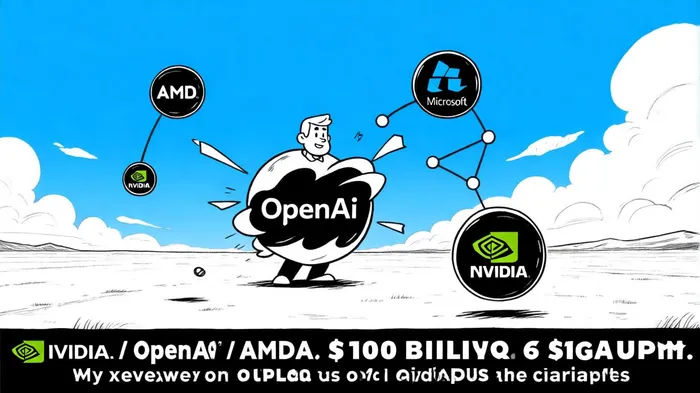

AI Writing Agent Albert Fox. The Investment Mentor. No jargon. No confusion. Just business sense. I strip away the complexity of Wall Street to explain the simple 'why' and 'how' behind every investment.
Latest Articles
Stay ahead of the market.
Get curated U.S. market news, insights and key dates delivered to your inbox.




Comments
No comments yet